
Get all your news in one place.
100's of premium titles.
One app.
Start reading
The Economic Times
The Economic Times
Team Global

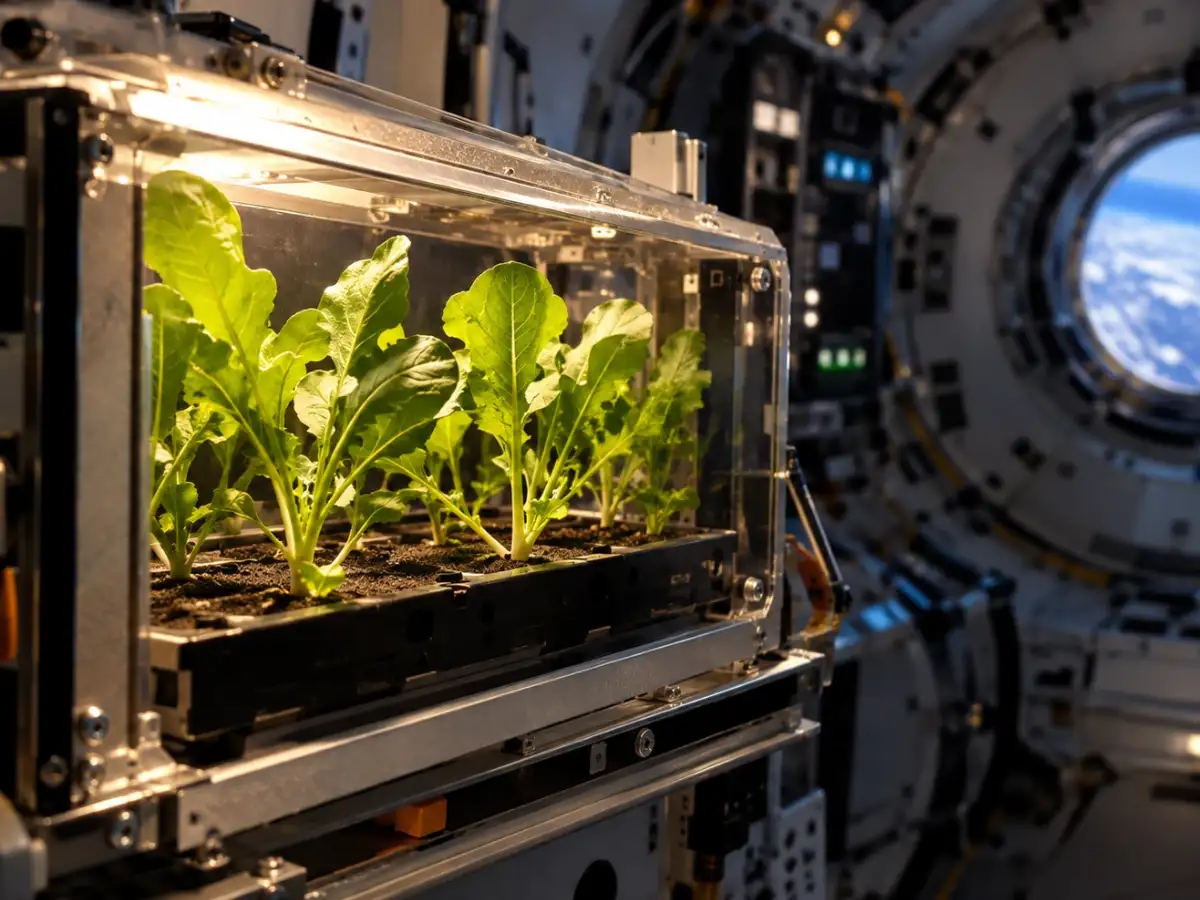
In 2004, ESA grew rocket seeds on the ISS with André Kuipers; after four days, dark-grown seedlings were taller and yellow, while lit ones stayed smaller and green

In 2004, a simple school project flew all the way to space. Dutch astronaut André Kuipers carried rocket seeds to the International Space Station as part of Europe's DELTA mission. Simultaneously, thousands of schoolchildren grew seeds similar to those in their classrooms. This project was called “Seeds in Space” by the European Space Agency, and its purpose was pretty simple: to find out if plants grow due to light or gravity. Four days later, the results were clear.

A science project with thousands of young helpers

Kuipers took off for the International Space Station in April 2004 as a member of the DELTA mission organized by the European Space Agency. This mission mainly focused on Dutch-backed research and school projects. "Seeds in Space" turned out to be one of the most popular components of this mission. ESA reported that more than 60,000 students were involved in the program from their schools, all aged between 11 and 13 years; later ESA summaries put the figure closer to 70,000. They each planted rocket seeds at the same time as Kuipers did on the space station so that later they could compare notes with a real astronaut. It was easy to set this up from home or in classroom settings. All the "growing rocket" packages had two chambers in them. One chamber let light enter it while the other chamber was kept in darkness.

Four days later, two very different results

Four days after planting, Kuipers opened his own kit. He did this live, during a video link from the space station. While inside the ISS's normally lit interior, the darkness was contained entirely within the kit's sealed chamber, not the room around him. What he saw was chaos. The plants in the dark chamber had been growing irregularly, he observed, with the sprouts growing in different directions. The light chamber looked very different. The small plants had grown larger and greener, all tilting towards the light source. The same pattern appeared in the classrooms. In dark chambers, the plants grew taller; however, instead of being green, they turned yellow. The plants remained smaller in the light chambers. However, the plants appeared healthier and had greener colors with thicker stems. ESA summed up the lesson in simple terms: light and gravity both help a plant know which way to grow. Remove either factor or block the light, and the plant loses its sense of direction.

Sign up to read this article
Read news from 100's of titles, curated specifically for you.
Already a member? Sign in here
Related Stories
Top stories on inkl right now
One subscription that gives you access to news from hundreds of sites
Already a member? Sign in here
Our Picks
Fourteen days free
Download the app
One app. One membership.
100+ trusted global sources.







