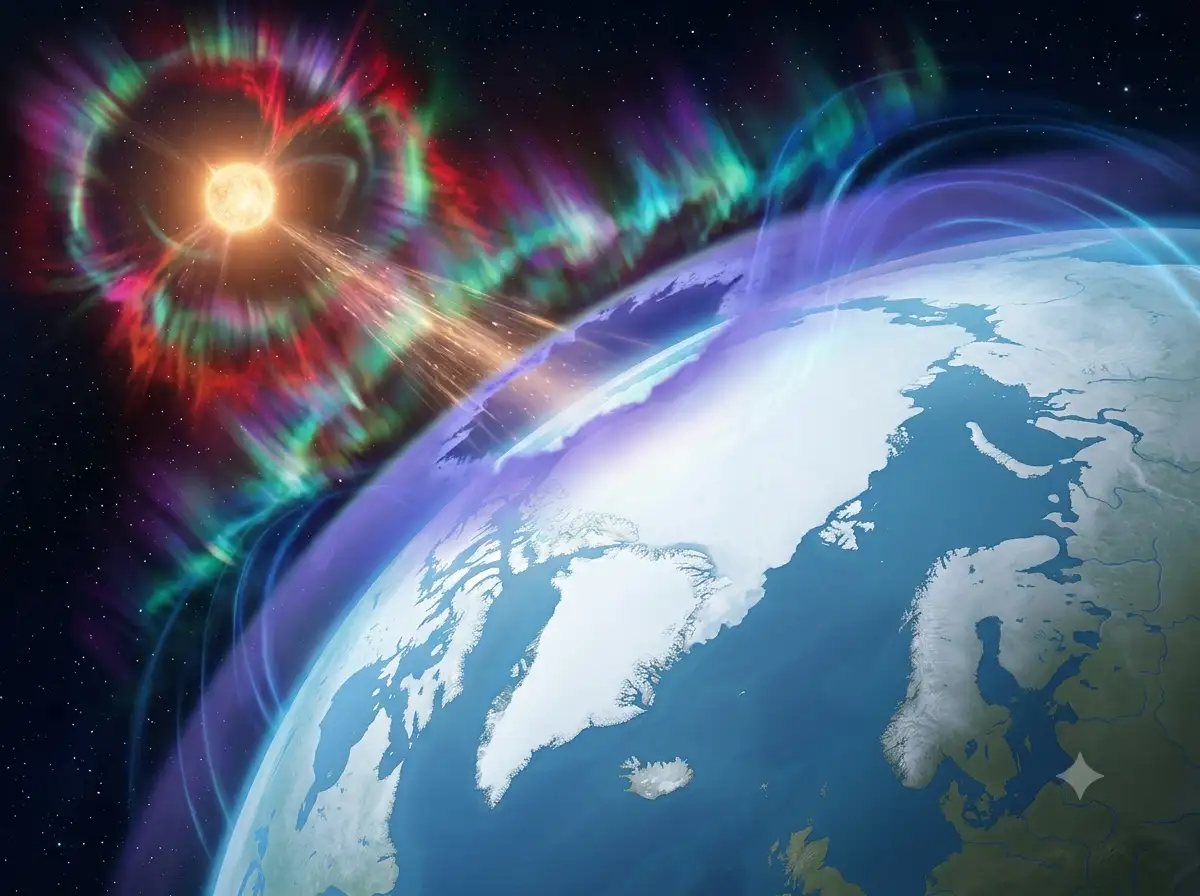
In 2003, powerful solar storms during Halloween set off a chain reaction that damaged the Arctic Ozone layer , according to a scientific study that examined an unexpected drop in ozone levels during the spring of 2004. Scientists discovered that charged particles released during the solar storms changed the chemistry of the upper atmosphere. These changes combined with strong winds in the polar stratospheric vortex and resulted in major ozone depletion over the Arctic. The research also showed that natural events from the Sun can affect the ozone layer along with human-caused influences, highlighting the need for continued monitoring of Earth's atmosphere.