Get all your news in one place.
100's of premium titles.
One app.
Start reading
The Economic Times
The Economic Times
Shreya Biswas

In 2001, protected tropical forests entered a global wildfire study spanning 24 years. 23 years later, more than 4 million hectares had been destroyed by fire, twice the size of Wales, with annual losses roughly 9 times higher after 2016

More than 4 million hectares of protected tropical forest, an area roughly twice the size of Wales, were destroyed by wildfires between 2001 and 2024, according to a new University of Sheffield study.

Published in Global Change Biology, the study is the first to examine in detail how much protected tropical forest has been lost to wildfires worldwide and whether protected status actually reduces the risk of forests burning.
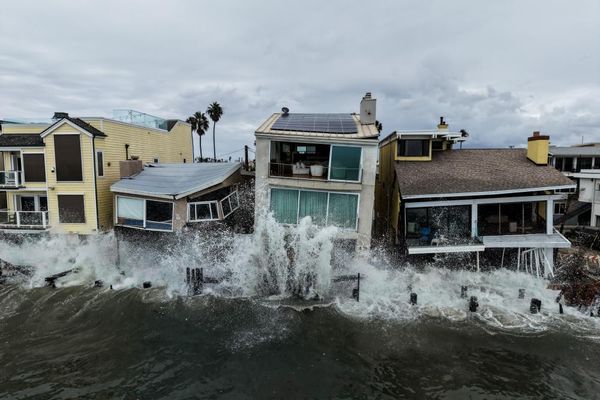
Researchers combined satellite wildfire data with maps of more than 9,700 protected areas across the tropics. They tracked forest losses over the 24-year period to examine the scale of the destruction and whether protected status reduced fire risk.

Wildfire losses surged after 2016

The researchers found that wildfire-driven destruction of protected tropical forests was not only substantial but also accelerating.

The annual area burned inside protected areas has been roughly nine times higher since 2016 than during the earlier years of the study. The increase was particularly severe in 2024, which accounted for nearly one-third of all protected forest losses recorded over the 24-year period, as per a Phys.org report.

The tropical Americas experienced the vast majority of the destruction, accounting for around 89% of global losses.

Brazil alone was responsible for almost two-thirds of the worldwide losses. Bolivia and Indonesia also recorded substantial amounts of protected forest loss.

READ ALSO: In 1901, Wuppertal opened a railway suspended 26 to 40 feet above the city. 125 years later, the 8.3-mile Schwebebahn remains the backbone of local transport, carrying more than 80,000 passengers every day

Researchers tested whether protection reduced fire risk

The study also examined whether protected status actually made tropical forests less likely to burn.

Researchers compared forest plots inside protected areas with very similar unprotected plots nearby. The plots were matched using factors known to influence wildfire risk, including temperature, rainfall, population levels and the amount of surrounding forest.

This allowed the researchers to examine the effect of protected status while accounting for other conditions that could influence whether forests burned.

Protected forests were less likely to burn than comparable unprotected forests in around half of the plots studied in the Americas. In Africa, the difference was stronger, with protection reducing the likelihood of fire in around seven out of 10 plots.

But the researchers also found an important limitation.

Protected areas are not immune to rising wildfire activity

Although protected forests were often less likely to burn than similar unprotected forests, wildfire activity was increasing over time at almost the same rate in both types of areas.

This means protected status can lower the likelihood of fire, but it does not prevent protected forests from being affected when wildfire activity rises across a region.

Christopher Bousfield, a research fellow at the University of Sheffield, said that, "Protected areas help reduce wildfire risk, but they offer no guarantee of safety as climate change intensifies. Because most tropical fires are human-caused, safeguarding these forests requires active collaboration with local communities and landowners to prevent both deliberate land-clearing fires and accidental escapes into protected regions," as quoted by Phys.org.

READ ALSO: In 1876, Rev. T. De Witt Talmage warned Americans that summer novels were “literary poison.” 150 years later, BookTok’s nearly 2 billion users have turned summer reading into a major cultural phenomenon

Fire prevention becomes part of conservation

The researchers say protected areas remain one of the most important tools for protecting tropical forests, wildlife and stored carbon.

However, the findings suggest wildfire prevention needs to become a more direct part of conservation planning.

Park planners must increasingly account for fire risk as climate change and extreme weather events such as El Niño contribute to more frequent and intense fires.

Oscar Morton, a research fellow at the University of Sheffield, said, "Protected areas have undoubtedly shielded tropical forests from fire over the past two decades. But they aren't immune to the broader climate crisis. To keep saving these ecosystems, we must tackle the root causes of increasing forest flammability—starting with climate change—and ensure fire risk is a core part of how we plan future reserves," as quoted by Phys.org.

The true scale of damage could be larger

The researchers used high-resolution satellite data capable of detecting forest loss at a resolution of 30 metres.

This allowed them to distinguish fires that destroyed stands of forest from smaller, lower-intensity fires that can damage or degrade forests without necessarily destroying them completely.

Because the study focused on stand-destroying fires, the researchers said their estimate is likely to be conservative. The total amount of fire-related damage in protected tropical forests could therefore be greater than the losses recorded in the study.

The findings show that protected status can make tropical forests less likely to burn, but rising wildfire activity is increasingly affecting these areas as well.

For conservation planners, the study points to a growing need to treat fire prevention as part of protecting tropical forests, rather than relying on protected status alone.

READ ALSO: In 1914, USDA researchers imported Australian melaleuca seeds into the United States. 100 years later, the fast-growing tree had conquered 500,000 acres of South Florida after being planted to help dry the Everglades

Sign up to read this article
Read news from 100's of titles, curated specifically for you.
Already a member? Sign in here
Related Stories
Top stories on inkl right now
One subscription that gives you access to news from hundreds of sites
Already a member? Sign in here
Our Picks
Fourteen days free
Download the app
One app. One membership.
100+ trusted global sources.