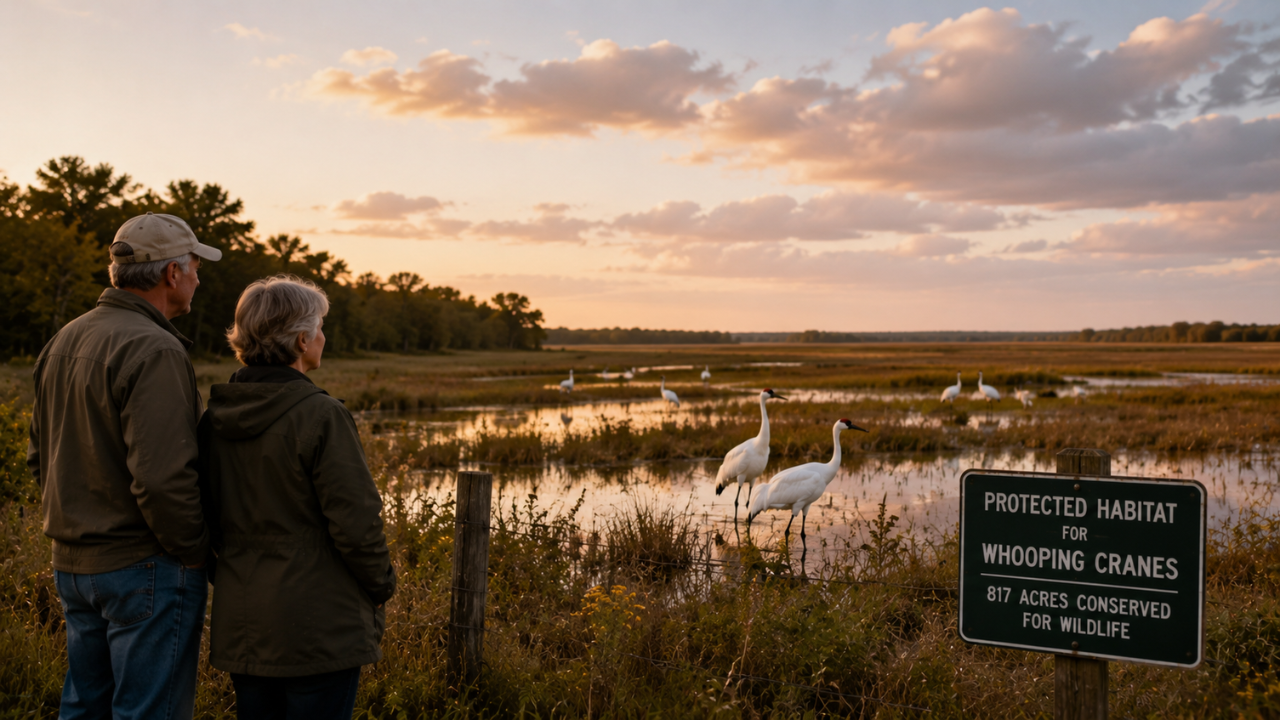
In 1999, Al and Diane Johnson thought they had finally found the place where they could build a home and settle down. They had bought 828 acres on Texas’ Lamar Peninsula, a broad stretch of marsh, grassland and live oak woodland near Rockport. Then they noticed two very large birds walking across their newly acquired land. They were whooping cranes, one of North America’s most endangered birds, and at the time only around 180 were believed to remain in the wild. The discovery left the couple unsure what it might mean for their plans, but it also changed the way they looked at the property. Rather than treating the cranes as an obstacle, they began asking how the land could be kept suitable for them. With help from conservationists, the Johnsons eventually protected 817 acres, while keeping just 10 acres for their home and other buildings. More than two decades later, the property remains a winter refuge for the cranes. The Johnsons’ decision transformed their private property into an unexpected conservation success story. By preserving wetlands, coastal prairie and woodland instead of developing most of the acreage, they helped maintain habitat for migrating cranes and demonstrated how individual landowners can play a meaningful role in protecting endangered wildlife. Their choice also showed how private conservation efforts can complement larger programmes aimed at protecting threatened species and the habitats they depend on.
Get breaking news anytime, anywhere. Download the TOI app now!