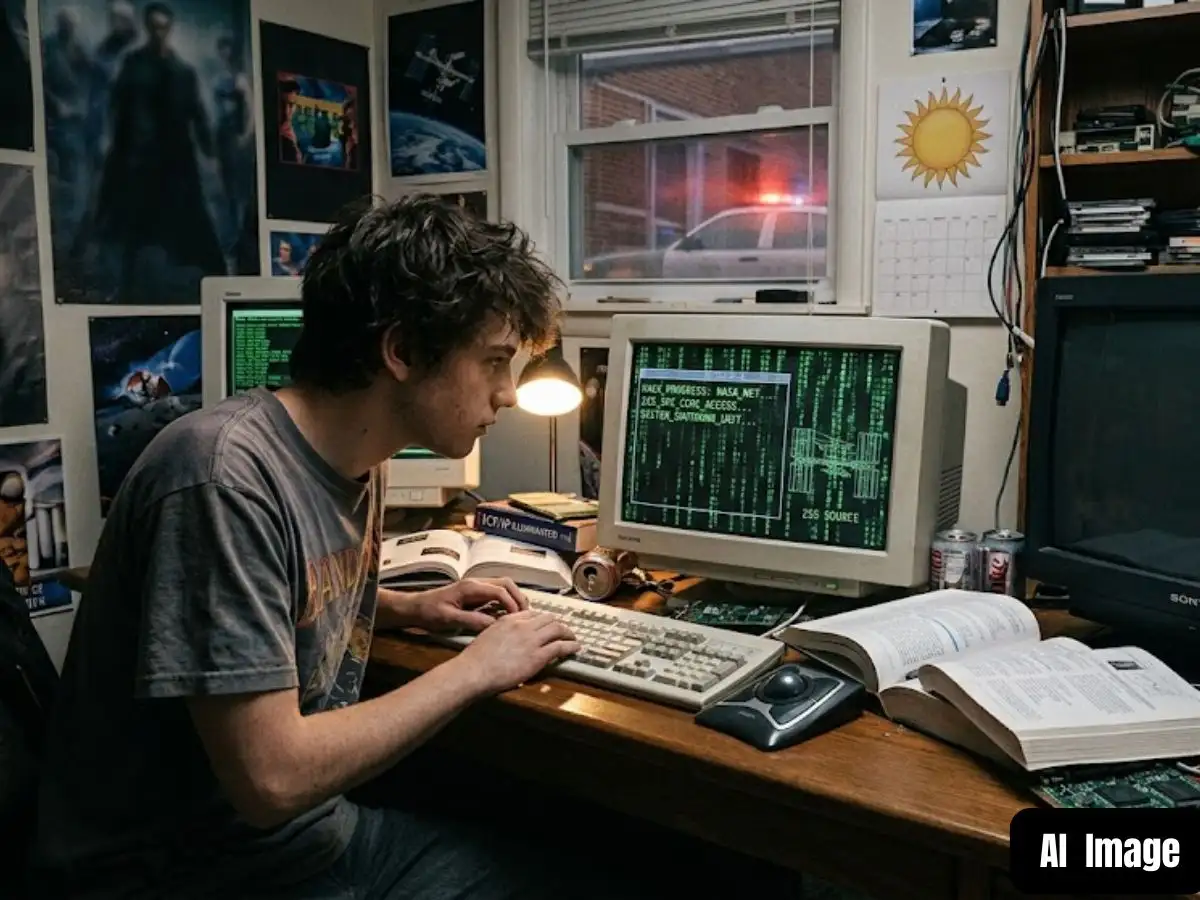
In the summer of 1999, a teenager in Florida managed to break into computers at NASA's Marshall Space Flight Center. He was only 15. Using the online name “c0mrade,” Jonathan James accessed 13 NASA computers over two days and downloaded proprietary software that NASA valued at about $1.7 million. The software supported the International Space Station's physical environment, including systems involved in controlling temperature and humidity.

The incident was serious enough for NASA to take the affected computer systems offline for 21 days while investigators examined the breach. The shutdown and related work cost the agency about $41,000 in contractor labour and equipment replacement, according to the US Department of Justice.
How a 15-year-old Hacked NASA
James was not a NASA employee or a security researcher working with the agency. He was a teenager who had become deeply interested in computers and hacking. In June 1999, he targeted computers at NASA's Marshall Space Flight Center in Huntsville, Alabama. Federal investigators later determined that he had gained unauthorised access to 13 systems on June 29 and 30.
What he found was far more valuable than an ordinary collection of files.
Among the material he downloaded was proprietary NASA software connected to the International Space Station's environmental systems. The Justice Department specifically said the software supported the station's physical environment, including temperature and humidity inside the living area.
That detail later gave the case an almost unbelievable reputation. Some accounts described James as having stolen the ISS's “source code.” But that description needs some qualification.
The official Justice Department account says he downloaded proprietary software supporting the ISS's physical environment. It does not say that he took control of the space station, accessed every piece of ISS software or remotely operated the station.
Why NASA shut down its computers
The biggest consequence was not that the teenager suddenly gained control of a spacecraft orbiting Earth. It was the response on the ground.
After discovering the intrusion and data theft, NASA shut down the affected computer systems for 21 days in July 1999. The agency used the shutdown to investigate the extent of the compromise and replace equipment. The Justice Department put the resulting cost at approximately $41,000.
For an organisation responsible for some of the world's most sophisticated technology, having to take systems offline because of a teenage hacker was a major embarrassment. And the NASA incident was only part of James's hacking spree.
NASA was not his only target
Later in 1999, James also broke into systems operated by the Defense Threat Reduction Agency, a US government organisation dealing with threats involving weapons. According to the Justice Department, he installed a backdoor that allowed him to return to the system and intercepted employee emails, usernames and passwords. Investigators said he obtained information from thousands of email transmissions.
The combination was striking: a 15-year-old had managed to penetrate networks belonging to NASA and the US Department of Defense.
At the time, however, internet security was still a very different world. Many government systems did not have the layered protections and monitoring that are expected today.
The case eventually caught up with him
James was arrested after investigators traced the attacks back to him. He later pleaded guilty to juvenile delinquency charges. In September 2000, when he was 16, he was sentenced to six months in a Florida detention facility. He was also required to write letters of apology to NASA and the Department of Defense.
The case became an early warning about a problem that would grow dramatically in the years that followed: highly capable young hackers could sometimes reach systems belonging to organisations that appeared almost impossible to penetrate.
The $1.7 million figure needs context
One of the most repeated details from the story is that James “stole $1.7 million worth of software.” That figure comes from the value NASA assigned to the proprietary software he downloaded. It does not mean that he stole $1.7 million in cash or physical property.
The more important point was what the software represented. It was connected to systems supporting the physical environment of the International Space Station, a project involving multiple countries and technology critical to maintaining living conditions in orbit. That is why the breach attracted so much attention.
A case that changed the way people viewed cyberattacks
The story of Jonathan James has survived for more than two decades because it sounds almost like a movie plot: a 15-year-old, a home computer and NASA systems on the other side of the internet. But the lasting lesson was less dramatic and more important.
The incident showed that an organisation does not need to lose control of a spacecraft for a cyberattack to become costly. Access to ground systems, proprietary software and credentials can itself create a major security crisis. NASA ultimately spent weeks dealing with the intrusion. And the hacker was still just 15.