Get all your news in one place.
100's of premium titles.
One app.
Start reading
The Economic Times
The Economic Times
Shreya Biswas

In 1997, Thomas Jefferson University tested a digital X-ray system that could replace film. 29 years later, digital radiography is standard, with images available in seconds instead of waiting for film processing

In 1997, Thomas Jefferson University Hospital in Philadelphia was studying a new X-ray technology that could eventually replace conventional film-based radiography.

The system, called DirectRay, was developed by Sterling Diagnostic Imaging of Newark, Delaware, and was being reviewed by the U.S. Food and Drug Administration. Gary S. Shaber, M.D., a research professor of radiology at Jefferson Medical College and director of the hospital's Division of General Diagnostic Radiology, had spent more than a year studying the technology, as per a report.

At the time, Shaber believed digital radiography had the potential to change how hospitals produced, stored and shared X-ray images.

A new approach to X-ray imaging

In 1997, about 70% of diagnostic examinations were performed using conventional film-based radiography, as per a ScienceDaily report. Film-based systems used fluorescent materials to absorb X-ray energy and convert it into light. The light was then converted into electronic signals. Shaber explained that the emitted light could scatter during this process, potentially reducing image sharpness.

DirectRay used a different approach. The technology captured X-ray energy and converted it into electronic signals that formed a digital image on a video screen. The images could be duplicated and transmitted electronically without losing quality.

READ ALSO: In Poland, engineers used a 3,500-ton concrete cradle to launch a giant boring machine beneath Łódź; the 2.9-mile tunnel will carry high-speed trains under the city without tearing up its streets

Digital images could be enhanced

Digital radiography also offered software that could allow radiologists to focus on or enhance a specific area of an X-ray. The technology was also being studied at the Cleveland Clinic Foundation in Cleveland, Ohio.

Shaber highlighted that the images produced by digital radiography were equivalent to those produced by conventional film-based radiography, as per the ScienceDaily report.

Digital storage could reduce costs

Film-based X-rays required processing, storage and transportation. With digital radiography, X-rays could be stored on computers for quick access by physicians and transmitted electronically.

Shaber said this could reduce the costs associated with processing, storing and transporting images while allowing radiologists to process and review more X-rays, as per the ScienceDaily report.

READ ALSO: Canada turned discarded aluminum into submarine fuel by reacting it with water; up to 12 Type 212CD boats can use hydrogen fuel cells to remain submerged for 41 days

Hospitals could handle more patients

The technology could also help radiology departments see more patients and reduce repeat examinations. Shaber believed it could eventually lead to hospitals having completely filmless radiology departments.

He said, “This should improve output and increase productivity, and this is one of the issues that radiologists will have to face in the future, as well as efficiency. And the only way they’re going to become more efficient, I feel, is through digital radiography," as quoted by ScienceDaily.

Patients could spend less time waiting

The potential benefits also extended to patients. Shaber said digital radiography could reduce the time patients spent waiting for X-rays to be developed and read. Results could also be communicated quickly to a patient's primary care physician, potentially while the patient was still in the doctor's office.

He also said digital technology offered a significantly lower radiation dose than conventional imaging.

READ ALSO: In 1997, NASA sent a lightning sensor into orbit aboard TRMM to study storms. 29 years later, the mission’s data still helps scientists understand lightning, rainfall and climate

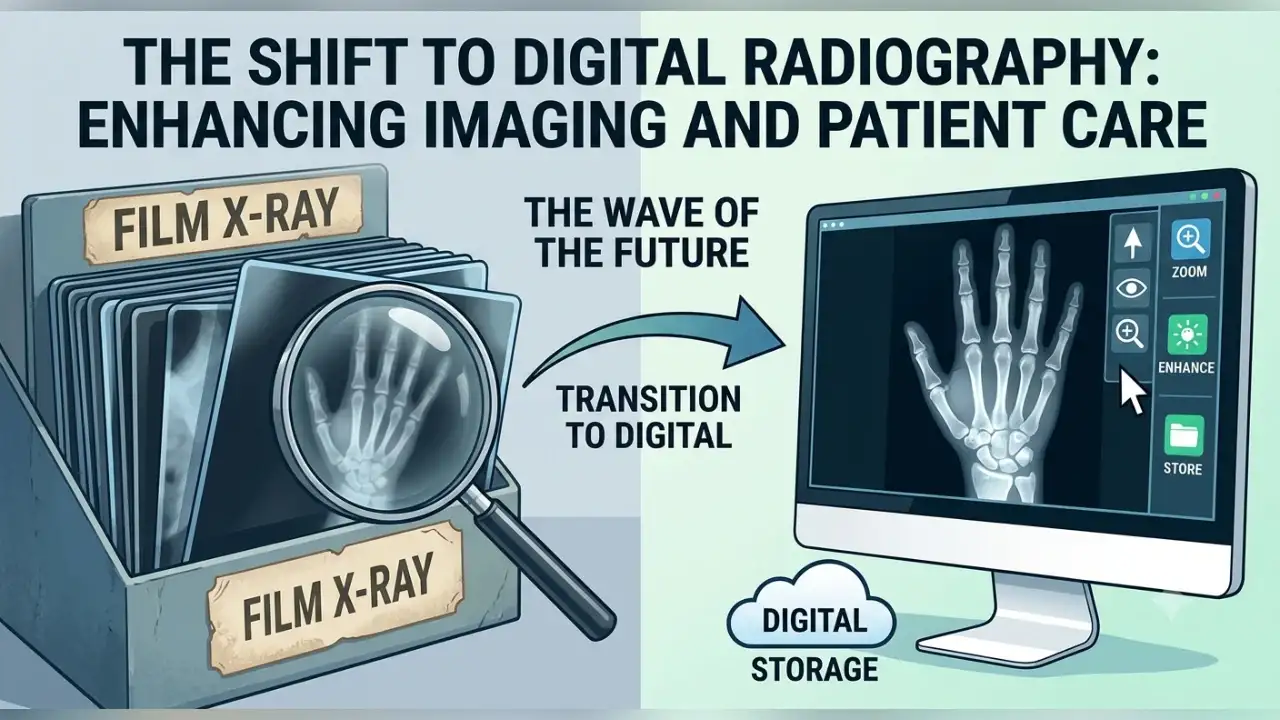
Shaber called it the wave of the future

DirectRay was scheduled to be formally unveiled on November 30, 1997, at the 83rd Scientific Assembly and Annual Meeting of the Radiological Society of North America in Chicago.

After studying DirectRay, he said digital radiography had "tremendous potential" and called it "the wave of the future," as quoted by ScienceDaily.

He believed the technology could help radiology departments improve output and productivity while allowing patients to spend less time waiting for X-rays.

Sign up to read this article
Read news from 100's of titles, curated specifically for you.
Already a member? Sign in here
Related Stories
Top stories on inkl right now
One subscription that gives you access to news from hundreds of sites
Already a member? Sign in here
Our Picks
Fourteen days free
Download the app
One app. One membership.
100+ trusted global sources.