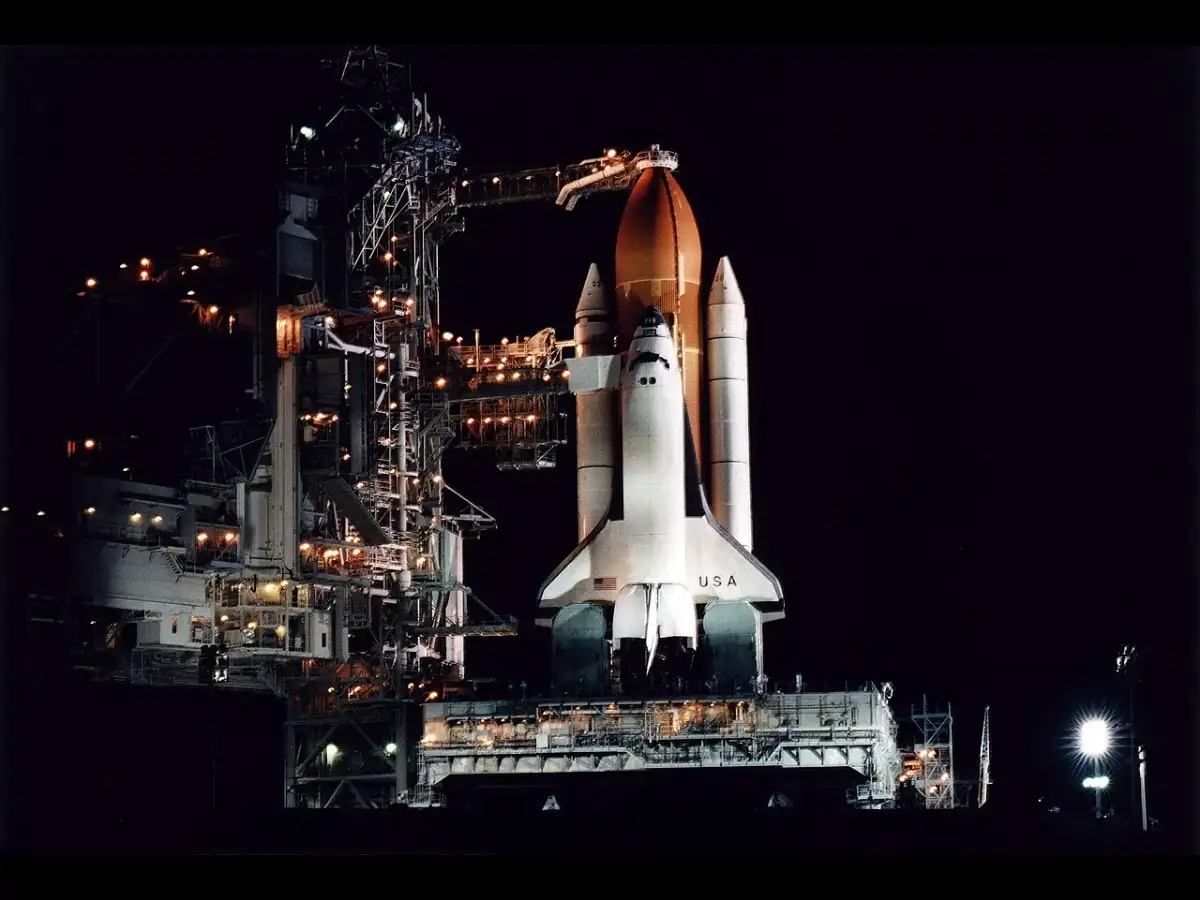
Space missions do not always go as planned, and one flight from the 1990s is a good example. Space Shuttle Columbia launched on 4 April 1997 on STS-83, carrying seven crew members, five astronauts and two payload specialists, as part of NASA's first Microgravity Science Laboratory mission. The laboratory housed a range of experiments designed to study materials, combustion and other processes in microgravity.
Among them was an experiment called Thermophysical Properties of Undercooled Metallic Melts. It examined how far molten metal could be cooled below its normal freezing point before solidification began. The experiment used TEMPUS, a German electromagnetic levitation furnace that could hold metal samples without a physical container. This allowed researchers to study molten materials without the contact with a container that can influence when solidification begins. The results could help scientists better understand how the structure of metals develops as they solidify.