Get all your news in one place.
100's of premium titles.
One app.
Start reading
The Times of India
The Times of India
World
TOI World Desk

In 1997, conservationists launched a plan to kill every feral goat on the Galápagos Islands; by 2006, they had eliminated more than 140,000 of them, and vegetation and birds returned

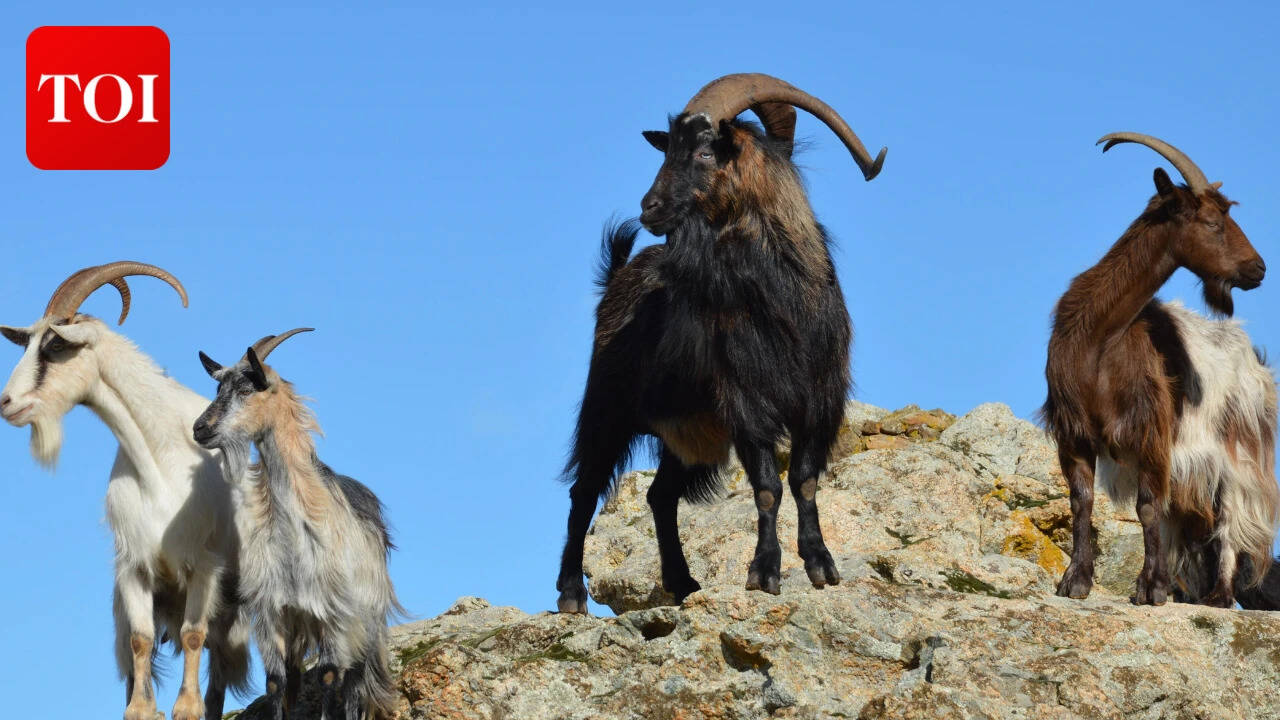
When Charles Darwin sailed through the Galápagos Islands in 1835, feral goats were already there. Almost two centuries later, conservationists decided to fix that, and what followed became one of the biggest island restoration projects ever attempted on Earth.

Get breaking news anytime, anywhere. Download the TOI app now!

According to a study published in PLoS ONE , more than 140,000 feral goats were removed from over 500,000 hectares in the Galápagos archipelago for US$10.5 million. The effort, called Project Isabela, started in 1997 and has transformed the way scientists think about large-scale wildlife conservation.

Why goats were destroying an entire ecosystem

Feral goats are more than just a nuisance. They are ecological wrecking balls on islands. They remove native vegetation, degrade soils, and destroy the plant communities on which endemic wildlife rely for survival. For generations, the damage had been accumulating in the Galápagos, home to species that live nowhere else on Earth.

According to Campbell and Donlan's research, ‘ Feral Goats Eradication on Islands ,’ it is one of the most effective conservation interventions available. The first goat eradication in the Galápagos occurred way back in 1971 on the tiny, 12-hectare Plaza Sur Island. Since then, goats have been eradicated from nine islands of the archipelago.

The sheer scale of Project Isabela

The north of Isabela Island was the pride and joy of the whole operation, the biggest island in the Galápagos at 458,812 hectares. To put that in perspective, it is roughly the size of Rhode Island. According to the PLoS ONE study, a 1997 international workshop involving 15 experts concluded that it was feasible to eradicate goats from northern Isabela, but would cost an estimated US$8.5 million over four years.

The aerial hunting by helicopter was responsible for 89% of the 62,818 goats removed from Isabela, doing the heavy lifting. Ground hunting teams were sent into thick vegetation where helicopters couldn’t go, but they accounted for a mere 4% of the total, just 2,637 goats across the whole campaign. The remaining animals were located using a clever technique: Judas goats.

The genius of the Judas goat strategy

Conservationists would trap a goat, fit him with a radio telemetry collar, sterilize him, and release him back into the wild. They are herd animals and would naturally join up with other feral goats. Researchers could then track the collared animal by helicopter and shoot any goats it led them to.

One variant, the “Mata Hari” goat, a sterilized female put into a permanent state of estrus, was particularly good at attracting males. The PLoS ONE study reports that during the period March 2005-March 2006, more than 700 Judas goats were used on Isabela Island. During 465+ days of active monitoring, they were checked 5,470 times, with 3,439 feral goats located by hunters. The last wild goat on northern Isabela was removed in December 2005. 266 Judas goats were left on the island for long-term monitoring.

Somebody kept bringing the goats back

The PLoS ONE study found at least 12 cases of goats being intentionally introduced or reintroduced to the Galápagos since 1990, or roughly one every 20 months. Some were from fishermen who used goats as a source of food on boats passing through the Marine Reserve. Others were calculated acts of political sabotage: locals threatening to reintroduce goats to pristine islands as a bargaining chip in fishing permit disputes with the Galápagos National Park. In 2008, someone even took a goat to remote Wolf Island, over 100km from the inhabited islands.

Three years after Santiago Island was declared free of goats, six were reintroduced in 2009. It cost $32,393 to remove them.

The answer was a strategy of island-wide eradication: eliminate goats from each island, so there was no source population nearby to draw from. Since 2006, an additional $1.0 million has been spent to remove the remaining goats and donkeys from the islands of Floreana, San Cristobal, and Santa Cruz.

What came back once the goats were gone

The ecological turnaround has been stunning. The PLoS ONE study found that the endangered Galápagos rail, a bird not seen on Floreana Island since the late 1980s, made a comeback after vegetation recovered. Eight endemic plant species listed by the International Union for the Conservation of Nature have increased both in population and range. Included was Scalesia atractyloides, an endemic tree once feared extinct and recently recovered on Santiago Island, leading to a proposal to downgrade its endangered status.

But the eradication didn't make things simple. Without the pressures of herbivory, the invasive blackberry rapidly spread across the highlands of Santiago with the help of native birds. Systematic control is now underway.

What the Galápagos proved to the rest of the world

The scale and cost-effectiveness of this effort likely altered conservation thinking. The study found the aerial-based Isabela campaign cost just $9 per hectare, compared with $110 per hectare for the largely ground-based Santiago campaign. The Galápagos demonstrated that large-scale island restoration is not only possible but economically feasible at an estimated archipelago-wide cost of less than $20 per hectare.

But the larger takeaway here is that island size is no longer the primary barrier to eradication. The challenge now is financing, political will, bureaucratic process, and community support. In the Galápagos, those challenges proved harder to solve than the science ever was.

Sign up to read this article
Read news from 100's of titles, curated specifically for you.
Already a member? Sign in here
Related Stories
Top stories on inkl right now
One subscription that gives you access to news from hundreds of sites
Already a member? Sign in here
Our Picks
Fourteen days free
Download the app
One app. One membership.
100+ trusted global sources.