Get all your news in one place.
100's of premium titles.
One app.
Start reading
The Economic Times
The Economic Times
Team Global

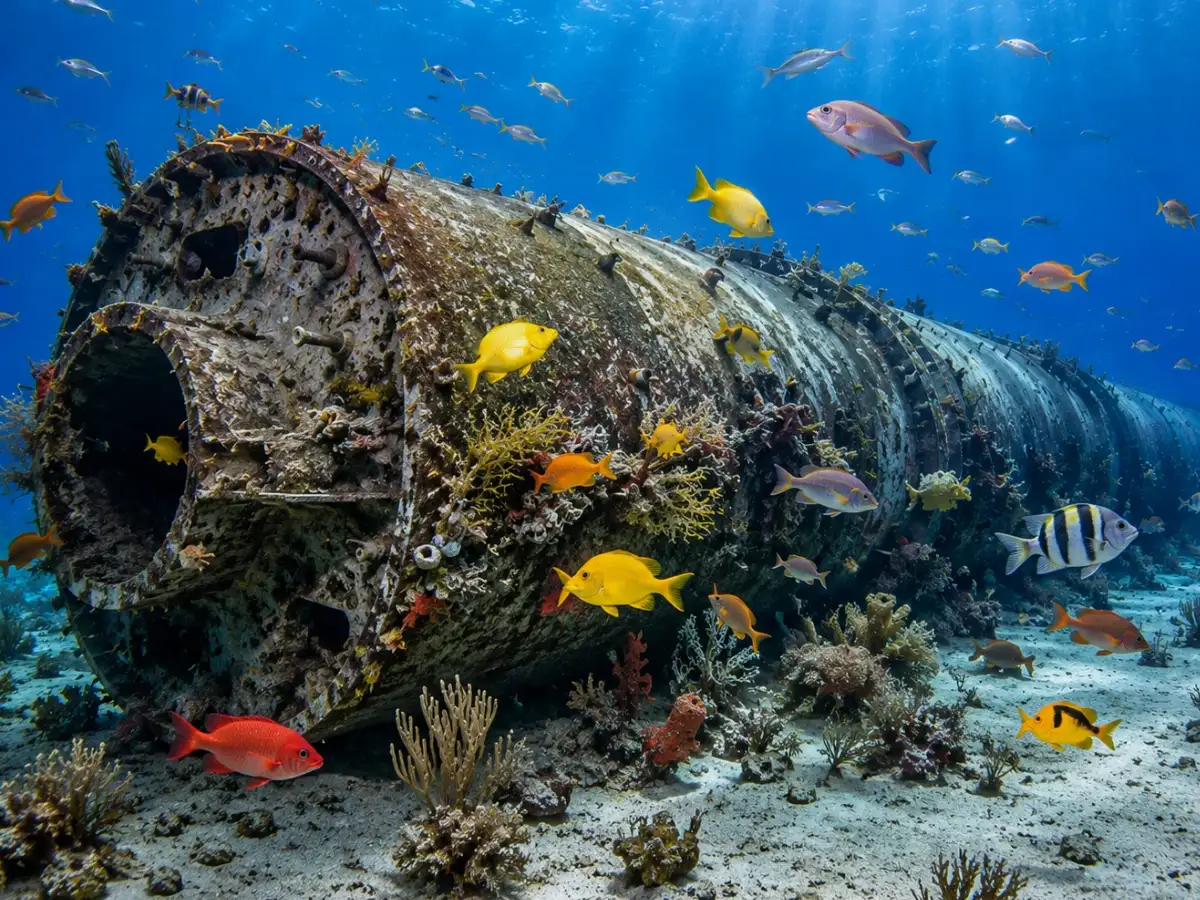
In 1996, NASA sank a 132-foot shuttle booster training device off Port Canaveral to become an artificial reef; marine life was expected to establish itself there within four months

In 1996, a retired piece of NASA's Space Shuttle training equipment found an unusual second life. Instead of being scrapped or left on land, the 132-foot structure was sunk on purpose in the Atlantic Ocean to become an artificial reef. The object was an obsolete Solid Rocket Booster recovery training device called the Ocean Training Fixture, or OTF, according to a news release from NASA's Kennedy Space Center, issued six days after the sinking, on April 17, 1996.

A space training device heads underwater

The OTF was used to train divers for recovering the Space Shuttle's two Solid Rocket Boosters from the Atlantic after launches. By 1996, NASA said the OTF no longer served any useful purpose for land-based training. On April 11, 1996, NASA's recovery ship Liberty Star towed the 132-foot-long OTF to an area 22 miles southeast of Port Canaveral, Florida. It was then disposed of using six charges in 122 feet of water, the agency's release detailed.

The OTF was repurposed as part of an artificial reef project. The agency explained that the OTF was meant to be a key component of an artificial reef, where there would be conditions favorable to marine organisms. In addition, the Canaveral Port Authority had been working on such a reef construction project since 1994 by sinking four railway cars into the same spot. NASA also said it planned to add more retired space hardware, including parts from the Apollo era.

It was designed to become a new underwater habitat

Artificial reefs can provide structure in areas where the surrounding seafloor offers little three-dimensional habitat. Research off southeastern Florida shows that fish communities can begin using such structures quickly. In the peer-reviewed study, "Effects of Reef Size on Colonization and Assemblage Structure of Fishes at Artificial Reefs Off Southeastern Florida, U.S.A.," James A. Bohnsack, Douglas E. Harper, David B. McClellan and Mark Hulsbeck studied 16 artificial reefs made from concrete modules. The researchers reported that colonization was rapid and that artificial reefs supported diverse and abundant fish communities. They also found that the size of the reef affected the number of species, individual fish, and biomass associated with the reefs. The study was not of the artificial reef built from the OTF, later named the Thomas William Hart Reef, so the results cannot be used to say exactly how the NASA structure formed, but it does offer useful scientific context for why adding a large structure onto the seafloor can create habitat for marine life.

Sign up to read this article
Read news from 100's of titles, curated specifically for you.
Already a member? Sign in here
Related Stories
Top stories on inkl right now
One subscription that gives you access to news from hundreds of sites
Already a member? Sign in here
Our Picks
Fourteen days free
Download the app
One app. One membership.
100+ trusted global sources.