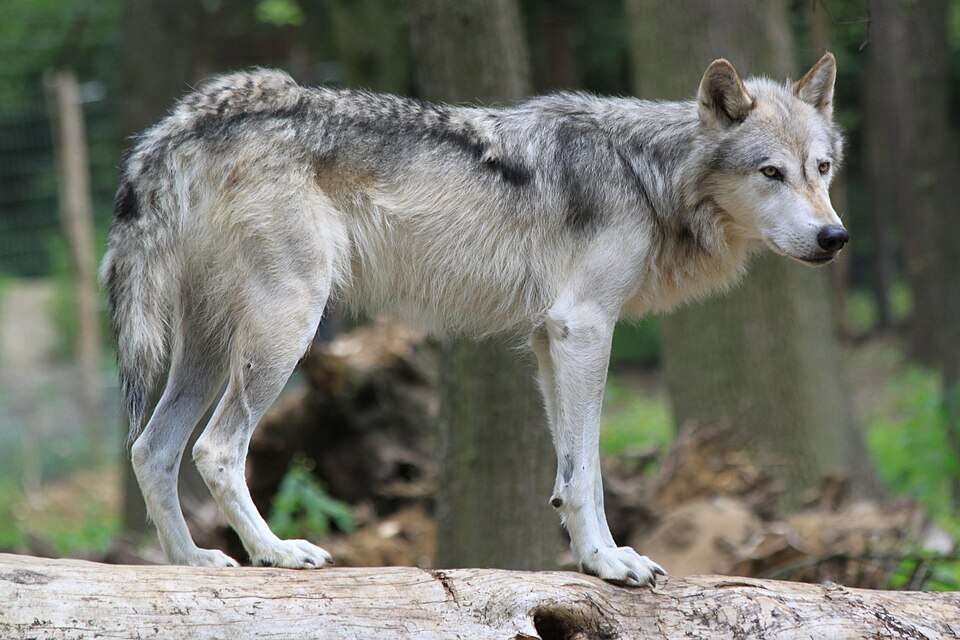
For almost 70 years, one of the most famous American national parks lacked its primary predator. By 1926, grey wolves had been eliminated from Yellowstone National Park in accordance with government programmes aimed at controlling predators. As a result, the park’s ecosystem lost its balance, and the number of elk grew; young willow and aspen forests stopped regenerating. Species that required healthy riverbank vegetation began to vanish.
Get breaking news anytime, anywhere. Download the TOI app now!

In January 1995, the United States began a major wildlife-restoration effort. 14 grey wolves, caught in Alberta, Canada, were brought to Yellowstone, and in the following year, 17 more wolves, taken from British Columbia, joined them. Thus, 31 wolves marked the start of an ecological experiment that still affects conservation science today.
More than three decades have passed since then, and the project is widely cited in restoration ecology. Scientists continue to debate some of the ecological changes, but research suggests that wolves affected Yellowstone’s food web, including elk, willows and beavers.
Bringing back a missing predator
Grey wolves (Canis lupus) once ranged widely across North America, but hunting, poisoning and trapping extirpated them from Yellowstone by 1926. Following the extinction of the park’s top predators, the number of elk rose significantly. The elk formed large herds that stayed for a long time, grazing around riverbanks while destroying the young shoots of willow, cottonwood, and aspen trees.
Over time, the effects became clear. The destruction of the vegetation around the riverbanks affected other animals like birds, insects, and mammals. Beaver numbers declined because willows were their main food source.
Recognising the ecological imbalance, the U.S. Fish and Wildlife Service, the National Park Service and Canadian wildlife authorities launched a carefully planned wolf reintroduction programme. In 1995, 14 wolves from Alberta were transported to Yellowstone and temporarily housed in acclimation pens before their release. Seventeen additional wolves from British Columbia followed in 1996, establishing the first breeding packs in the park in nearly 70 years.
The project initially generated controversy, particularly among ranchers concerned about livestock predation. Nevertheless, conservationists hoped the wolves would restore natural predator-prey relationships that had been absent for generations. According to the U.S. National Park Service, the wolf population established itself successfully, and breeding packs soon spread throughout the Greater Yellowstone Ecosystem.
Wolves triggered changes across the landscape
Wolves did not just reduce elk numbers; they also changed how elk interacted with their environment. Studies have shown that wolves caused elk to spend less time grazing in open areas and along rivers, where they were more vulnerable to attack. As a result, grazing pressure on young willows, cottonwoods and aspens eased. These trees were able to regenerate. The behavioural shift in elk, often described by ecologists as a "landscape of fear", meant that prey animals no longer used the most productive valleys and riparian corridors as intensively as they had when wolves were absent. Instead of feeding for long periods in these exposed areas, elk moved more frequently and spent less time browsing young plants. This change reduced sustained pressure on recovering vegetation, allowing saplings to survive long enough to mature and helping restore the natural structure and diversity of plant communities across parts of the park.
The recovery of streamside vegetation also helped stabilise riverbanks and improved habitat quality along waterways. Taller shrubs and trees provided shade that kept streams cooler, benefiting fish and aquatic invertebrates, while healthier riparian zones supported a wider range of insects, birds and small mammals. These gradual changes strengthened ecosystem resilience and contributed to the restoration of ecological functions that had been diminished for decades.
One animal that benefited from the regrowth was the North American beaver. As willows recovered, beavers had enough woody material to build dams and dens, creating habitat for fish, amphibians, waterfowl and other species. A landmark study published in Biological Conservation found that wolf reintroduction initiated a trophic cascade, a chain of ecological interactions extending beyond predator and prey. Researchers reported that reductions in browsing pressure contributed to the recovery of woody vegetation in several parts of Yellowstone, demonstrating how the return of a top predator can influence entire ecosystems.
Other species also benefited. Recovering vegetation improved nesting habitat for songbirds, while wolf kills provided food for scavengers such as ravens, bald eagles, magpies, coyotes and grizzly bears. Carcasses became important seasonal food sources, particularly during winter.
Scientists caution, however, that Yellowstone's recovery cannot be attributed solely to wolves. Factors including drought, climate variability, hunting outside the park and the growing bear population have also influenced elk numbers and vegetation recovery. Even so, most ecologists agree that wolves have played a significant role in restoring ecological processes that had largely disappeared.
A conservation success that changed wildlife management
Today, Yellowstone's wolves are among the most studied large carnivores in the world. Their reintroduction has become a landmark case in conservation biology, frequently cited in discussions about ecosystem restoration and rewilding.
Research published in Animal Ecology found that wolves altered elk movement and habitat use, reinforcing the idea that predators shape ecosystems not only by reducing prey numbers but also by influencing prey behaviour. These findings have helped reshape conservation strategies worldwide, encouraging managers to consider the ecological importance of apex predators rather than viewing them solely as threats.
Yellowstone's wolf reintroduction continues to be studied by ecologists, conservationists and wildlife managers as one of the world's most influential examples of ecosystem restoration. The return of grey wolves to Yellowstone National Park has become a benchmark for understanding how dominant predators shape biodiversity, regulate prey populations and support healthier forests, rivers and wetlands by maintaining the delicate balance of interconnected ecosystems and the complex relationships among living organisms.
The project has also altered people’s attitudes toward wolves. Once considered dangerous predators, wolves are now perceived as essential components of a healthy ecosystem. People from around the world visit Yellowstone to see wolf packs, creating economic opportunities for nearby communities through wildlife tourism. Although there are still ongoing discussions concerning wolf management outside the park, Yellowstone has become one of the most convincing examples of what happens when a missing predator is restored. The 31 wolves imported from Canada in the mid-1990s helped restore ecological interactions that had been missing for decades, allowing forests, wetlands and wildlife populations to recover. It suggests that restoring a missing ecosystem component can help preserve nature.