Get all your news in one place.
100's of premium titles.
One app.
Start reading
The Times of India
The Times of India
World
TOI World Desk

In 1994, a zoologist began giving Namibian farmers guard dogs; some farms reported livestock losses falling by 80-100%, reducing pressure to kill predators

In Namibia, cheetah conservation can start with a dog standing among a flock of goats. In 1994, a zoologist, Laurie Marker and the Cheetah Conservation Fund (CCF) began an experiment that placed livestock-guarding dogs with farmers who were losing animals to predators. The idea was straightforward: if farmers could protect their sheep and goats without killing cheetahs, leopards and other carnivores, both livestock and wildlife could share the same landscape. Three decades later, the programme has become one of Namibia’s best-known examples of non-lethal predator management.

Get breaking news anytime, anywhere. Download the TOI app now!

According to research published in Biological Conservation , most of Namibia’s cheetahs live on commercial livestock and game farms, where they frequently encounter farmers. The study found that a perceived threat to livestock or game was the main reason for most live captures and almost half of the cheetah deaths it examined, even though actual livestock predation by cheetahs appeared to be minimal. These findings show the conflict that can arise when predators and livestock share farmland and why non-lethal measures such as livestock-guarding dogs matter.

A Turkish breed finds a new role in Namibia

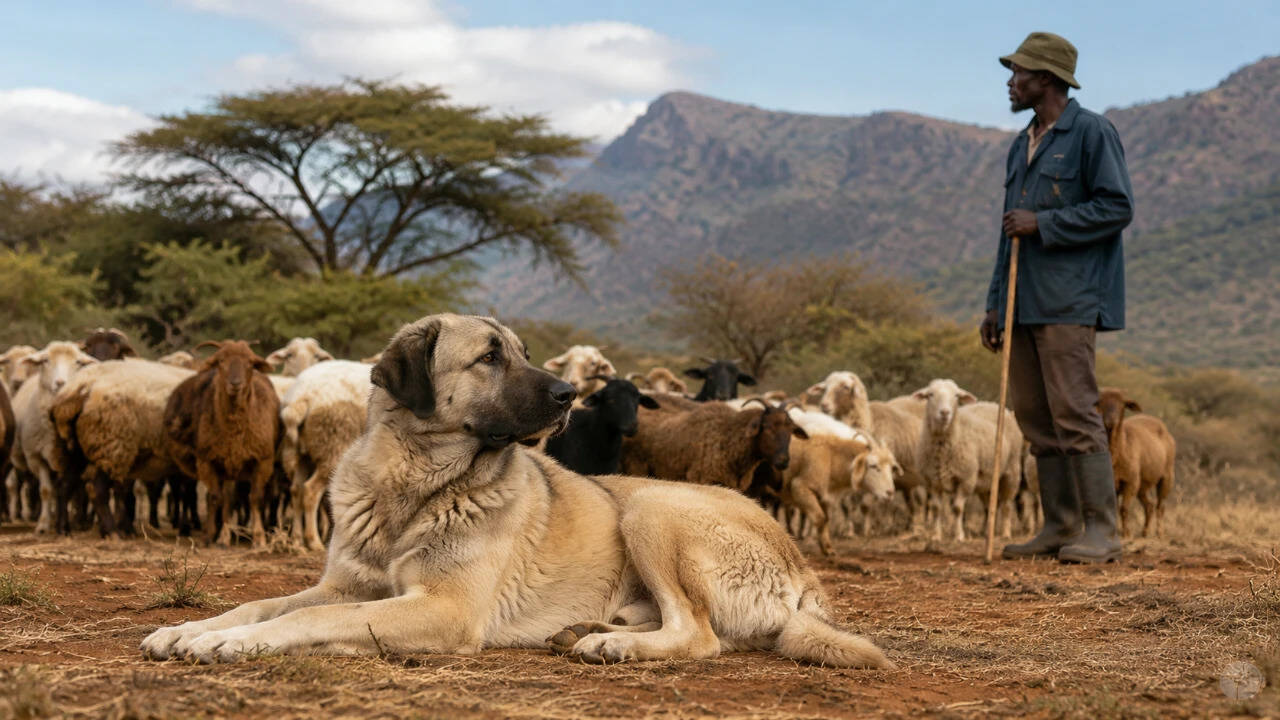
Marker began the livestock-guarding dog programme in 1994 using Anatolian Shepherds, a breed with a long history of protecting livestock in Turkey. The first dogs were raised with sheep and goats so they would bond with the animals they were meant to protect rather than treat them as prey. CCF later incorporated Kangal dogs into the programme.

The dogs were not trained to hunt predators. Their role was to stay with the herd and act as a deterrent. Their size, presence and loud bark could persuade approaching predators to stay away, reducing the likelihood of an encounter becoming an attack. This distinction was central to the programme: the goal was not to introduce another predator, but to create a protective presence that allowed wildlife to remain on farmland.

According to Rangeland Ecology & Management , an early assessment of 117 livestock-guarding dogs placed on Namibian farms between 1994 and 2001 found that 73% of responding farmers reported a large decline in livestock losses after acquiring a dog, while the same proportion reported an economic benefit. The study provided some of the programme's earliest evidence that, when properly trained and cared for, the dogs could be an effective method of protecting livestock.

From experiment to conservation tool

The programme expanded as more farmers adopted the approach. According to a 25-year assessment published in the Journal of Vertebrate Biology , the Cheetah Conservation Fund placed 634 livestock-guarding dogs on Namibian farms between 1994 and 2018. The study found that 91% of responding farmers reported little to no livestock losses after receiving a dog. It also recorded a reduction in predator killings by farmers following dog placement, suggesting that the animals could help reduce conflict between livestock owners and wildlife.

CCF has also reported even larger reductions on some farms, with farmers using its dogs reporting livestock-loss reductions of 80–100%. The exact outcome varies between farms and depends on factors including the individual dog, the livestock, husbandry practices and the predators present. The strongest evidence therefore supports the dogs as an effective tool rather than a universal guarantee against losses.

A different way to share the landscape

The programme’s value lies in preventing attacks before livestock are killed. The traditional response to a predator seen as a threat is often to trap or kill it, but the presence of a livestock-guarding dog gives farmers another option. This does not make every cheetah safe or guarantee that losses will disappear. Farmers still make decisions based on their circumstances, and predators can continue to cause livestock losses. However, long-term monitoring suggests that guarding dogs can reduce those losses enough to make living alongside wildlife more practical. Since the programme began in 1994, CCF has placed hundreds of dogs with farmers, and the approach has been adopted in other parts of Africa. Its central idea is simple: reducing conflict can give farmers a reason to tolerate predators rather than remove them.

An Anatolian Shepherd working among a herd of goats may seem unusual, but the dog is central to this approach. Instead of relocating predators, the strategy changes the conditions around livestock so that encounters are less likely to result in losses. By helping farmers protect their animals, livestock-guarding dogs have become one of the tools used to reduce human-wildlife conflict and support the continued presence of cheetahs on working farmland.

Sign up to read this article
Read news from 100's of titles, curated specifically for you.
Already a member? Sign in here
Related Stories
Top stories on inkl right now
One subscription that gives you access to news from hundreds of sites
Already a member? Sign in here
Our Picks
Fourteen days free
Download the app
One app. One membership.
100+ trusted global sources.