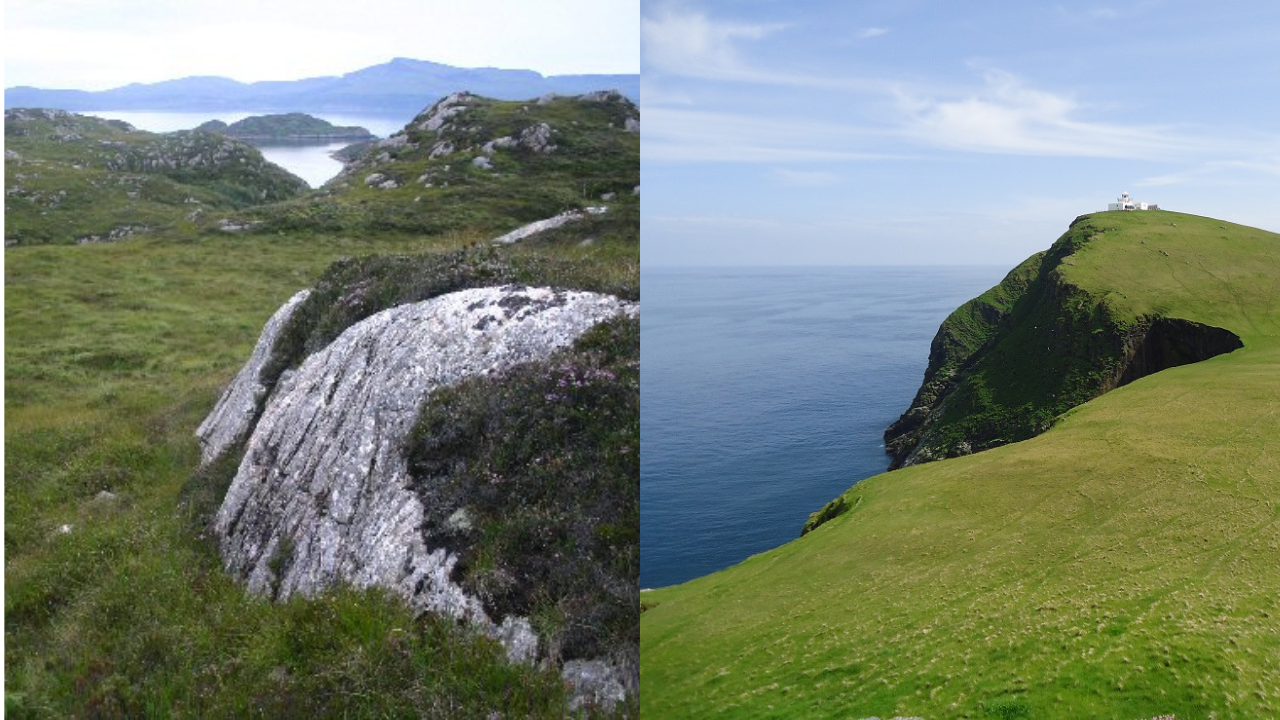
Danish couple Dorte and Arne Jensen bought the Isle of Rona in 1992, when they acquired a remote island in Scotland's Inner Hebrides with no roads, no shops, and very few permanent residents. The island lies between Skye and Raasay and covers about 2,400 acres. It had previously been owned by the Ministry of Defence, and the Jensens bought it for just under £250,000, according to the BBC's 2019 report on the island.
Get breaking news anytime, anywhere. Download the TOI app now!

Their ownership would last more than three decades, and during that time, Rona remained largely undeveloped compared with nearby Skye, which became one of Scotland's busiest tourist destinations. The island had holiday cottages and a lodge, but access depended on boats and the weather. There were no public roads crossing the island. Its terrain included scrub, bog, rocky ground and coastal inlets, while the surrounding waters supported marine wildlife.
The Jensens' approach to Rona depended heavily on people who could live there and manage the practical demands of an isolated island. That role eventually fell to Bill Cowie, who first arrived on Rona in April 2002. He had initially been sent there for a short period to carry out work. The arrangement became permanent. In his account of his years on Rona , Cowie wrote that he had spent three months on the island before the owners decided they needed someone based there full-time.
A three-month job became a 23-year stay
Cowie's early years on Rona were largely solitary. His own account says he lived there alone for the first five years. Lorraine Shill later joined him in 2007, and the pair became the island's only permanent residents. Their work extended well beyond looking after a single property. Cowie described managing livestock, holiday accommodation, machinery, boats and visitors. He was also responsible for deer management. Life on the island required a degree of self-sufficiency that would be unusual in most parts of Britain. Supplies had to be brought in by boat, and poor weather could disrupt travel. Cowie also dealt with infrastructure problems directly. In later accounts of his work, he described managing water systems, fences, accommodation and other day-to-day needs that could not simply be handed to a local contractor.
The island nevertheless received visitors. Holidaymakers stayed in its cottages, while yachts, kayakers and other boats arrived during the warmer months. Cowie wrote that the growth of nature tourism increased the number of people coming to Rona over the years. That brought another part to the custodians' work: managing visitors on privately owned land while maintaining the island's facilities. By 2025, Cowie had spent 23 years living and working on Rona, while Shill had spent 18 years there. Their departure marked the end of a long period in which the same two people had handled much of the island's daily management. Cowie announced that the island had been sold in July 2025 and said he and Shill would remain temporarily while preparing to move to Skye.
The island changed hands after 33 years
The sale ended the Jensens' ownership of Rona after more than three decades. Cowie wrote that the transfer had finally taken place on July 24, 2025, and that he and Shill would stay until October at the latest while passing on practical knowledge to the incoming team. His account described the transition in practical terms: water systems, infrastructure and the details of running an isolated island all had to be explained to the people taking over.
The island's official accommodation website now says bookings were paused for 2026 following Bill and Lorraine's retirement. It says the owners are working through staffing and support arrangements and intend to keep Rona operating in the spirit established during the custodians' years there, with a possible reopening for guests in 2027.That means the story has moved beyond the version reported by the BBC in 2019, when the Jensens still owned Rona and Cowie and Shill were living there. As of 2026, the Danish couple no longer owns the island, and its two long-term custodians have retired to Skye.
Rona enters a new phase
The change of ownership has also brought an end to Rona's unusual period of continuous stewardship by Cowie and Shill. Bill's own website now describes 2025 as the year they left after 23 years on the island, while a separate update says they have retired and no longer have responsibility for its day-to-day management.
Rona remains roadless and sparsely developed. Its future operation is still being worked out, with the island's accommodation business currently paused for 2026. The present owners say they hope to welcome guests again in 2027. For now, the practical knowledge accumulated by the two people who lived there for decades is being handed over as the island begins its first full chapter under new ownership since 1992.