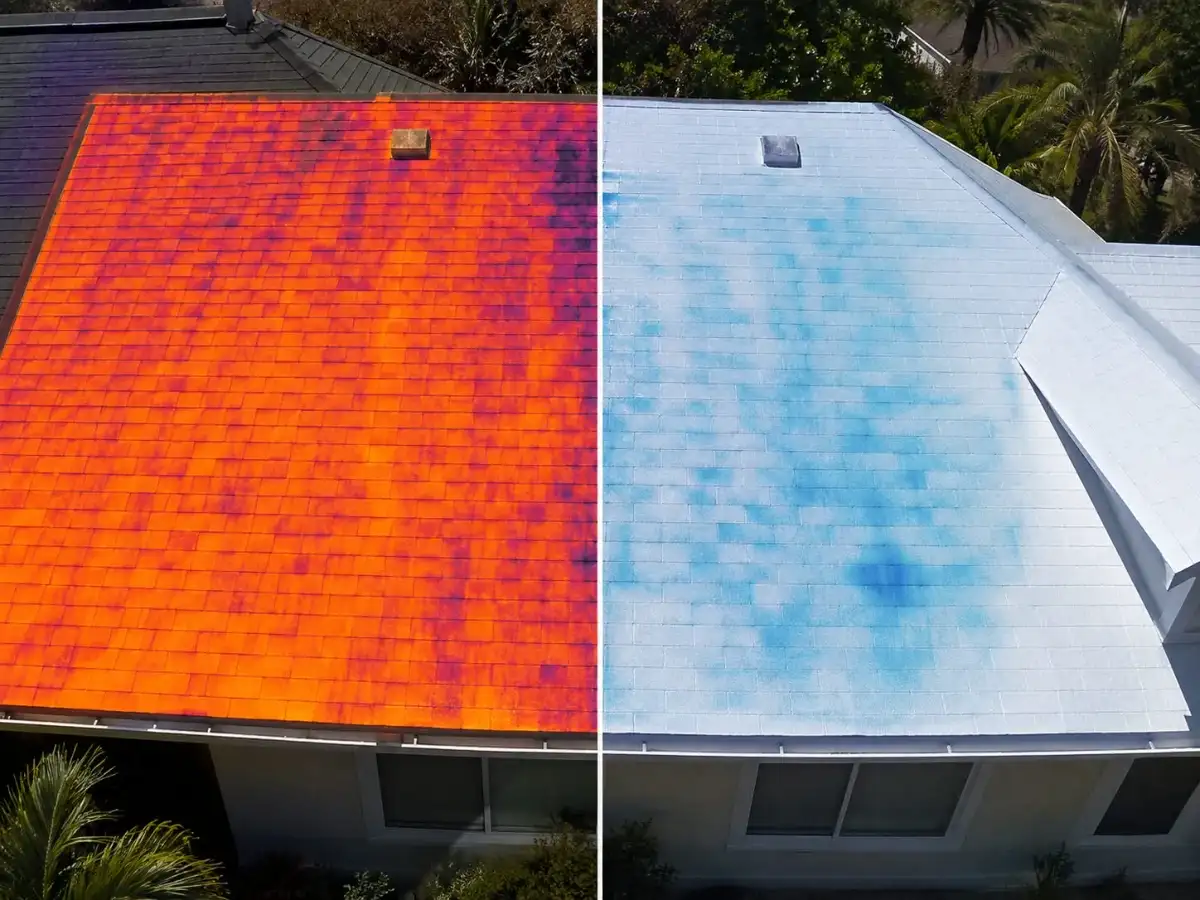
The temperature of shingles on top of an average suburban house can reach 160-170 degrees F on a hot July afternoon in Florida. It's not the air outside, not the attic underneath; the actual roof surface of the house becomes so hot that you'd think twice before touching it. In 1991, researchers coated the green-gray shingle roof of a home in Merritt Island, Florida, with a reflective material to observe what would happen. The surface temperature was lowered to approximately 110 degrees.
A 1995 Florida Solar Energy Center study titled “Measured Cooling Energy Savings from Reflective Roofing Systems in Florida: Field and Laboratory Research Results,” showed that the roof reflectivity of a single-story home on Merritt Island that was coated with a reflective material increased from 0.22 to 0.73, while the temperature of the shingles fell from approximately 160-170°F before treatment to about 110°F after the coating was applied. The report also found a 10.5% reduction in air-conditioning energy use at the Merritt Island test home. More than three decades later, the underlying finding remains relevant: roof reflectivity can affect how much heat a building absorbs and how much energy is needed for cooling.