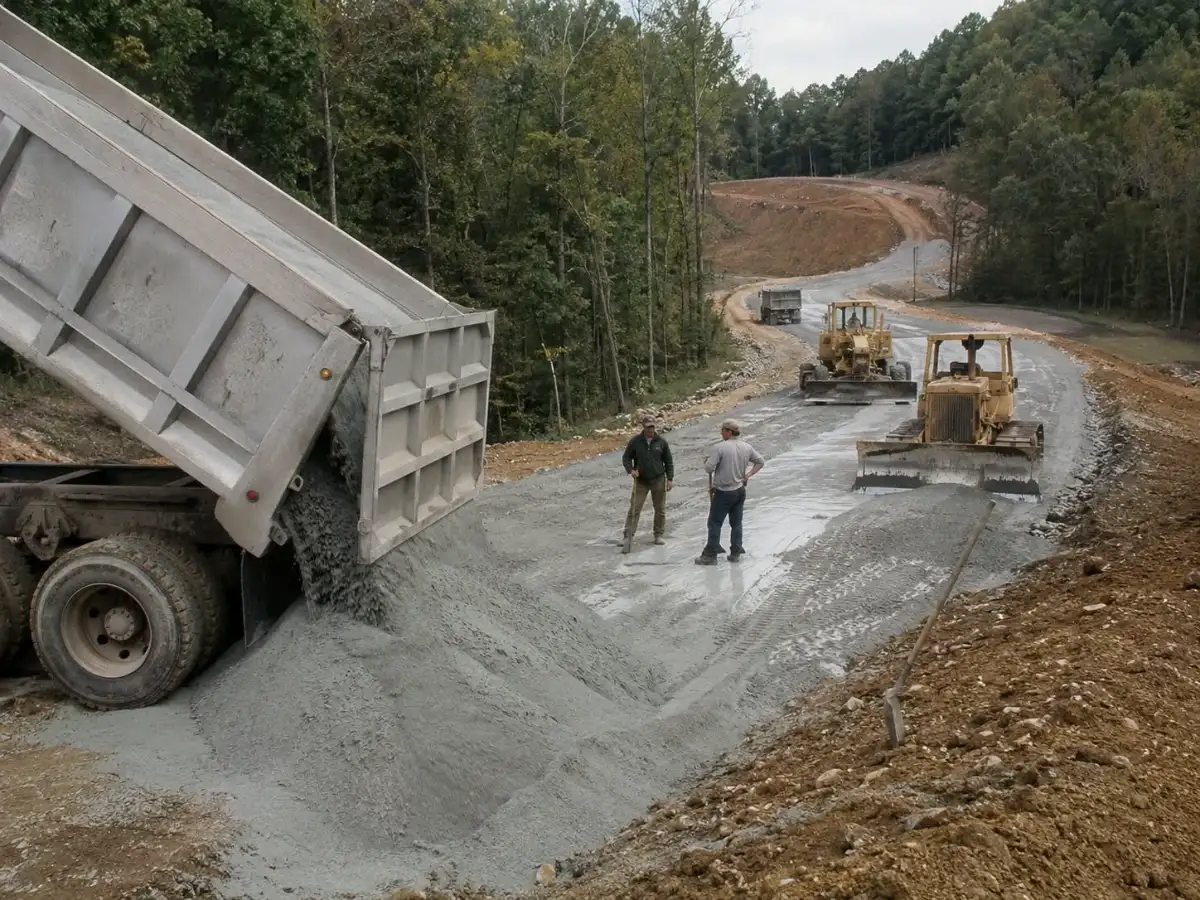
In a bald strip of asphalt in rural Kentucky, there's a simple experiment: a road base that is, to some degree, composed of the old residue of a coal plant. There was no ribbon cutting, no press conference, just 750 feet of highway making a point that America's infrastructure conversation hasn't fully embraced. According to a 1989 research report titled “Preliminary Engineering, Monitoring of Construction, and Initial Performance Evaluation: Use of Ponded Fly Ash in Highway Road Base,” from engineers David Hunsucker and R. Clark Graves of the Kentucky Transportation Center, roughly 80 tons of the fine, water-logged byproduct of coal-burning electric generating plants called "ponded fly ash" were used to form this experimental base course in May 1988. They added it to the road, rather than sending it to a landfill.
What's actually in this pavement