Get all your news in one place.
100's of premium titles.
One app.
Start reading
The Times of India
The Times of India
World
TOI World Desk

In 1989, conservationists began prescribed burns on 81 acres in North Carolina; by 2025, more than 1.8 million acres of longleaf pine habitat had been restored across the Southeast

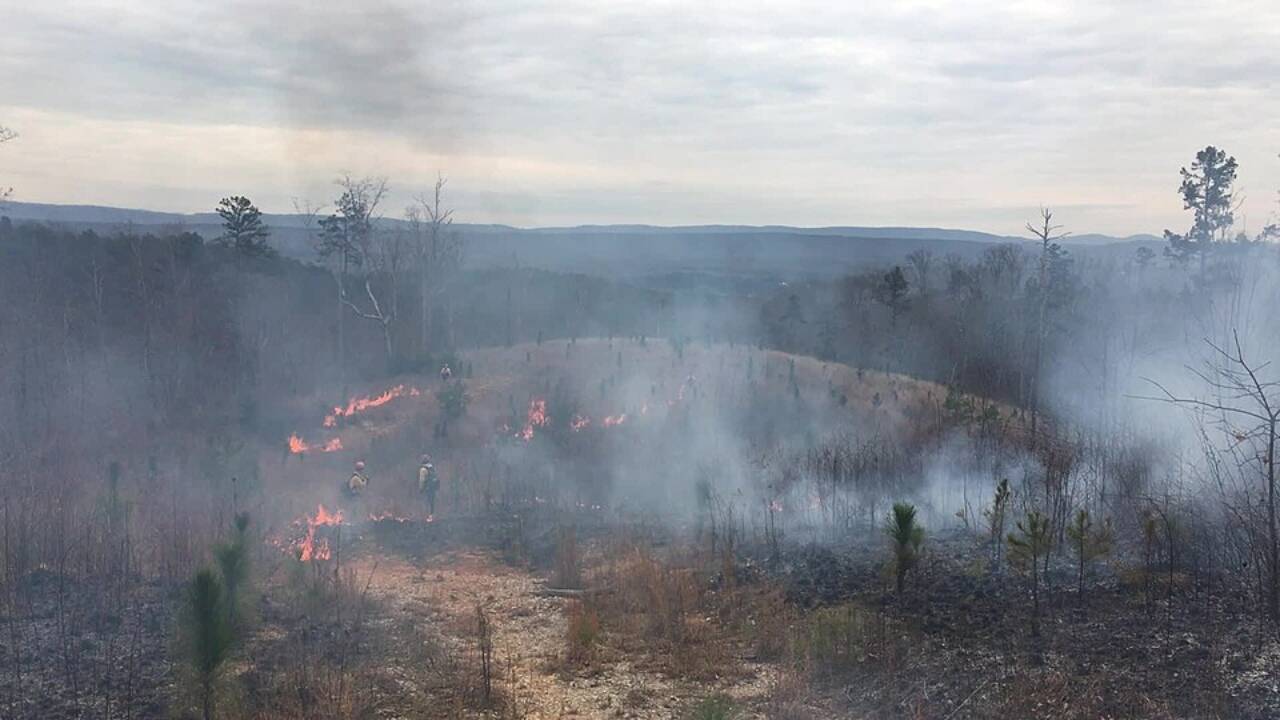
For generations, wildfire was treated as an enemy of the American forests. However, in the longleaf pine ecosystems of the southeastern United States, conservationists found that the opposite was often true: without regular fire, one of North America’s richest and most endangered forests struggled to survive. Notably, what began in 1989 with three carefully managed prescribed burns covering just 81 acres in North Carolina has now grown into one of the country’s largest ecological restoration efforts. According to The Nature Conservancy (TNC) , by 2025, restoration partners had restored more than 1.8 million acres of longleaf pine habitat across the southeastern United States, while the prescribed fire programme had surpassed 500,000 cumulative acres burned. It is worth noting that these figures measure different aspects of restoration and are not directly comparable.

Get breaking news anytime, anywhere. Download the TOI app now!

Restoring a forest that evolved with controlled fire

As per The Nature Conservancy, longleaf pine forests once covered an estimated area of 90 million acres from Virginia to Texas before widespread logging, agriculture and development reduced its population to only a small fraction of their range. Unlike many forests, longleaf ecosystems evolved with frequent, low-intensity fires, many of which were naturally ignited by lightning or set by Indigenous peoples to maintain healthy landscapes. It is worth noting that without these periodic burns, dense shrubs and hardwoods crowd out native grasses and flowers, thus reducing their habitat for wildlife uniquely adapted to fire-dependent ecosystems.

TNC launched its programme of prescribed fire in North Carolina in 1989 with just three burns across 81 acres. Following this, decades of investments in scientific research, firefighter training, specialised equipment and partnerships with state and federal agencies have now transformed the programme, and by 2025, by 2025, the programme had grown to conduct prescribed burns on more than 40,000 acres annually in North Carolina, reaching a cumulative total of 500,000 acres burned on partner lands.

Why setting fire helps longleaf pine forest recover

TNC has noted that prescribed burns remove accumulated vegetation that could otherwise fuel destructive wildfires while stimulating the growth of native plants, including wiregrass, whose seeds germinate successfully only after exposure to fire. Furthermore, the restored habitat supports threatened and declining species such as the red-cockaded woodpecker, Bachman’s sparrow, Venus flytrap, bobwhite quail and numerous pollinating insects. Interestingly, longleaf pine seedlings spend years developing deep root systems before rapid upward growth, an adaptation that allows these species to survive repeated low-intensity fires.

Modern prescribed burning has also embraced new technologies, as noted by the TNC, with fire crews now deploying aerial ignition drones that can safely ignite the interior of burn units while reducing risks to individuals and improving operational efficiency. These burns are conducted according to carefully prepared fire management plans that specify objectives, weather conditions, ignition methods and safety procedures before any prescribed fire begins.

The reviving of longleaf pine forests has become one of North America’s major collaborative conservation initiatives. According to America’s Longleaf Restoration Initiative, more than 1.8 million acres of longleaf pine habitat had been restored across the Southeast by 2025 through coordinated efforts involving conservation organisations, private landowners and government agencies. Researchers increasingly view controlled fire as an essential ecological process for maintaining longleaf pine ecosystems, improving biodiversity and reducing hazardous fuel loads that can contribute to more severe wildfires.

Sign up to read this article
Read news from 100's of titles, curated specifically for you.
Already a member? Sign in here
Related Stories
Top stories on inkl right now
One subscription that gives you access to news from hundreds of sites
Already a member? Sign in here
Our Picks
Fourteen days free
Download the app
One app. One membership.
100+ trusted global sources.