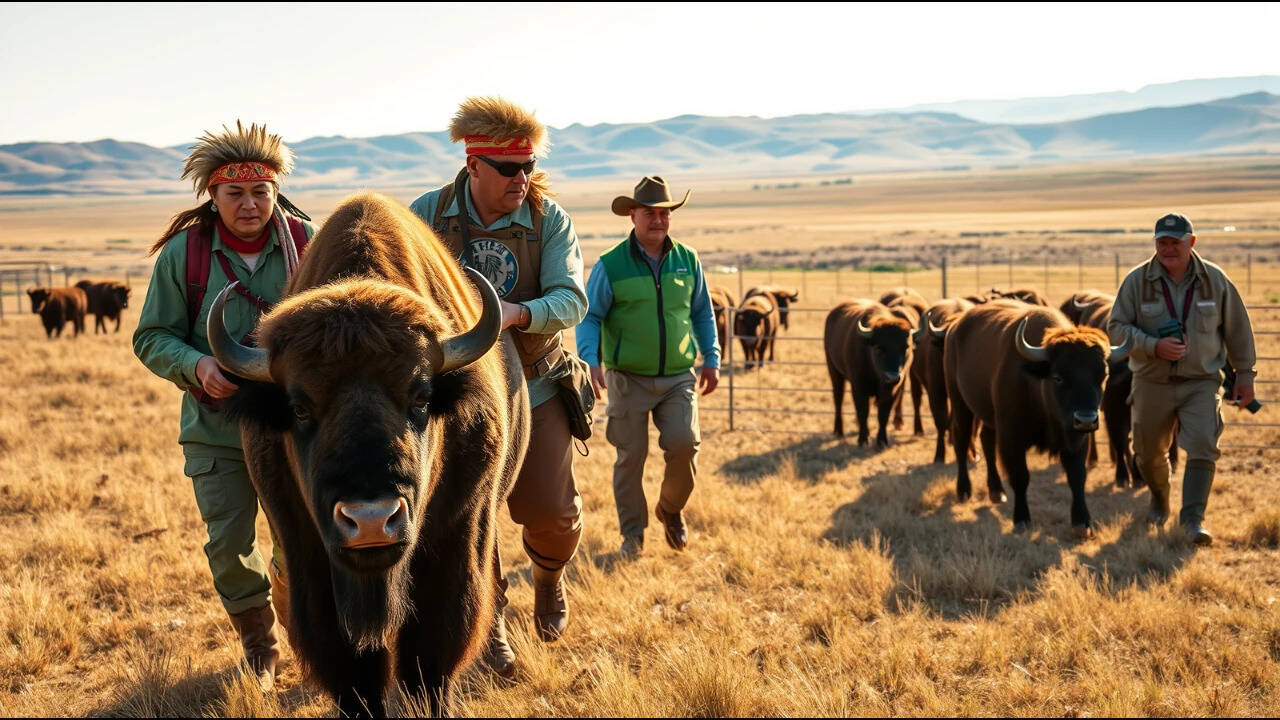
In 1987, tribal leaders on the Fort Peck Reservation in northeastern Montana began working to restore buffalo to Assiniboine and Sioux lands, reviving an animal central to their culture, spirituality and way of life. Two years later, the tribes purchased more than 100 bison from the nearby Fort Belknap Reservation and established a herd on 5,800 acres. What began as a cultural restoration effort eventually developed an economic component as the costs of managing a large, roaming herd grew and Fort Peck began allowing paying hunters from outside the reservation to hunt its bison. The hunts generated revenue, but over time tribal elders became concerned that the program was drifting away from the reason the buffalo had been brought back in the first place. Fort Peck ultimately ended the commercial hunting operation and shifted toward a system in which tribal members could hunt through a cultural lottery, allowing hunting to remain part of the herd's purpose while putting the community rather than outside customers at the centre of the program. This remarkable transformation illustrates how Indigenous communities can successfully reclaim cultural traditions while building sustainable programs that honor ancestral values over commercial interests. The decision ultimately placed cultural stewardship at the heart of the herd, ensuring the buffalo remained more than an economic resource for future generations.
Get breaking news anytime, anywhere. Download the TOI app now!
Why Fort Peck elders decided the bison program had lost its way
According to the Property and Environment Research Centre, Robert Magnan, who has managed Fort Peck's buffalo program for nearly 15 years, said the change came after tribal elders told program leaders that the community had lost sight of the purpose behind bringing the buffalo back. The issue was not hunting itself, which remains an important part of the tribes' relationship with the animal, but the decision to make the herd available to outside hunters for a fee. Once commercial hunts became an important source of income, the economic value of the animals risked overshadowing their cultural role. Fort Peck therefore stopped selling hunts to outsiders and redirected hunting opportunities toward tribal members. The cultural lottery now issues a limited number of tags each year, with demand exceeding supply. Around 50 tags were issued to tribal members last year, demonstrating that hunting remains an active part of the modern buffalo program rather than something the tribes have abandoned.
How Yellowstone bison became part of Fort Peck's restoration effort
A second chapter in the program's history began with Yellowstone National Park, where a growing wild bison population created longstanding disputes over how animals could move beyond the park's boundaries. In 2000, federal and Montana agencies established the Interagency Bison Management Plan, while the InterTribal Buffalo Council later became involved in the management framework. In spring 2012, Montana transferred 61 certified disease-free Yellowstone bison to Fort Peck, prompting a legal challenge from critics who argued that state law required landowner approval for bison movements. In 2013, the Montana Supreme Court ruled unanimously in favour of the tribes, finding that the relevant law did not apply to reservation land in the manner the challengers had argued. The Yellowstone-origin animals subsequently became an important part of Fort Peck's conservation work, helping the reservation develop its capacity to quarantine and certify disease-free bison for transfer to other tribal communities. That work has turned Fort Peck into an important hub for the broader movement to restore buffalo to Native American lands.