Get all your news in one place.
100's of premium titles.
One app.
Start reading
The Times of India
The Times of India
World
TOI World Desk

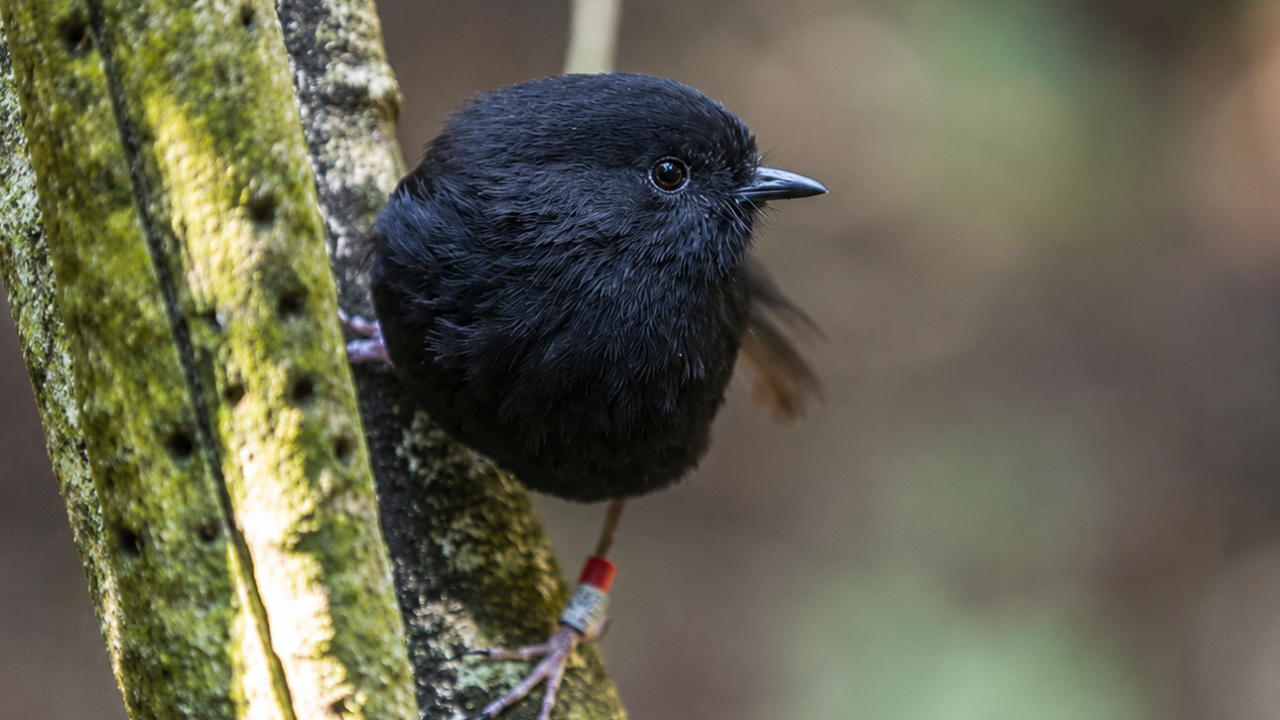
In 1981, five black robins remained on Earth; scientists made other birds raise their eggs

Only five Chatham Island black robins remained before the breeding season of 1981-82: a pair named Old Blue and Old Yellow, a second pair named Green and White, and one surviving chick from the year before, according to the Predator Free NZ Trust. The species was considered the rarest bird species on the planet at the time. To save the black robins, the small group of New Zealand wildlife officers who took care of the birds decided to try something no one had ever done before.

Get breaking news anytime, anywhere. Download the TOI app now!

A bird pushed to the edge of an island

The Chatham Island black robin, scientifically referred to as Petroica traversi, could be found in various locations in the Chatham Islands, a remote archipelago about 800 kilometres east of New Zealand's South Island. The bird had nearly disappeared from much of the Chatham Islands because of rats and cats introduced by Europeans, surviving mainly on Little Mangere Island, a small, steep, windy outcrop. There were only about 18 black robins left on Little Mangere Island by 1973, according to a paper in the New Zealand Journal of Ecology by wildlife biologist Don V. Merton. Forest degradation continued to reduce the population, which had fallen to seven birds by the time the last robins were moved to nearby Mangere Island in 1976. By then, more than 120,000 native trees had already been planted to restore their habitat, the paper notes.

However, the relocation efforts did not immediately change the fortunes of the Chatham Island black robins. Diseases, adverse weather, and bad luck continuously reduced the population to fewer numbers. Only five black robins existed towards the close of the 1978-79 breeding season.

Old Blue, Old Yellow, and a last-ditch idea

One of the two surviving females was a bird nicknamed Old Blue, a ten-year-old robin in 1980 who had long outlived her four-to five-year average lifespan for her species, the Predator Free NZ Trust notes. Her mate was Old Yellow, while another couple called Green and White made up the rest of the flock.

Merton, a conservationist and leader of the Wildlife Service team who worked with the robins, soon realised that merely protecting them and breeding was not going to be sufficient. Usually, black robins lay only one clutch of eggs per year. It became evident that if any hope existed for the robins' revival, they should nest more often than that.

Tricking another species into raising robin chicks

Merton used a technique known as cross-fostering. Before the 1981-82 breeding season, he began removing the first clutch of eggs laid by a pair and transplanting them to another species, with the hope that the foster birds would take up the parenting responsibility for the chicks. Losing their eggs should prompt the robins to lay again.

Initially, the Chatham Island warbler was used as the foster parent. The warbler can incubate the eggs and raise the chicks for the initial few days of life, but not until the chicks reach their fledging stage, the Predator Free NZ Trust explains. The Chatham Island tomtit was also used alongside the warbler, with birds from neighbouring South East Island serving as foster parents and the warblers as backups. Removing eggs from the world's rarest bird was risky because it was unknown whether the parent robins would lay again.

The gamble worked. By the end of the 1981–82 breeding season, the season when tomtits took over most of the foster-parenting duties, the population had risen to 12 birds.

From five birds to a red list downgrade

Old Blue continued breeding for several more years before being moved to South East Island in 1983. She was last sighted in December that year when she was estimated to be about 13 or 14 years old, and all black robins alive now are the offspring of the six chicks she and Old Yellow raised in her final breeding seasons.

The population kept increasing in the subsequent years. As noted by the trust, as of 2013, there were about 250 black robins that were offspring of Old Blue in Mangere and the South East Islands. Currently, the number is about 300 according to BirdLife International , spread across both islands. In 2022, IUCN downgraded the status of the black robins from endangered to vulnerable in its Red List, which was a rare piece of positive news regarding the conservation of an endangered bird species numbering just five birds.

A small bird, a big lesson

Since the whole population is descended from so few birds, there is still very little genetic diversity in the species, which, according to BirdLife International, makes it susceptible to invasion by predators and natural calamities and other shocks. Conservationists see the black robin's recovery as an example of how a small group can save a species from extinction with limited resources. Techniques developed for the black robin have since gone on to help other endangered birds across the Pacific.

Sign up to read this article
Read news from 100's of titles, curated specifically for you.
Already a member? Sign in here
Related Stories
Top stories on inkl right now
One subscription that gives you access to news from hundreds of sites
Already a member? Sign in here
Our Picks
Fourteen days free
Download the app
One app. One membership.
100+ trusted global sources.