Get all your news in one place.
100's of premium titles.
One app.
Start reading
The Times of India
The Times of India
World
TOI World Desk

In 1980, a Spanish factory worker began weaving riverside saplings together; by 2001, they formed a roughly 1.5-kilometre labyrinth beneath seven 100-foot towers

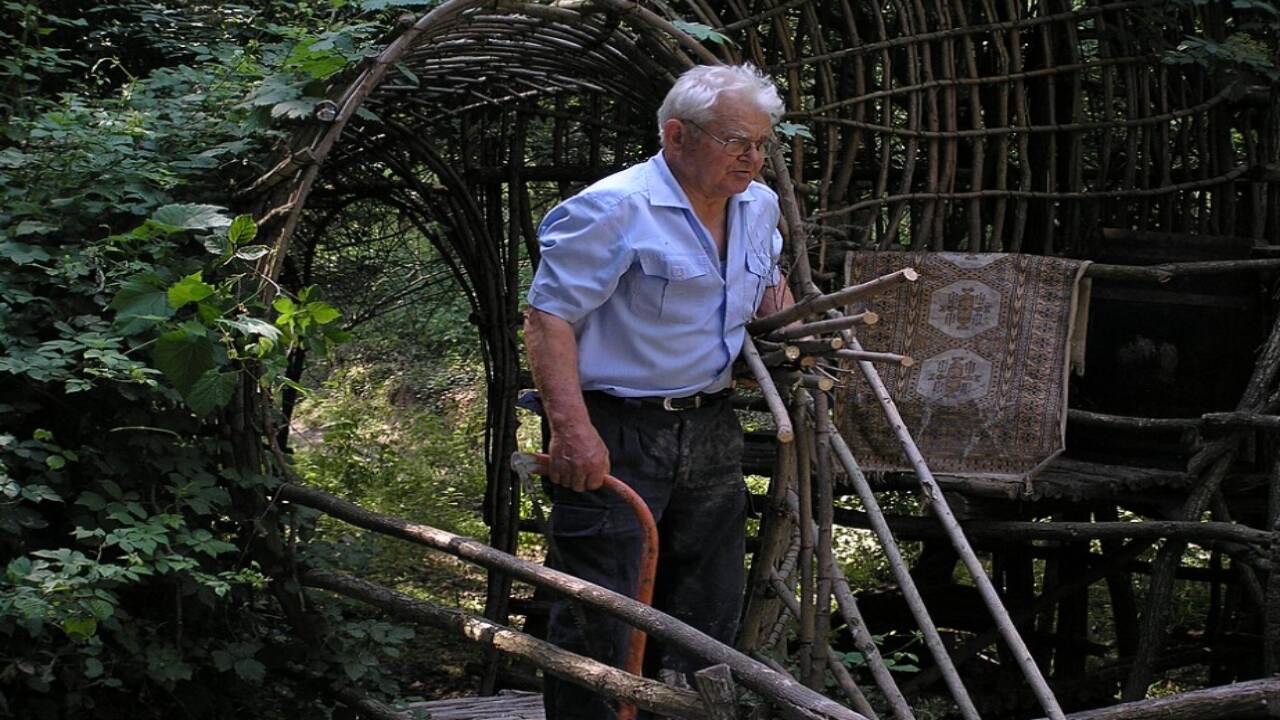
In 1980, Spanish factory worker Josep Pujiula i Vila began shaping young trees beside the Fluvià River in Catalonia. What began as a simple sapling shelter grew into a maze of tunnels, bridges, cabins and towers. By 2001, the self-taught builder’s creation had reached its peak, with seven towers rising about 100 feet and a labyrinth extending roughly 1.5 kilometres through the woodland. The SPACES Archives record describes how Pujiula spent decades turning the riverside landscape into a maze of woven trees and scavenged materials.

Get breaking news anytime, anywhere. Download the TOI app now!

Pujiula, who was born in 1937, had worked as a metal turner in the La Garrotxa region. He had no formal architectural training and initially built the structures for his own amusement. His first structure came from a practical idea: he wanted to shelter an amphibious motor scooter he had designed and kept on land near Argelaguer. He gathered young trees from the nearby river and used them to make the shelter. Then he kept adding. Small cabins and animal enclosures appeared, followed by a three-storey dwelling made from discarded materials.

The early settlement was later dismantled. Local authorities eventually forced Pujiula to dismantle some structures because they had been built too close to overhead electrical wires. Instead of stopping, he changed his approach. He began weaving flexible young trees into enclosed passageways, fastening slender branches together and bending them into shapes that could support walkways and walls. Over about 20 years, those experiments grew into a complicated network of dead ends, ladders, hidden entrances and twisting corridors.

How the wooden maze grew

The second version of Pujiula's creation became much larger than the original structures. The structures spread across woodland near Argelaguer and were linked by passages and bridges. The towers were built from branches and other materials, while the labyrinth forced visitors to navigate the site rather than simply walk through it. By 2001, the complex had reached its most spectacular form. Seven towers stood around 30 metres high, while the maze and its connected structures extended for about 1.5 kilometres. Visitors came to explore the strange landscape, and their interest became part of what kept Pujiula working on it. The project was increasingly viewed not simply as a collection of homemade structures but as an example of self-taught or outsider art. A profile by the Institute for Public Art's profile of Pujiula described Pujiula as a self-taught artist whose work became closely tied to Argelaguer’s identity. The maze also served a practical purpose. After earlier versions of the site suffered vandalism, Pujiula made the paths increasingly complicated, making it harder for unwanted visitors to reach the central structures.

A creation that was repeatedly dismantled

The largest version of the labyrinth was dismantled after only a short time. A new freeway route was planned through the area, and in 2002 Pujiula was forced to dismantle the settlement again. He soon started again nearby, using materials that road workers had discarded, including concrete and steel. New towers, tunnels, fountains and another labyrinth followed.

That cycle of construction and demolition continued. In 2012, after Pujiula suffered an injury, authorities required him to remove most of the wooden structures because of safety concerns. Some concrete and steel elements remained, and supporters pushed to preserve those surviving parts of the site. The remaining elements were later treated as local heritage, even though most of the original wooden labyrinth had disappeared. Pujiula continued building until his death in June 2016, aged 79. Most of the wooden labyrinth has since disappeared, although parts of the wider site and some later structures remain. His original roughly 1.5-kilometre maze is gone, but its story remains tied to the landscape he transformed by hand over more than four decades.

Sign up to read this article
Read news from 100's of titles, curated specifically for you.
Already a member? Sign in here
Related Stories
Top stories on inkl right now
One subscription that gives you access to news from hundreds of sites
Already a member? Sign in here
Our Picks
Fourteen days free
Download the app
One app. One membership.
100+ trusted global sources.