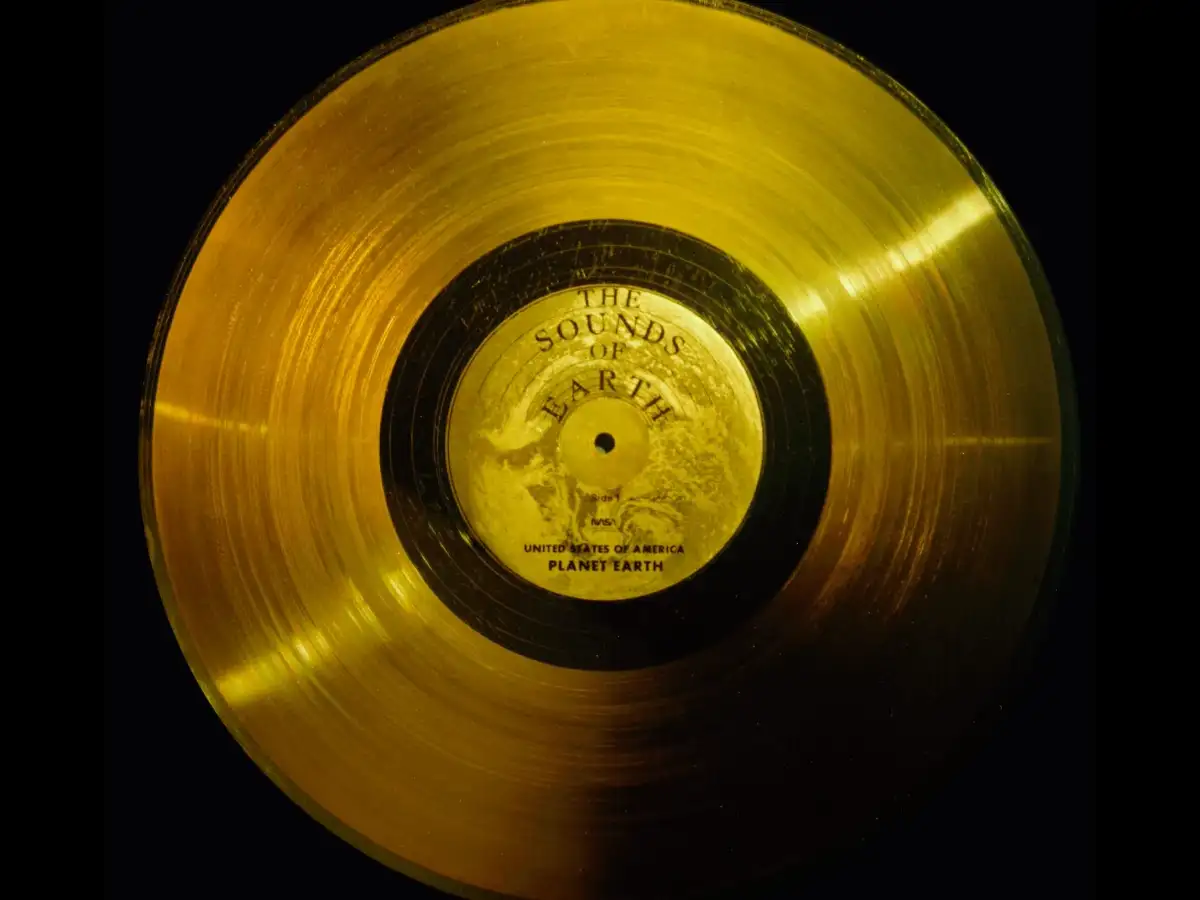
Beyond the edge of the solar system, a golden record carries humanity's greatest hits through space. In 1977, NASA placed a 12-inch (30-centimeter) gold-plated copper phonograph record on each of the twin Voyager spacecraft. The records contain 115 images, natural sounds, 90 minutes of music, and spoken greetings from Earth in 55 languages. Each record is protected by an aluminum jacket, which also carries symbolic instructions explaining how it can be played and how its images can be decoded. A cartridge and needle were included with each record.
The record was not designed as an ordinary vinyl LP. Its audio is meant to be played at 16⅔ revolutions per minute, a detail encoded into the symbolic instructions on the cover. That makes the Golden Record an odd mixture of familiar technology and alien-proof engineering: a physical phonograph that assumes its eventual listener has never encountered a phonograph before. Voyager 1 remains the most distant human-made object. NASA says it crossed into interstellar space in 2012 and continues its journey outward, carrying the Golden Record with it.