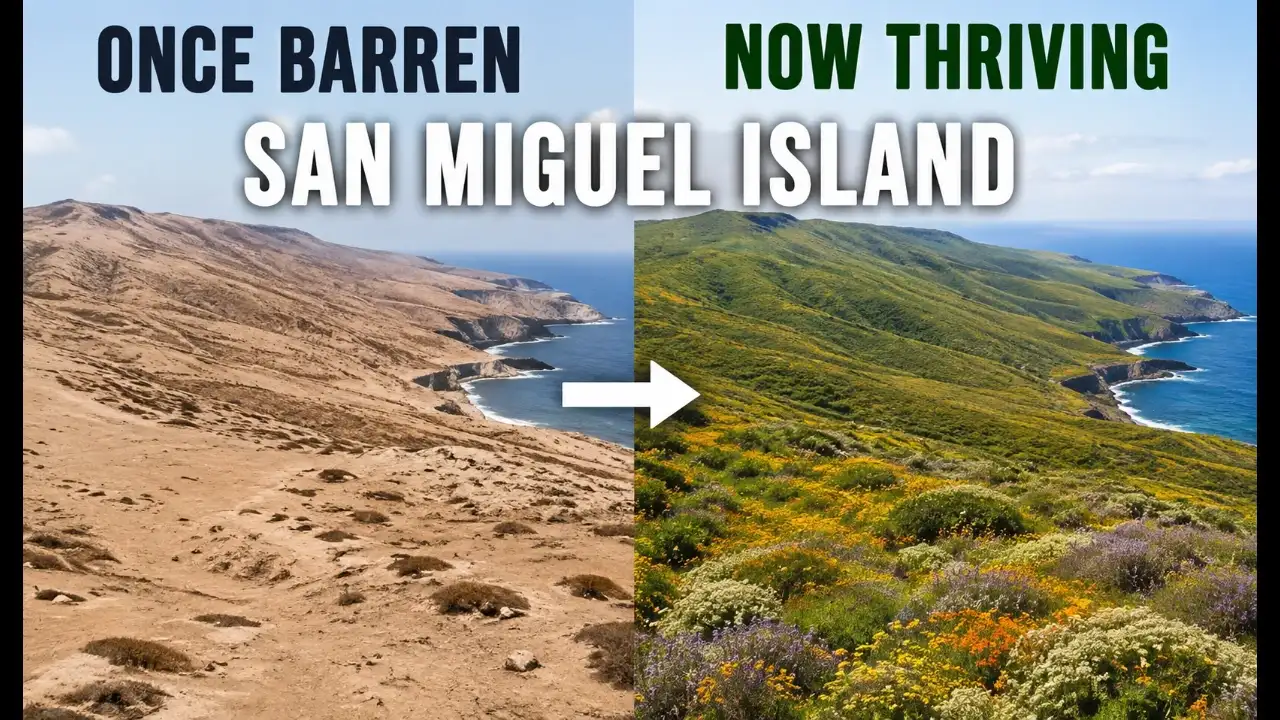
San Miguel Island offers one of California’s clearest examples of how a damaged landscape can recover when the pressure on it finally stops. The island was heavily grazed for more than a century by introduced livestock, including thousands of sheep. By the 1970s, much of the land had suffered from lost vegetation, exposed soil and erosion. Then the last feral burros were removed in 1977, ending the major grazing pressure that had shaped the island for generations.
The recovery did not happen overnight. San Miguel did not suddenly turn green the year the burros disappeared. Instead, native plants gradually began reclaiming areas where they could still find enough soil, moisture and shelter to survive. Decades later, the difference is striking. A place once described in historical accounts as a “barren lump of sand” now supports broad areas of native vegetation and provides habitat for wildlife found nowhere else.