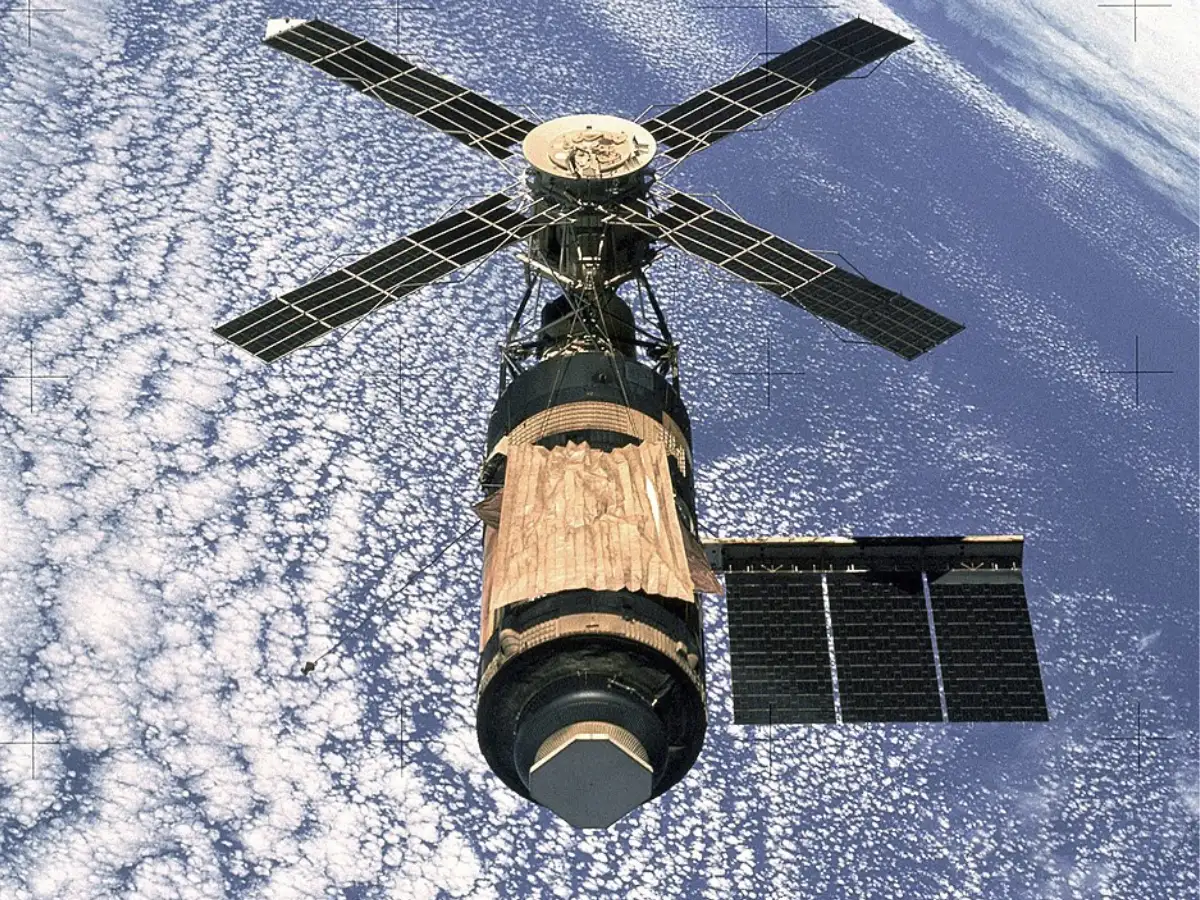
It may sound unusual, but it is what happened: a new space station is launched, loses its heat shield in seconds, and starts cooking under the sun. Engineers rescue it with a parasol made of fishing rods and foil-like fabric. Skylab, America’s first space station, launched May 14, 1973, and ran into trouble almost immediately, according to a NASA history account published by the agency’s Johnson Space Center. What followed was an ingenious rescue job in the history of space flight.
A launch that went wrong within seconds
Skylab was intended as a scientific laboratory in space, where astronauts would study the sun, the Earth, and the human body in zero gravity. However, during its launch, aerodynamic pressure ripped off its micrometeoroid shield that also served as thermal protection for the station. That was not all: pieces of the torn shield jammed one solar panel, while the other was ripped off entirely. The station reached orbit, but was starved of power and was now overheating.