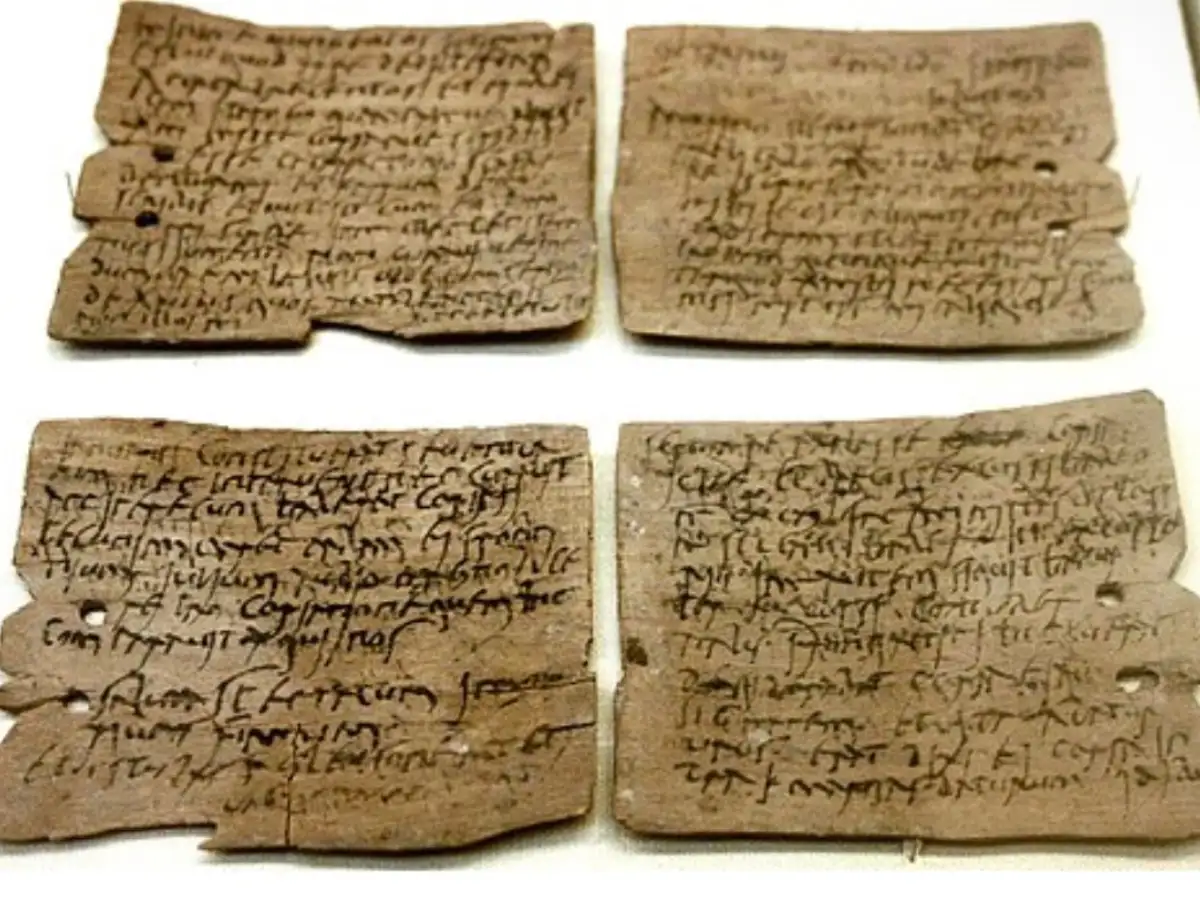
People usually picture stone walls, military forts, crumbling ruins, and the remains of an empire that announced itself through architecture and engineering when they imagine Roman Britain. What they rarely imagine is handwriting; yet one of the most important discoveries ever made along Hadrian’s Wall was not a monument or a weapon but a collection of thin wooden writing tablets recovered in 1973 from the Roman fort of Vindolanda.
These fragile pieces of wood transformed historians’ understanding of life on Rome’s northern frontier because they preserved something unusually personal: the written words of the people who actually lived there. Research published in Frontiers in Environmental Science has since shown that Vindolanda’s unique waterlogged conditions created an environment capable of preserving organic materials that would normally disappear, allowing wood, leather, and written documents to survive for nearly two thousand years.