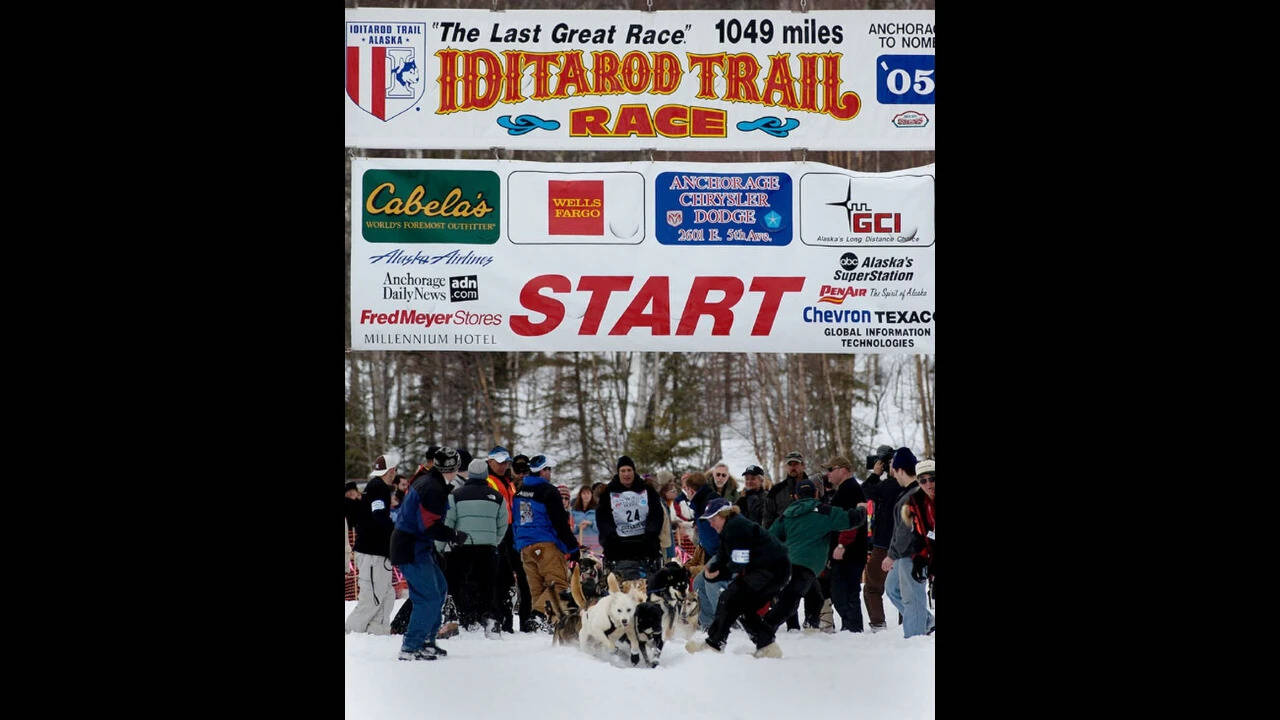
When Libby Riddles left the Midwest for Alaska as a teenager, she was not setting out to make history. She was drawn instead to the wilderness, dogs and a life far removed from the one she had known in Wisconsin. More than a decade later, those interests brought her to one of the most demanding sledge-dog races in the world. In 1985, with a powerful storm stopping other leading mushers, Riddles made a decision that helped define the race: she kept going.
Get breaking news anytime, anywhere. Download the TOI app now!

According to the official Iditarod race records , Libby Riddles won the 1985 Iditarod, finishing first in 18 days, 20 minutes and 17 seconds and earning $50,000 in prize money. She finished ahead of Duane Halverson, who placed second in 18 days, 2 hours, 45 minutes and 36 seconds. Riddles also received the Race Champion, Golden Harness and Humanitarian awards that year.
A teenager drawn to Alaska and sledge dogs
Riddles moved to Alaska as a teenager and developed a strong interest in the outdoors and sledge dogs. The Smithsonian National Museum of American History notes that she raised and trained sledge dogs before pursuing long-distance racing. By the time she entered the Iditarod, mushing had become more than an adventure for her. It had developed into a demanding discipline that required careful attention to dogs, equipment, weather and the trail.
Her first Iditarod appearances did not suggest an immediate championship. Riddles entered the race in 1980 and finished 20th, then returned in 1981 and improved to 18th. She continued racing and gaining experience on the long-distance trail rather than stepping away from the sport. Those early races helped her develop the experience she would draw on when she returned to compete for the lead in 1985.
That experience mattered because the Iditarod was not a race in which a musher could simply depend on speed. The dogs had to remain healthy, the sledge had to function in extreme conditions, and the musher had to decide when to rest and when to keep moving. The Smithsonian records that Riddles faced dehydration, fatigue, illness in her dogs, difficult trail conditions and poor visibility during her 1985 run. The race itself grew from Alaska's historic winter transportation network, when the trail was used to carry mail and supplies between remote communities. The modern Iditarod was first run to Nome in 1973, following sections of this historic route across mountains, rivers, tundra and coastal terrain.
The storm that changed the race
Riddles' breakthrough came during the final part of the 1985 race, when the weather deteriorated as mushers approached the coast. Wind-driven snow made the trail difficult to see, and several leading competitors stopped at a checkpoint rather than risk travelling into the storm.
Riddles made a different choice. She left the checkpoint and pushed her team onward towards the coast. The Alaska Sports Hall of Fame records that she was the only musher among the leaders to take on the storm beyond Shaktoolik. The decision allowed her to move into first place while the other leading teams remained behind.
The conditions were brutal. Contemporary accounts describe Riddles and her dogs crossing 58 miles of Norton Sound in winds reaching 40 knots as she gained the lead during the difficult stretch. The storm reduced visibility so severely that the trail could become almost impossible to distinguish from the surrounding snow. At one point, Riddles spent a night alone on the trail before continuing after conditions eased. The Alaska Sports Hall of Fame records that she maintained her advantage and eventually reached Nome in first place.
Her decision was risky, but it was not simply reckless. A musher had to judge the condition of the dogs as well as the weather and the trail. Riddles' ability to keep moving through severe conditions while managing her team became one of the defining features of her victory.
A finish that changed Iditarod history
Libby Riddles’ 1985 victory became a landmark in Iditarod history, not simply because she endured one of the race’s most difficult editions, but because she became the first woman to win the event. The Smithsonian notes that her victory helped inspire a new generation of women to compete in the Iditarod, turning her achievement into an important milestone for the sport.
Her achievement also highlighted the importance of the relationship between a musher and her team. Success in the Iditarod depends not only on physical endurance but also on knowing when to rest, when to continue and how to respond to the condition of individual dogs. Riddles’ win showed how careful judgement and trust in a team can shape the outcome of a race where conditions can change rapidly. The victory therefore came to represent more than a first-place finish. It marked a turning point for women in the Iditarod and demonstrated how strategy, teamwork and persistence can be just as important as speed in one of the world’s most demanding sledge-dog races.