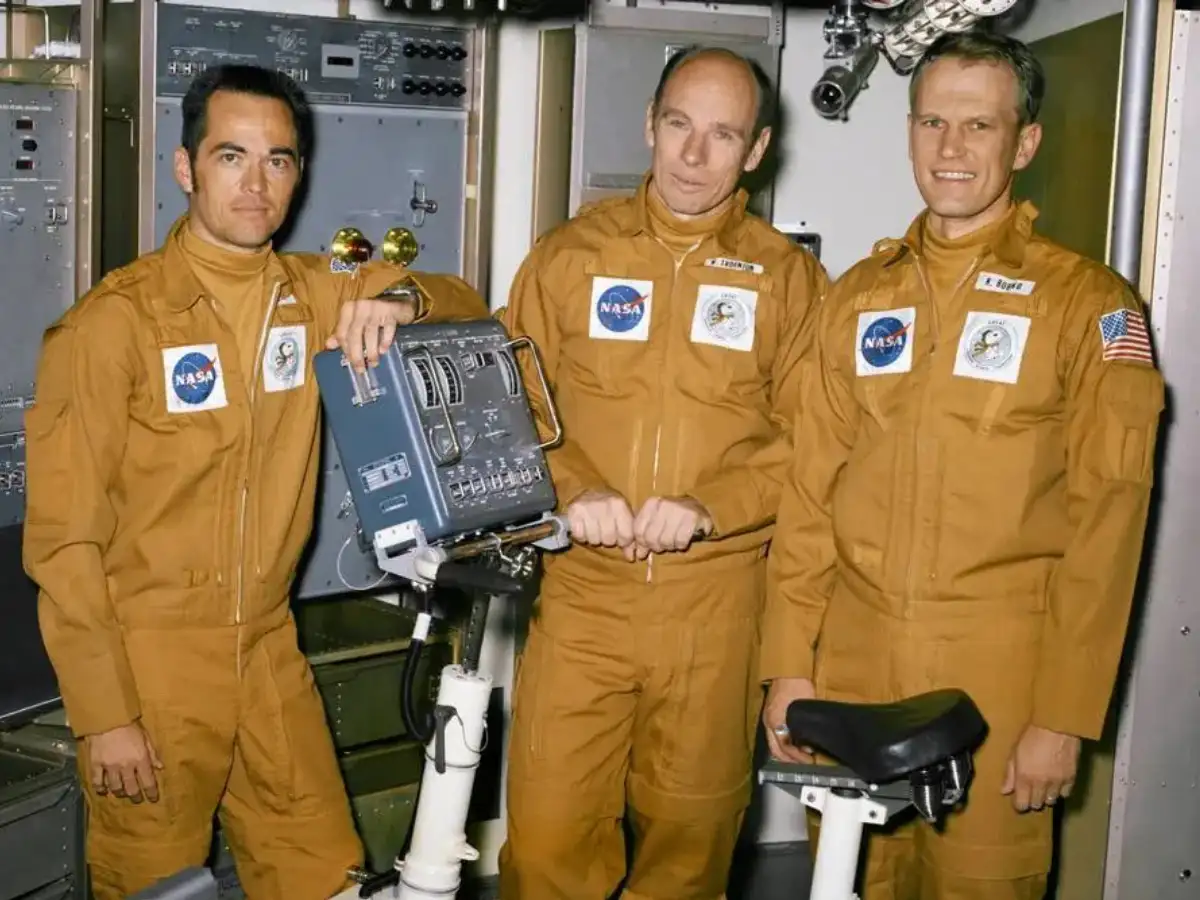
On September 20, 1972, three NASA astronauts stepped out of a 20-foot altitude chamber in Houston after spending 56 days sealed inside it. They hadn't been anywhere near space. The test, called the Skylab Medical Experiment Altitude Test, or SMEAT, was a rehearsal for the Skylab space station mission scheduled to launch the following year. The agency's official SMEAT technical memorandum, published by the Johnson Space Center, said the ground experiment was designed to catch hardware failures and medical surprises before astronauts ever left Earth.
A test flight that never left the ground
Skylab would be America's first space station, and before committing real astronauts to a real mission, officials wanted to know how the human body would deal with weeks of confinement. Approval for SMEAT came in February 1971. Four months later, the agency picked its crew: Robert Crippen, Dr. William Thornton, and Karol "Bo" Bobko. The trio spent 56 days in a 20-foot chamber in Building 7 at the Manned Spacecraft Center, now known as Johnson Space Center. The air in the chamber was the same as Skylab would use in orbit: 70 percent oxygen, 30 percent nitrogen, at 5 psi, below sea-level pressure. It wasn't a perfect substitute for the real spacecraft, since the chamber didn't have the volume of Skylab's upper deck, but its second level provided the crew with workspace, while its lower deck was a close approximation of where a real crew would sleep, eat, and exercise.