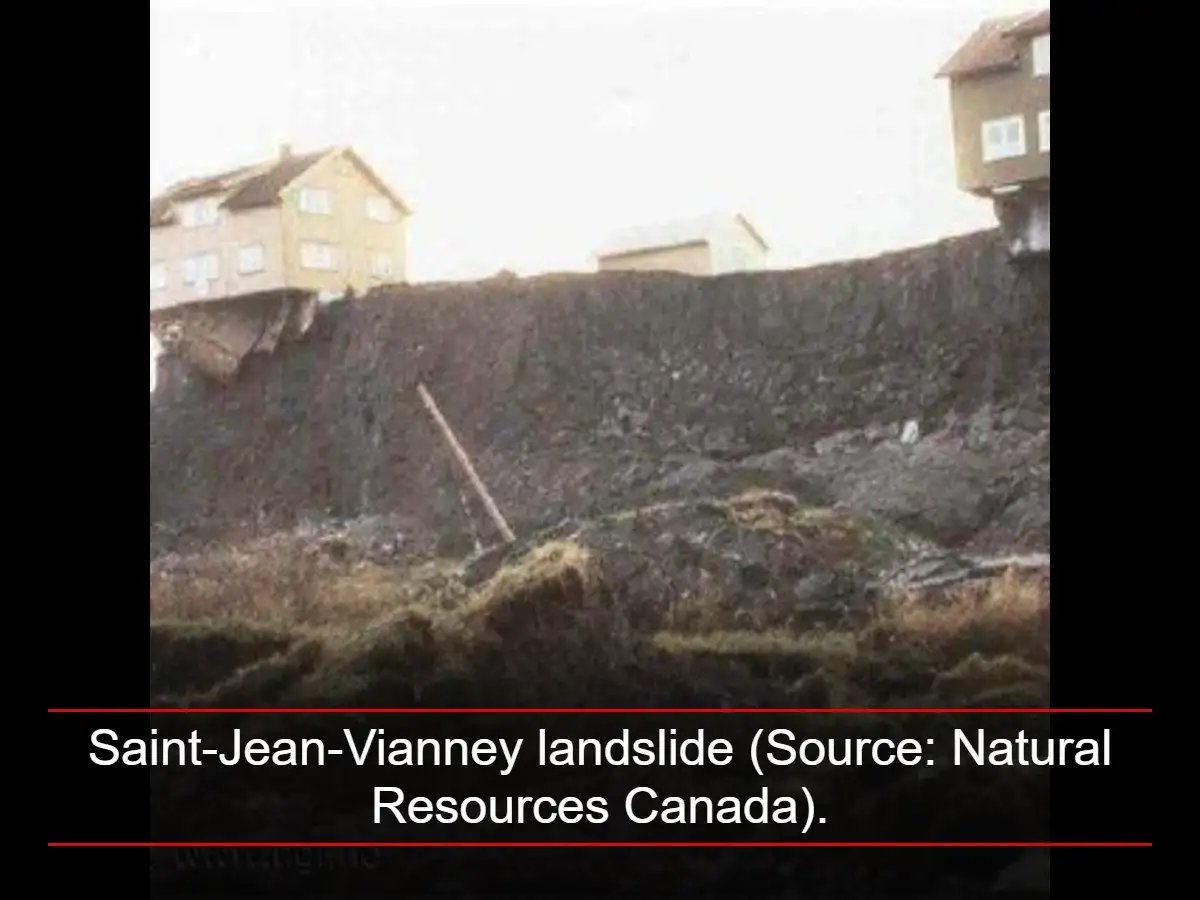
On the evening of May 4, 1971, Saint-Jean-Vianney in Quebec was struck by a devastating landslide that transformed an entire community in a matter of hours. Liquefied clay swept through the village, engulfing dozens of homes, cars and a bus while leaving 31 people dead or missing. The disaster was so severe that the surviving residents were forced to leave, and Saint-Jean-Vianney was eventually abandoned completely, as per a report by Bagotville Air Defence Museum.
Today, the former village is marked by a giant crater where homes and streets once stood.
How did the Saint-Jean-Vianney disaster begin?
Saint-Jean-Vianney, a village about 225 kilometres north of Quebec City, had a population of 1,266 in 1971. By the end of May 4, the community had been devastated by one of the region's greatest natural disasters.
The warning signs had already appeared.
April had been unusually rainy, leaving the clay soil heavily saturated with water. Areas of the soil gradually dissolved, and residents noticed changes around the village in the weeks before the disaster.
Cracks appeared in streets. Some homes dropped about eight inches into the ground. People also reported hearing underground thumps and the sound of running water.
Then, at 10:45 p.m. on May 4, the ground beneath the town suddenly dropped by roughly 30 metres.
What happened when the ground collapsed?
The liquefied clay spread across a huge area, engulfing homes and everything in its path. The landslide covered approximately 324,000 square metres and carried 41 homes with it, while other accounts in the supplied material put the number of houses engulfed at 42.
Several cars and a bus were also swallowed by the slide. The flowing clay moved toward the Shipshaw River and continued until about midnight. Thirty-one people were reported missing or killed in the disaster, with 13 never found.
The scale of the destruction left emergency crews facing an enormous search operation, as per a report by The Weather Network.
How did the military help the rescue?
Emergency services were quickly called to Saint-Jean-Vianney. Because of the scale of the disaster, military personnel from Bagotville also joined the rescue effort.
A search-and-rescue squadron had been established at Bagotville in 1966, and the first two Vertol H-21 helicopters arrived that fall. Those helicopters were subsequently used during the Saint-Jean-Vianney rescue.
For several days, military pilots flew over an enormous clay crater measuring about 300 metres across and 60 metres deep while crews searched for survivors.
Search-and-rescue technicians descended from the helicopters to reach people in distress. About 15 people who had taken refuge on the roofs of their homes were estimated to have been saved by the Bagotville crews.
The rescue effort became a crucial part of the aftermath as crews searched through the devastation for anyone who had survived.
Why was Saint-Jean-Vianney abandoned?
After the landslide, Saint-Jean-Vianney was declared unsafe for habitation. Survivors moved to nearby Arvida, leaving the devastated village behind.
What had once been a community of more than a thousand people was no longer considered safe to live in.
The location eventually became a giant crater, marking the place where the village had stood.
Later research found another landslide had occurred at the same site roughly 500 years before the 1971 disaster. The discovery showed that the ground had a much longer history of instability.
Saint-Jean-Vianney remains uninhabited.
The disaster is remembered as one of Quebec's major natural disasters, and its story continues to be featured by The Weather Network through Chris Mei's daily podcast, "This Day In Weather History," which examines people, communities and events shaped by weather.
The Saint-Jean-Vianney landslide remains a stark example of how quickly unstable ground can transform a community. In a single evening, streets cracked, homes disappeared and a village was permanently changed. By the following days, the search had become a rescue operation, and eventually, there was no village left to return to.
FAQs
What happened in Saint-Jean-Vianney?A massive landslide swallowed dozens of homes and killed 31 people.
Is Saint-Jean-Vianney inhabited today?
No. The village remains uninhabited.