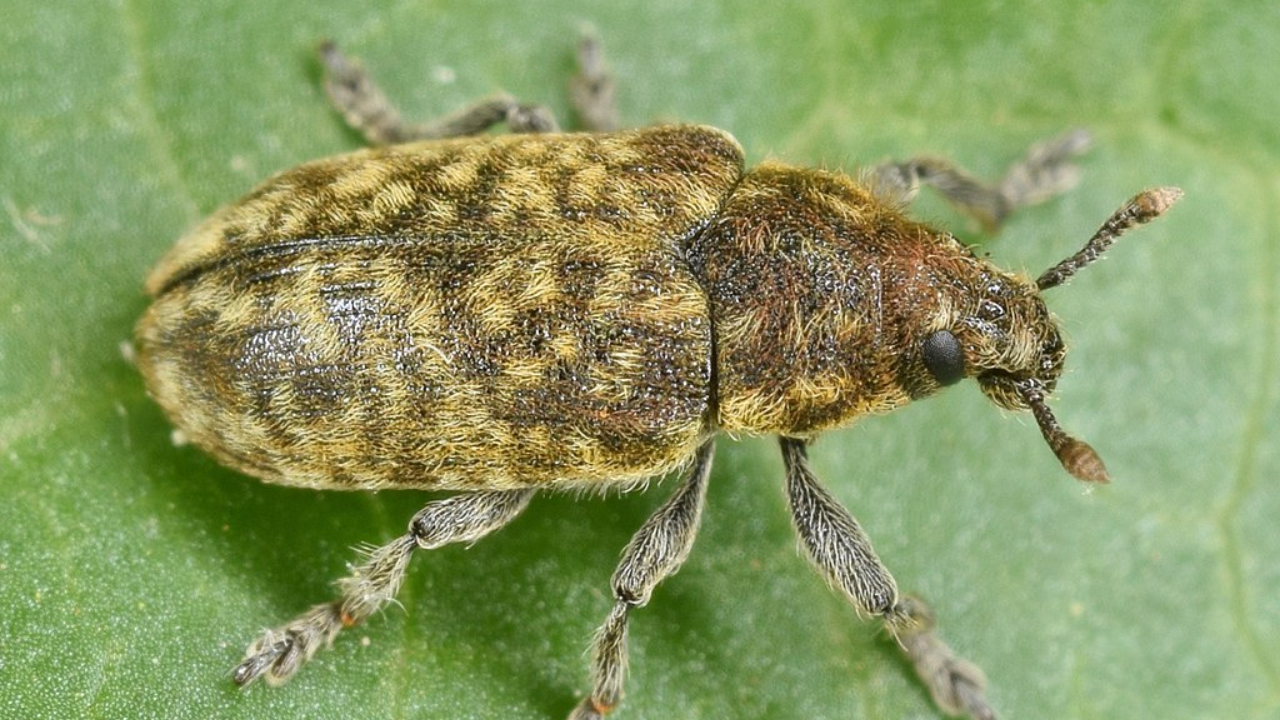
A European beetle released across North America in 1969 to control invasive pasture weeds became an ecological problem after expanding its diet to more than 30 native plant species, including at least seven rare or threatened thistles. The thistle head-feeding weevil ( Rhinocyllus conicus ) was introduced by wildlife and agricultural authorities as a biological control agent against musk thistle (Carduus nutans), an aggressive Eurasian weed that damages livestock rangelands. Instead of staying focused on its target plant, the insect established breeding populations on native North American plants, causing ecological damage across western nature reserves. According to botanical records from the US Department of Agriculture Forest Service Fire Effects Information System (FEIS), Rhinocyllus conicus larvae feed inside flower heads and consume developing seeds before they can spread. Research archived by the University of Maryland Digital Repository shows that this feeding can sharply reduce seed production in native Cirsium thistles, threatening species such as Pitcher's thistle (Cirsium pitcheri) and Platt's thistle (Cirsium xcanescens).
Get breaking news anytime, anywhere. Download the TOI app now!