
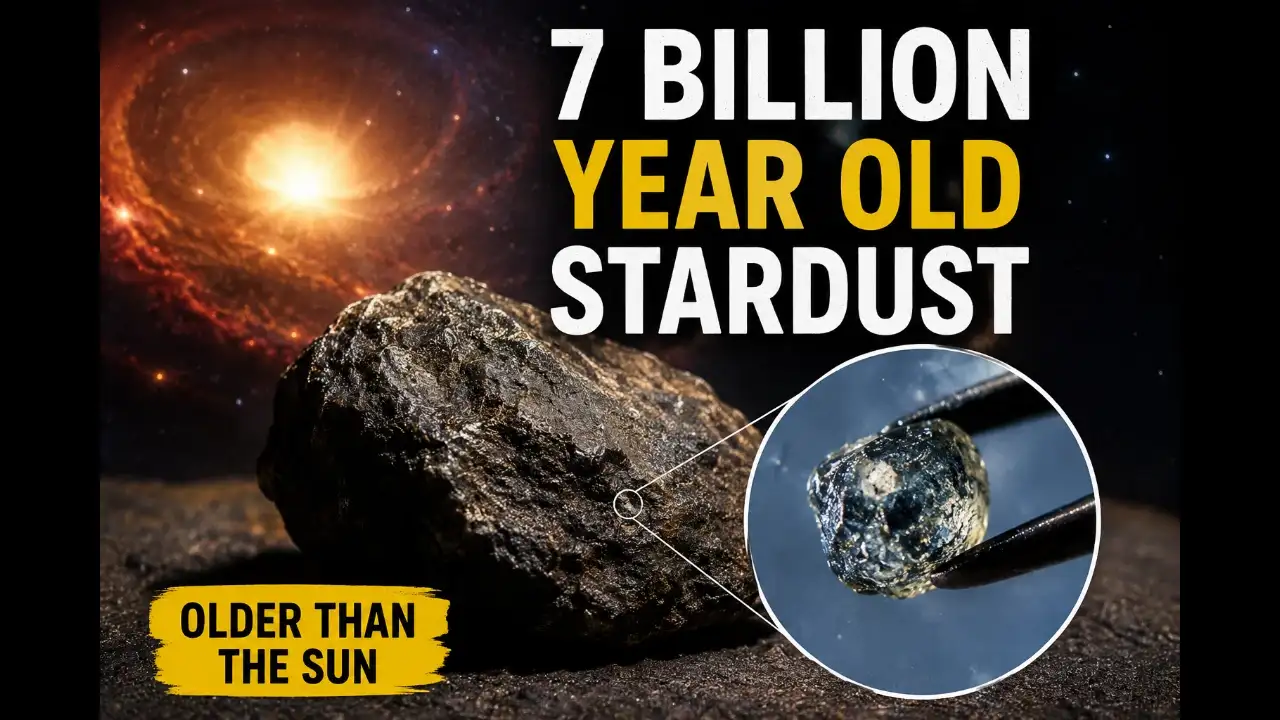
A tiny grain buried inside the Murchison meteorite is older than the Sun, older than Earth, and older than the solar system itself. Scientists estimated that some of the meteorite’s presolar grains formed between 5 and 7 billion years ago , with the oldest material dating to roughly 7 billion years. That makes these microscopic grains the oldest solid material ever identified on Earth.
The story begins on September 28, 1969 , when the Murchison meteorite broke apart in the atmosphere over Victoria, Australia. Pieces fell across an area of roughly 35 square kilometers near the town of Murchison, and about 108 kilograms of material were eventually recovered. More than five decades later, samples from that same fall are still being studied because they contain material that predates the birth of our solar system.













