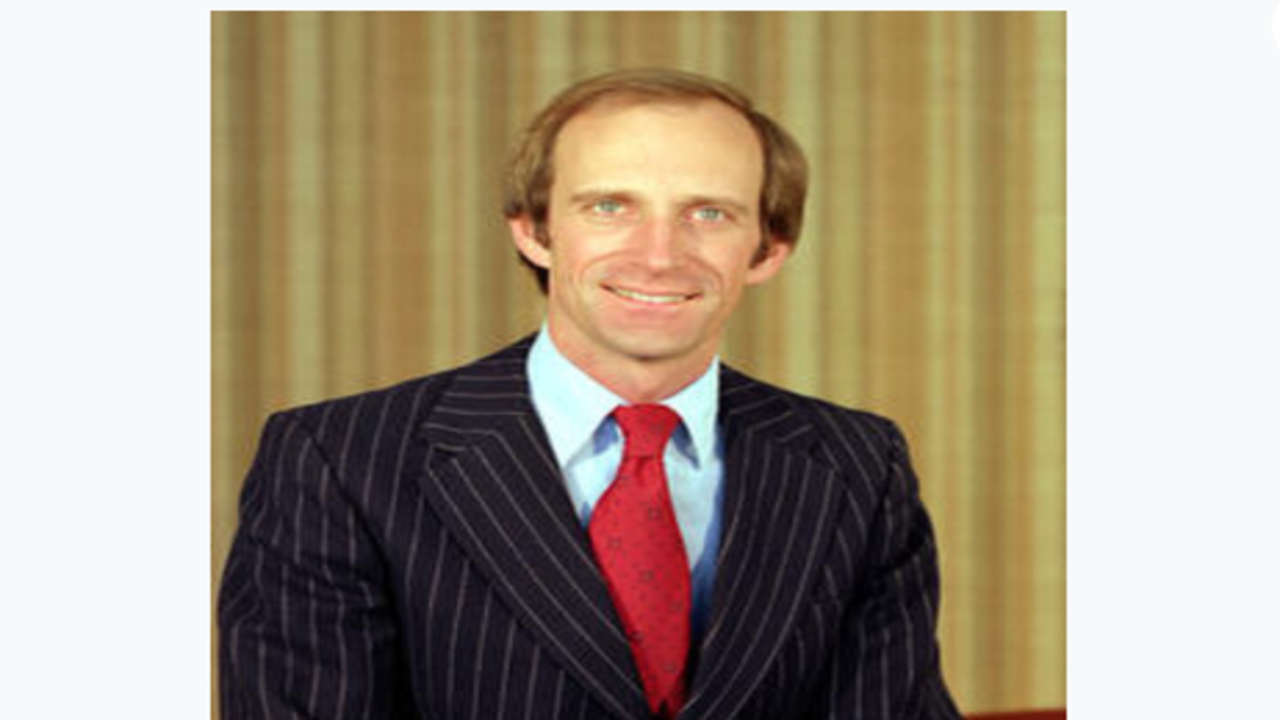
In the fall of 1969, 25-year-old Harvard Kennedy School student Denis Hayes travelled to Washington, D.C., for a meeting with Wisconsin Senator Gaylord Nelson, who was promoting environmental campus “teach-ins.” Hayes returned with a charter to organise Boston, as detailed by the Harvard Gazette in How Earth Day gave birth to the environmental movement . Working with a shoestring budget and a team of mostly student volunteers, Hayes helped mobilise roughly 20 million Americans on April 22, 1970, in what remains one of the largest coordinated demonstrations in the country's history.
Get breaking news anytime, anywhere. Download the TOI app now!

A Senator’s brainchild and a student’s dream
The idea began when Wisconsin Senator Gaylord Nelson grew frustrated that environmental problems were getting too little attention despite growing concern about river pollution, smog-filled cities, and the 1969 oil spill in Santa Barbara. According to the U.S. Environmental Protection Agency , Nelson's initial idea was quite simple: he was going to organise some kind of campus events in the form of “teach-ins,” which were becoming popular at that time and were used for demonstrating against war.
While studying at Harvard's Kennedy School of Government, Hayes learned about the idea and went to Washington to try to organise a similar event for the Boston area. But Nelson's office had bigger plans. Within days, Hayes was asked to leave his studies and coordinate the effort at the national level. He did, becoming the national coordinator for the future Earth Day in December 1969 at age 25.
Building a movement for very little money
The scope of what Hayes was trying to build was far larger than the modest funding he had available. As per the EPA history, the public response to the first Earth Day helped build momentum for environmental action, including the creation of the Environmental Protection Agency in 1970 and subsequent federal environmental legislation. The Clean Air Act, Clean Water Act, and Endangered Species Act followed in the early 1970s. Polls after the event showed a shift: a year later, more people saw environmental protection as a major issue than before.
Environmental Teach-In received financial support from Senator Gaylord Nelson, the United Auto Workers, the AFL-CIO, The Conservation Foundation, and other organisations. Republican Congressman Pete McCloskey of California had already been selected by Nelson as his co-chair in September 1969, helping give the planned environmental campaign a bipartisan profile before Hayes became its national coordinator.
A far larger crowd than expected
By April 22, 1970, the loose network of volunteers, students, and local organisers had built far more momentum than the organisers expected. Events took place across more than 2,000 colleges and universities, about 10,000 primary and secondary schools, and numerous communities across the country.
Hayes spent the day moving between demonstrations, beginning with a sunrise ceremony on the National Mall in Washington. He then went to New York City, where Mayor John Lindsay had closed up to 40 blocks of Fifth Avenue because of the huge turnout. From an elevated platform, Hayes looked out over the crowd, which he described as spreading like a sea before him, and saw the scale of the rally. By day's end, an estimated 20 million people in the U.S. had participated.
From one day to national legislation
The large turnout helped build momentum for environmental action. The Environmental Protection Agency was established in 1970, followed by major federal environmental laws including the Clean Air Act, Clean Water Act, and Endangered Species Act in the early 1970s. Polls after the event showed a shift: a year later, more people saw environmental protection as a major issue than before.
Hayes went on to have a successful career as an environmental activist after the initial Earth Day. He returned to his studies and eventually earned a law degree. During the Carter presidency, he served as head of the Solar Energy Research Institute, which is now the National Renewable Energy Laboratory. In 1990, he launched a global Earth Day campaign that reached more than 140 countries.
Improvised legacy
In retrospect, the first Earth Day's uniqueness lay in how improvised it was. Hayes and his team worked with limited resources, and rather than relying on a polished advertising strategy, the campaign depended on mimeographed newsletters and word of mouth. The event attracted unprecedented turnout, which surprised even its organisers, and had a lasting impact on U.S. environmental policy. More than five decades later, Earth Day remains a testament to what an underfunded but determined group can accomplish when people are willing to organise and participate.