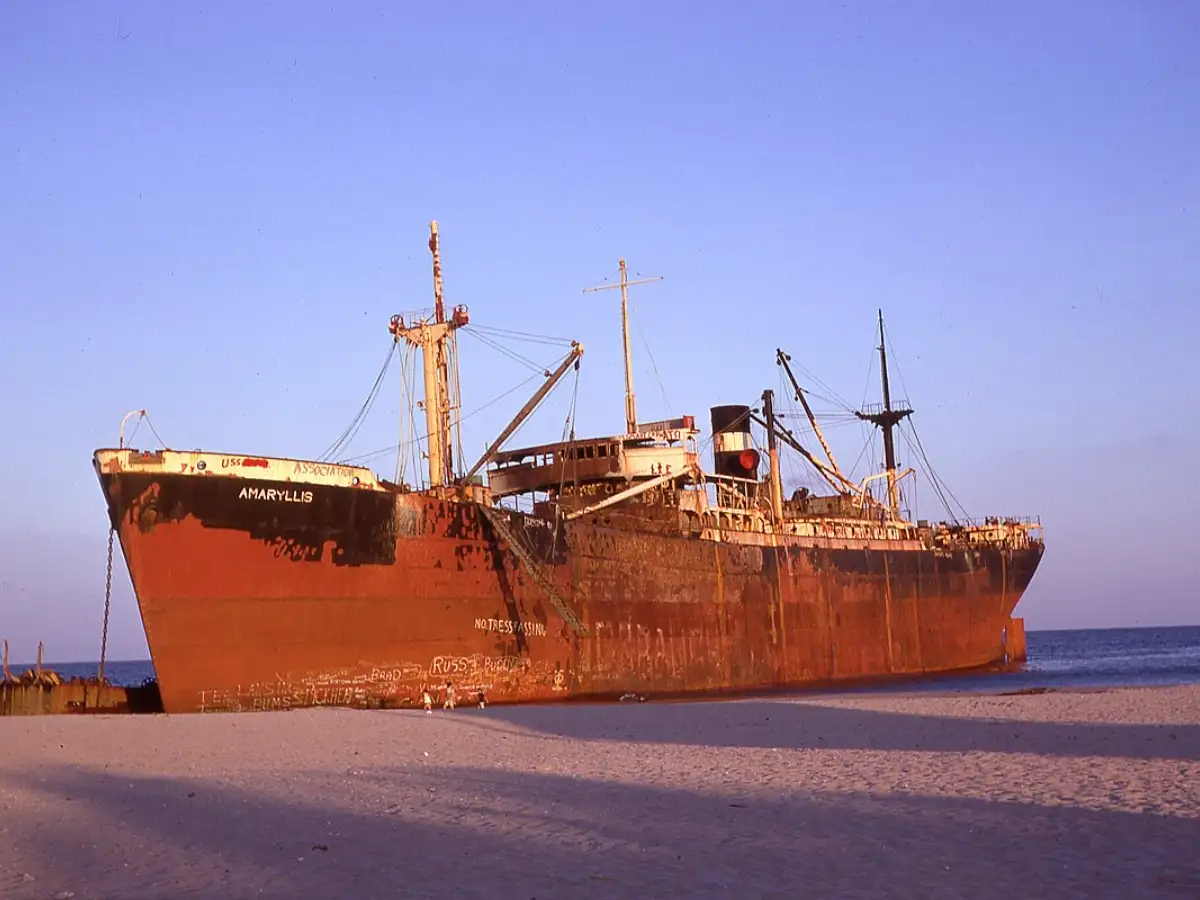
Roughly 80 feet off the coast of Palm Beach County lies the wreck of the Amaryllis, a 440-foot freighter that now hosts more than 136 recorded fish species. The ship’s story illustrates how artificial reefs, structures humans sink on purpose, can shape local marine ecosystems. A 2020 review titled “Meta-Analysis Reveals Artificial Reefs Can Be Effective Tools for Fish Community Enhancement but Are Not One-Size-Fits-All,” published in the journal Frontiers in Marine Science, by a team that includes NOAA researchers, found that artificial reefs, a category that includes shipwrecks, provided comparable fish density, biomass, species richness, and diversity to natural reef systems, though those factors varied by location and materials used. The Amaryllis is an interesting story, but it's just one data point.
From beach attraction to artificial reef