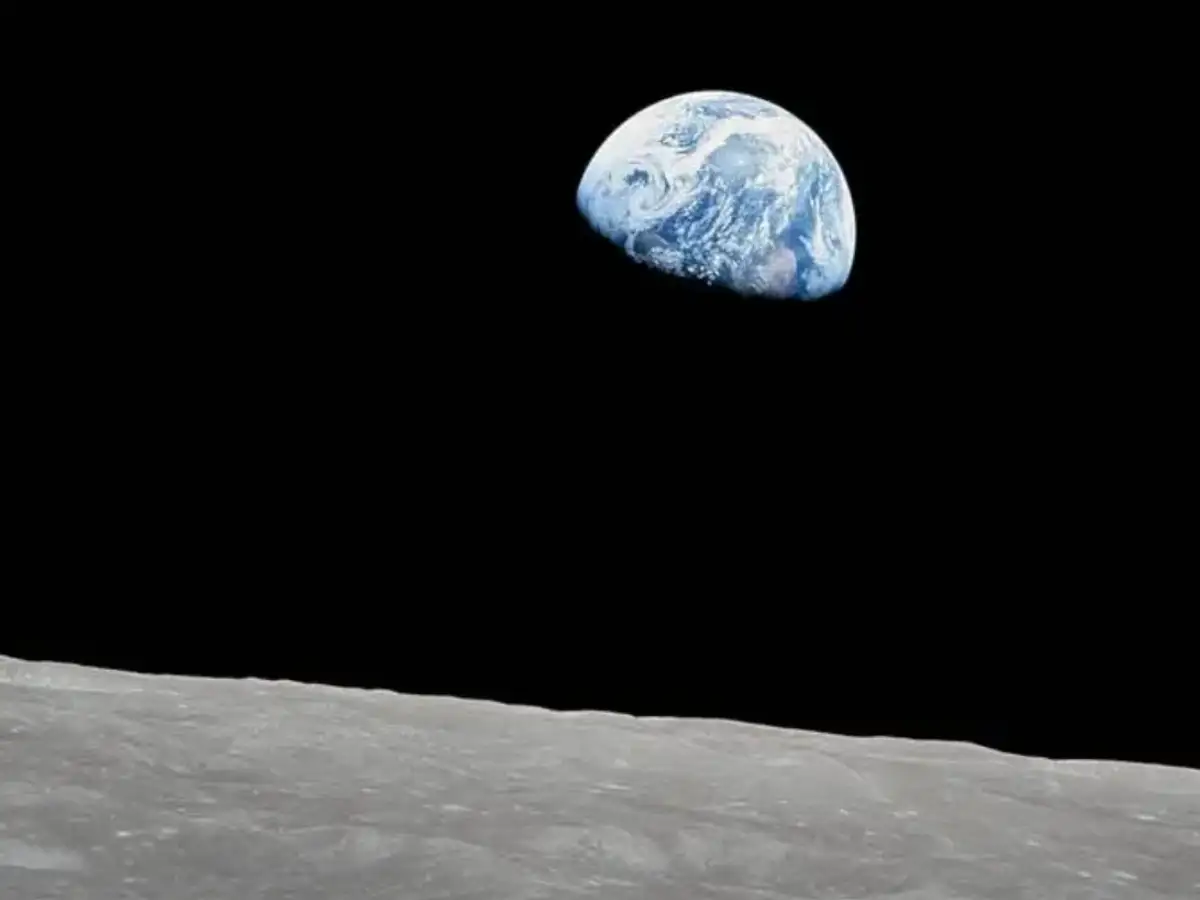
For decades, no one could say where Apollo 8 was orbiting when Earth rose over the Moon on December 24, 1968. Astronaut William Anders captured it on the spacecraft's orbit, almost by accident, and that moment became one of the most reproduced photographs in history. According to NASA's Earth Observatory, the precise second and location remained unknown for 45 years, until the answer was found hiding in plain sight, buried in a second camera nobody on board was paying attention to.
Why an unplanned glance changed spaceflight history

Apollo 8 wasn't built to take pictures; it was designed to carry astronauts out of Earth's orbit, around the Moon, and safely back home. Astronauts Frank Borman, James Lovell, and William Anders focused on getting there and coming back safely. On their trip around the Moon as they came from the far side, Borman started to turn the spacecraft to get a navigation reading. That turn aligned a window with Earth, and Anders just happened to have a camera in his hand. As NASA describes it, he said Earth was coming up and looked amazing, then took a black-and-white picture. A minute later, he put in color film and took the picture that became famous as Earthrise. One detail is less widely known. Earth had already risen during each of the three trips around the Moon too. None of the windows on the spacecraft were facing the way to see it. The timing of the turn during the fourth trip made a window and a camera line up at the perfect moment.