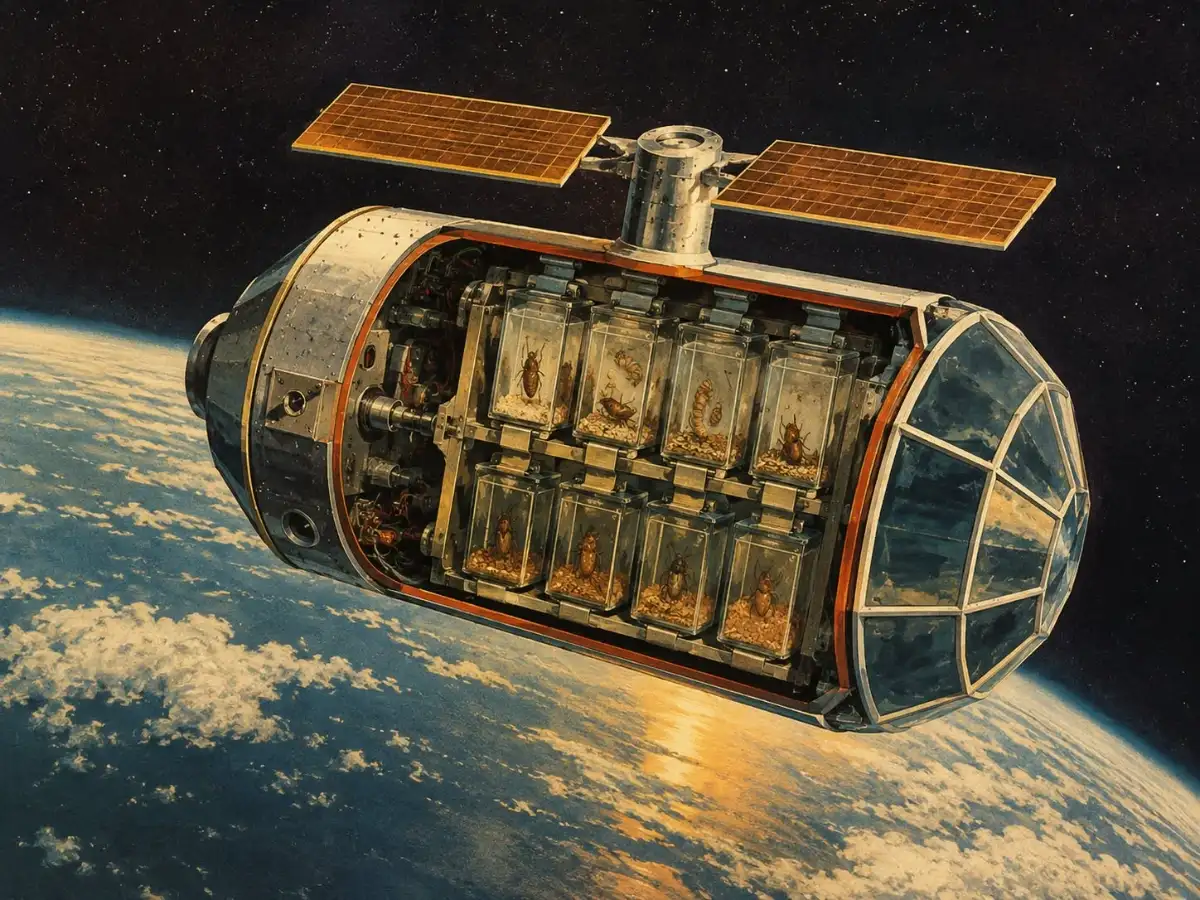
During the fall of 1967, as the United States awaited the next Apollo update, a crew of flour beetles, frog eggs, wheat seedlings and fruit flies was strapped into a NASA capsule. They did not get ticker-tape parades. They got 45 hours of orbit, some radiation exposure, and, for the beetles, some serious wing deformities.
According to the mission report for Biosatellite II's insect experiments, the flour beetle pupae which were sent up in the spacecraft returned with a higher percentage of wing abnormalities, from a pre-flight rate of 29.9 percent to a post-flight rate of 44.8 percent, which scientists attributed to the combined effect of onboard radiation exposure and weightlessness, and not to either factor alone. This is a very technical and very obscure piece of information. It is, however, also one of the first concrete pieces of evidence that being in space isn't just about how spaceflight doesn't just expose the body to radiation; it may also make the body less capable of coping with that radiation.