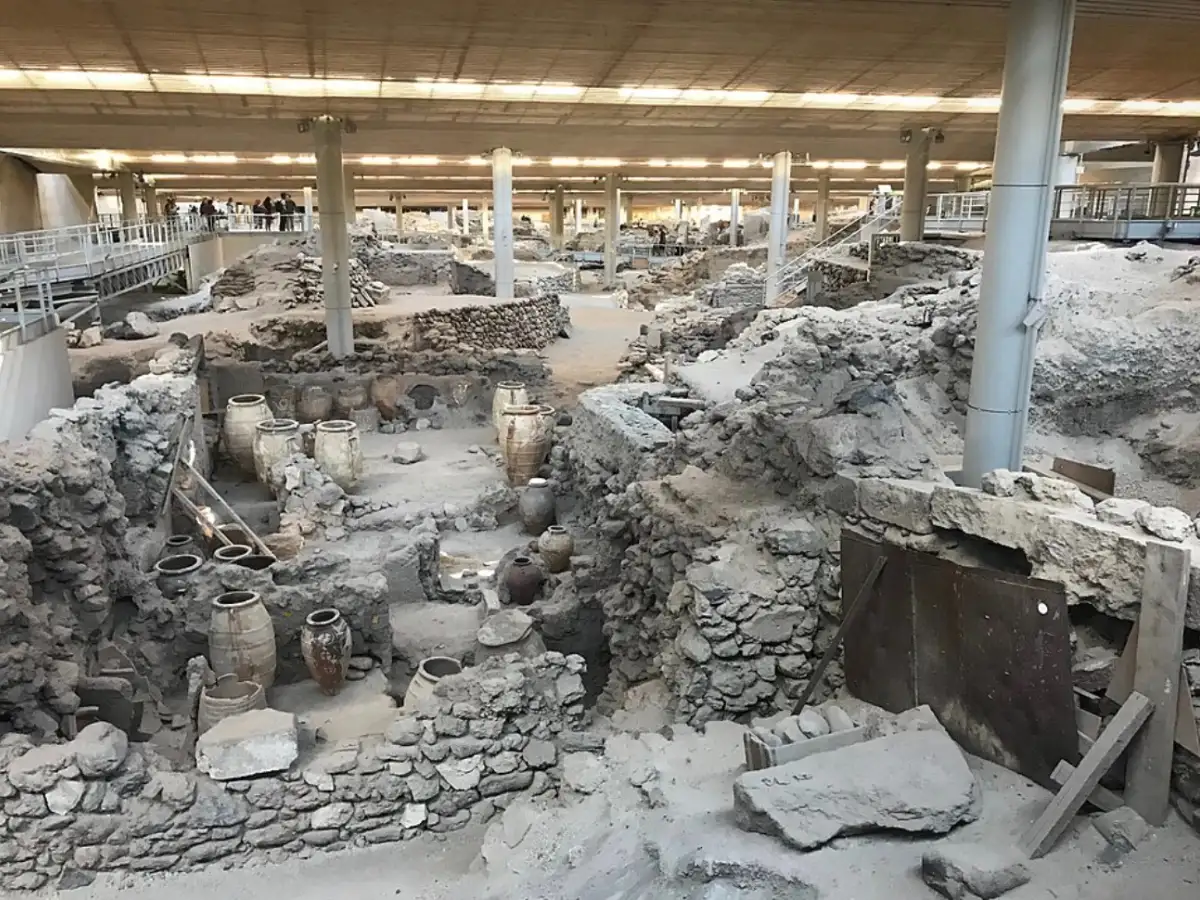
No other discovery in the field of archaeology has had such an effect on how the prehistoric world of the Aegean was understood as the excavations at Akrotiri, located on the Greek island of Santorini, did. The reason is that when archaeologist Spyridon Marinatos began his work in 1967, he was not simply working on a small discovery like an ancient temple, a royal burial site, or pieces of prehistoric art.
The results of his excavations revealed an entire prehistoric civilization that had remained buried under volcanic ash layers for about 3000 years. It is a highly developed urban area that includes numerous multistory buildings, well-paved streets, sewage systems, beautiful frescoes, and a wide variety of items used by its residents. This place has been described as a significant prehistoric site by researchers at Cornell University, Princeton University, and PubMed.