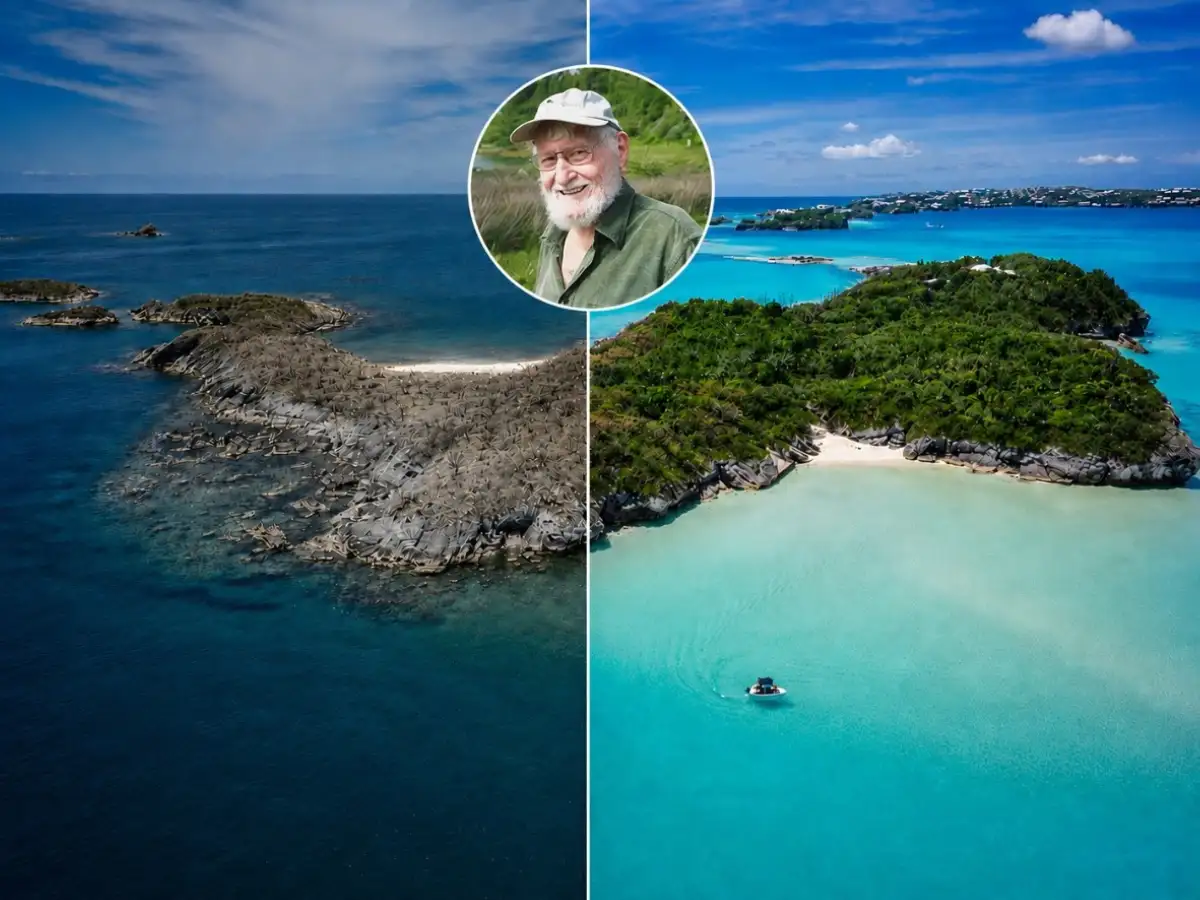
Imagine giving up hot water, cell service, and every modern comfort to live alone on a small island barely bigger than a few city blocks. That is what a young conservationist named David Wingate did in 1962, moving to Bermuda's Nonsuch Island to rebuild its lost forest by hand. According to David B. Wingate's own written account of the project, published by Cambridge University Press, his goal was to recreate the island's pre-colonial habitat so a seabird believed extinct for centuries might one day nest there again. It took decades, but it worked.
For readers looking for a conservation success story, this is a notable one.