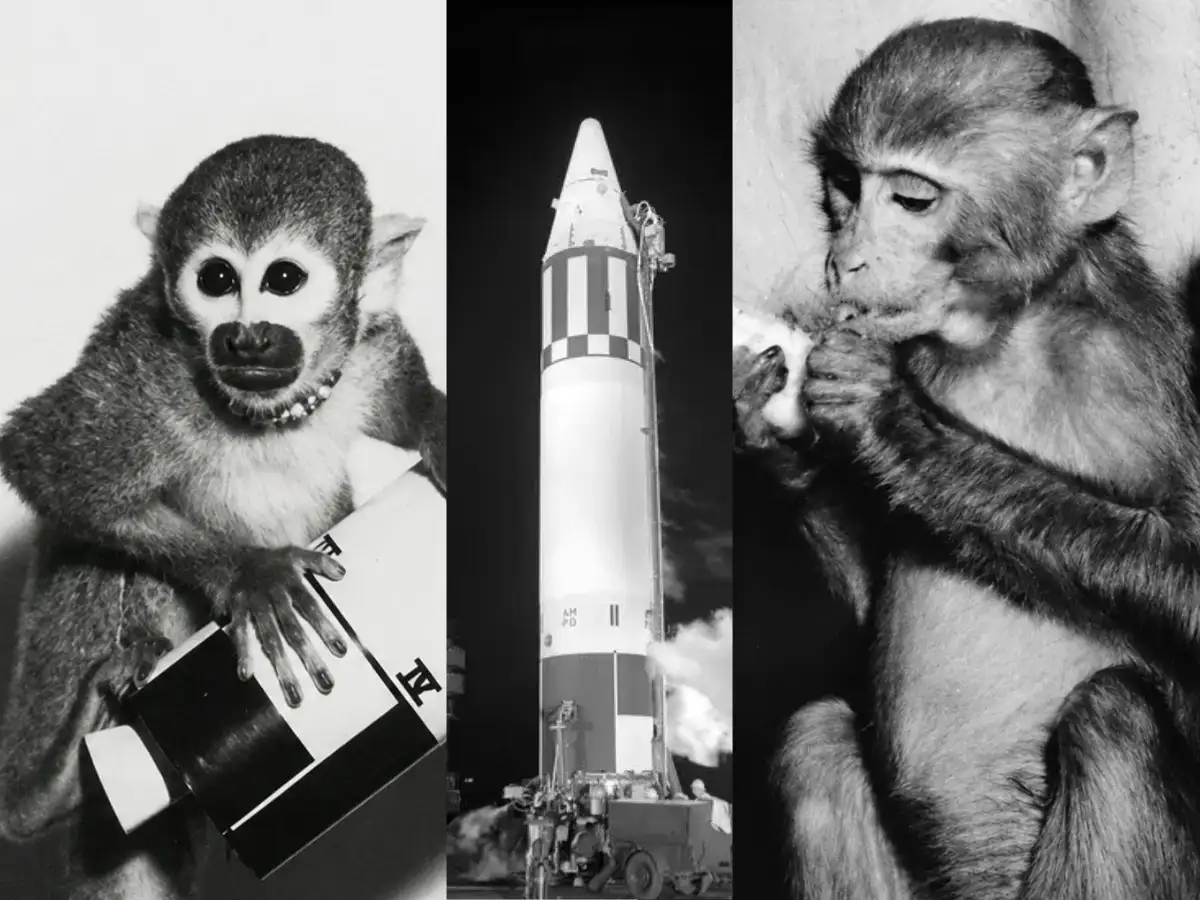
On May 28, 1959, an Army Ballistic Missile Agency Jupiter missile lifted two animals 300 miles above Earth. It returned them alive, marking the first successful animal recovery for the American space program, after a squirrel monkey named Gordo had died on splashdown five months earlier when his capsule's flotation gear failed, according to the Smithsonian's National Air and Space Museum. Records show that Able, a rhesus monkey, and Baker, a squirrel monkey, rode the nose cone of that rocket as part of a Department of Defense biomedical experiment involving the Army Medical Research and Development Command and the U.S. Navy School of Aviation Medicine, which trained Baker, and were recovered in good condition after splashdown. That bit of the story often appears in space trivia. The part that follows is often left out. It shows how two successful test subjects can end up very differently once the cameras stop recording.
Why NASA needed two monkeys to prove a point