Get all your news in one place.
100's of premium titles.
One app.
Start reading
The Times of India
The Times of India
World
TOI World Desk

In 1958, the US tried to eradicate imported fire ants by poisoning millions of acres; wildlife died, but the ants survived and kept spreading

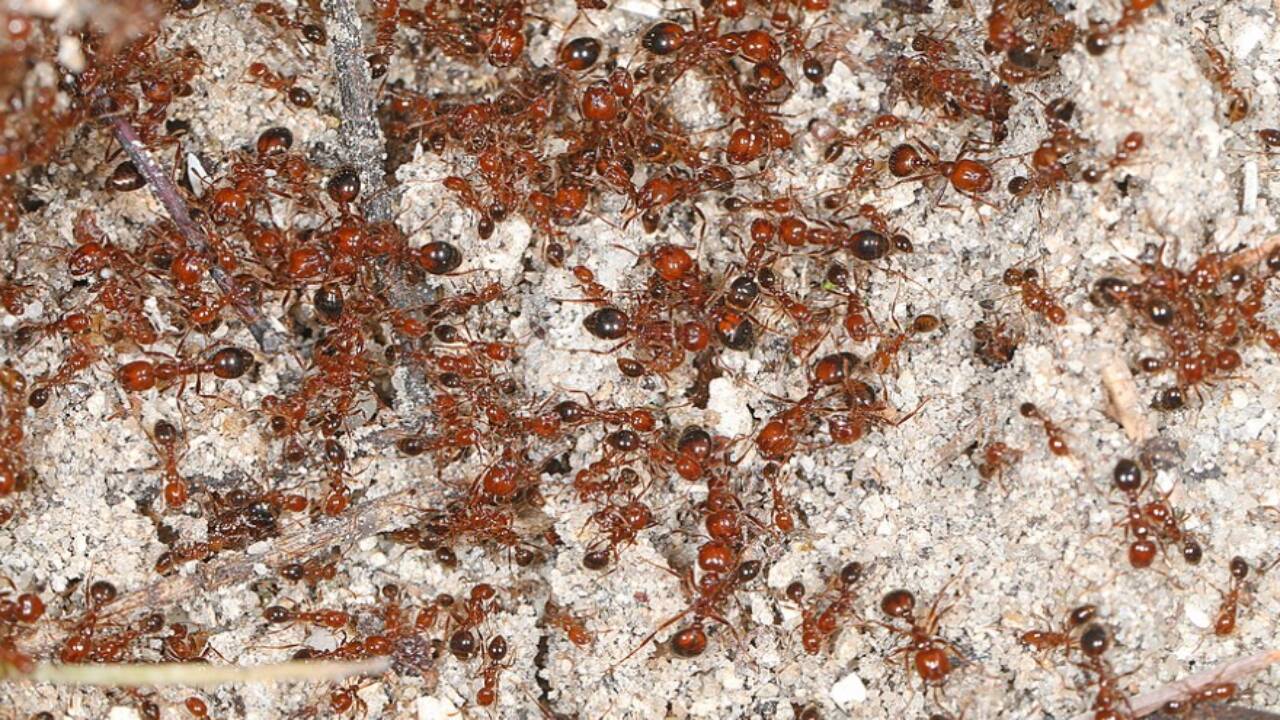
In 1958, the United States Department of Agriculture set out to eliminate an insect that had already spread across most of the American South, the imported fire ant. Officials coated millions of acres with insecticide over more than a decade. Wildlife started dying almost immediately. The ants, unlike almost everything else caught in the poison's path, kept spreading anyway.

Get breaking news anytime, anywhere. Download the TOI app now!
According to reporting in Nautilus magazine , fire ants first arrived in the United States sometime in the early 1930s, likely stowed away in coffee sacks, soil, or hollow logs aboard a cargo ship that docked in Mobile, Alabama. A small number of queen ants disembarked there and established the species' first American colony. By 1949, fire ants occupied a roughly 50-mile radius around Mobile along with scattered spots in Alabama and Mississippi. The suburban housing boom of the 1950s dramatically accelerated their spread, since nursery plants, sod, and potted soil shipped across state lines could carry a mated queen hundreds of miles at once. By the late 1950s, fire ants had spread across much of the southeastern United States, aided by the movement of nursery plants, sod and soil that could transport newly mated queens over long distances.

A witness documents the damage as it happened

The clearest record of the campaign’s impact on wildlife comes from a witness who saw it unfold in real time. Clarence Cottam, director of the Welder Wildlife Foundation and a 25-year veteran of the Federal Wildlife Service, delivered a detailed account to the Southeastern Section of the Wildlife Society in 1958, drawing on field reports from Louisiana State University, Alabama Polytechnic Institute, and the state game commissions of Texas and Alabama. Cottam reported that by September 1958, roughly 700,000 acres had already been treated with aerial applications of heptachlor and dieldrin, chemicals he described as ten to twenty times more toxic than the DDT commonly used at the time. At one Alabama plantation alone, 95 geese died within days of spraying, and farmers across the treated region reported losses of cattle, pigs, goats, sheep, and poultry, with veterinarians attributing the deaths to chlorinated hydrocarbon poisoning. Cottam called the programme a case of policy at its worst, warning that the cure seemed far more damaging than the disease it was meant to fix.

Millions more acres poisoned in the years that followed

The 1958 campaign Cottam documented was only the beginning. Between 1957 and 1962, the USDA coated 2.5 million acres with clay granules containing heptachlor, according to Nautilus, killing not just fire ants but blackbirds, quail, frogs, dogs, cats, crabs, and millions of fish, a widely cited example of the environmental harm that helped inspire Rachel Carson's book Silent Spring. Despite that fallout, the campaign expanded into an even larger phase afterward. Over 11 years, more than 143 million pounds of a related pesticide called 'mirex' were dropped across 77,220 square miles stretching from Texas to Florida, at a cost of close to 200 million dollars.

Why the poison could not stop the ants, and may have helped them

The programme produced almost the opposite of what officials intended. According to Nautilus, the ants nearly doubled their overall range during the campaign, and some entomologists have speculated the insecticide itself may have contributed to that spread. Mirex often wiped out every ant species present in a treated area, including native ants that had previously competed with fire ants for territory and resources. Once those native competitors were gone, fire ants often moved back in first and recolonised the cleared ground. Myrmecologist Walter Tschinkel, author of the book The Fire Ants, has attributed the species' resilience to a combination of large colony sizes, high numbers of winged reproductive ants, long dispersal distances, and an extended mating flight season.

A campaign remembered as a cautionary tale

Entomologist E.O. Wilson, who grew up in Mobile and first discovered a fire ant mound near his childhood home in 1942, later described the mirex programme as the Vietnam of entomology, according to Nautilus's account of the campaign's legacy. Cottam's own 1958 warning proved prescient in hindsight, urging officials to halt the aerial applications and redirect remaining funds toward actual research rather than continued spraying. Today, fire ants are firmly established across the southern United States, and their annual economic impact is now estimated at several billion dollars nationwide, according to entomologists at Texas A&M University. Modern control efforts have shifted away from broad chemical warfare toward more targeted approaches, including phorid flies that parasitise fire ants rather than eliminating them outright. Complete eradication across such a vast, already established range appears to have been unrealistic, a conclusion Cottam was already pointing toward while the programme was still underway.

Sign up to read this article
Read news from 100's of titles, curated specifically for you.
Already a member? Sign in here
Related Stories
Top stories on inkl right now
One subscription that gives you access to news from hundreds of sites
Already a member? Sign in here
Our Picks
Fourteen days free
Download the app
One app. One membership.
100+ trusted global sources.