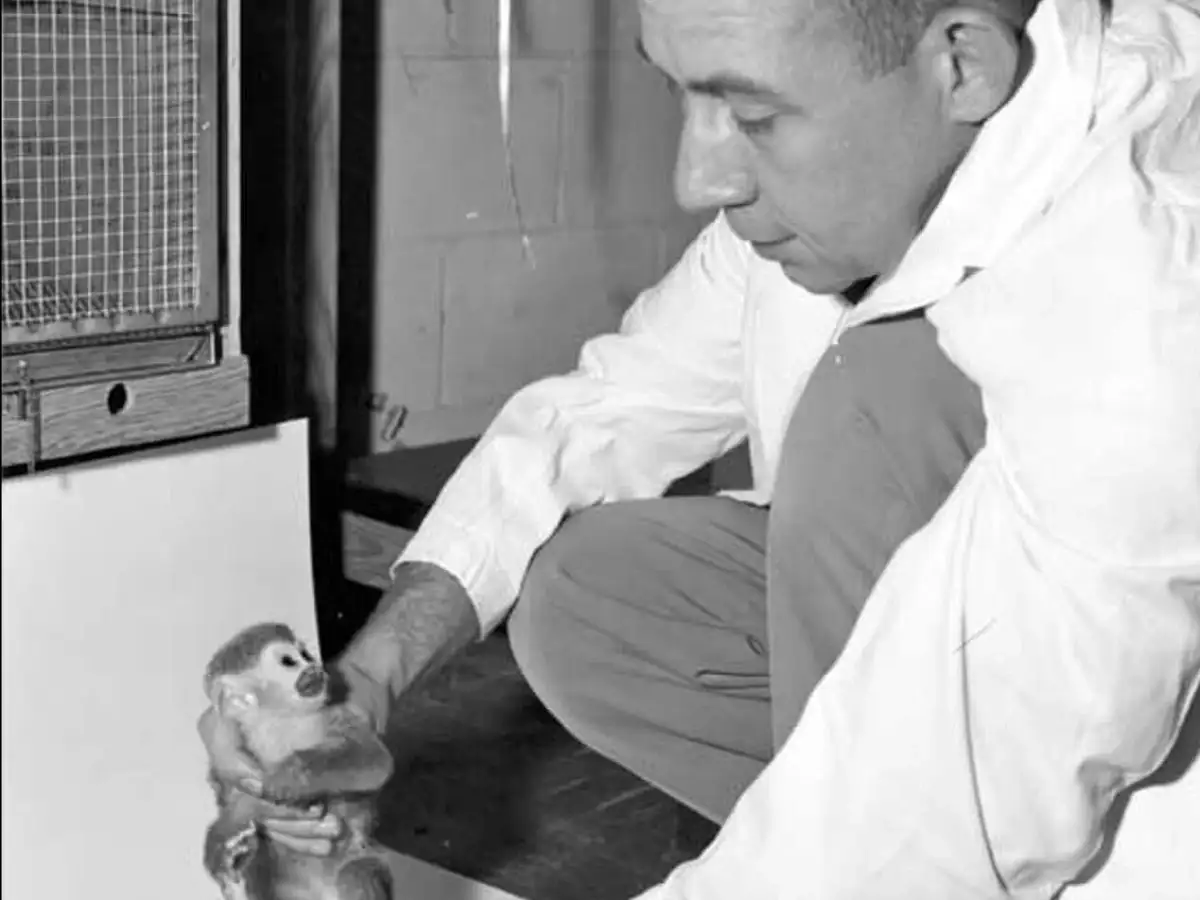
On December 13, 1958, about 68 years ago, Gordo, a squirrel monkey, was strapped to the nose cone of the Jupiter rocket PGM-19 and launched from Cape Canaveral, Florida.The Jupiter was the U.S. Air Force's operational missile, but the biological test flight itself was organized under the Army Ballistic Missile Agency, with the U.S. Navy responsible for training Gordo and monitoring his physiological signals before and during the flight. The rocket reached an altitude of approximately 600 miles (965 km), well beyond low Earth orbit's typical boundary, though the flight itself was suborbital. As per the records of historical launches maintained by NASA's Kennedy Space Center, Gordo endured 10 g forces at launch time , was weightless for 8.3 minutes, and endured 40 g re-entry forces, with no problem at all to any of his vital organs. Then, in a twist of irony befitting a Cold War-era space program that was run on duct tape and bravado, a flotation device failed to work properly, and Gordo ended up sinking into the ocean. He received little public recognition afterward.
A one-way ticket to space