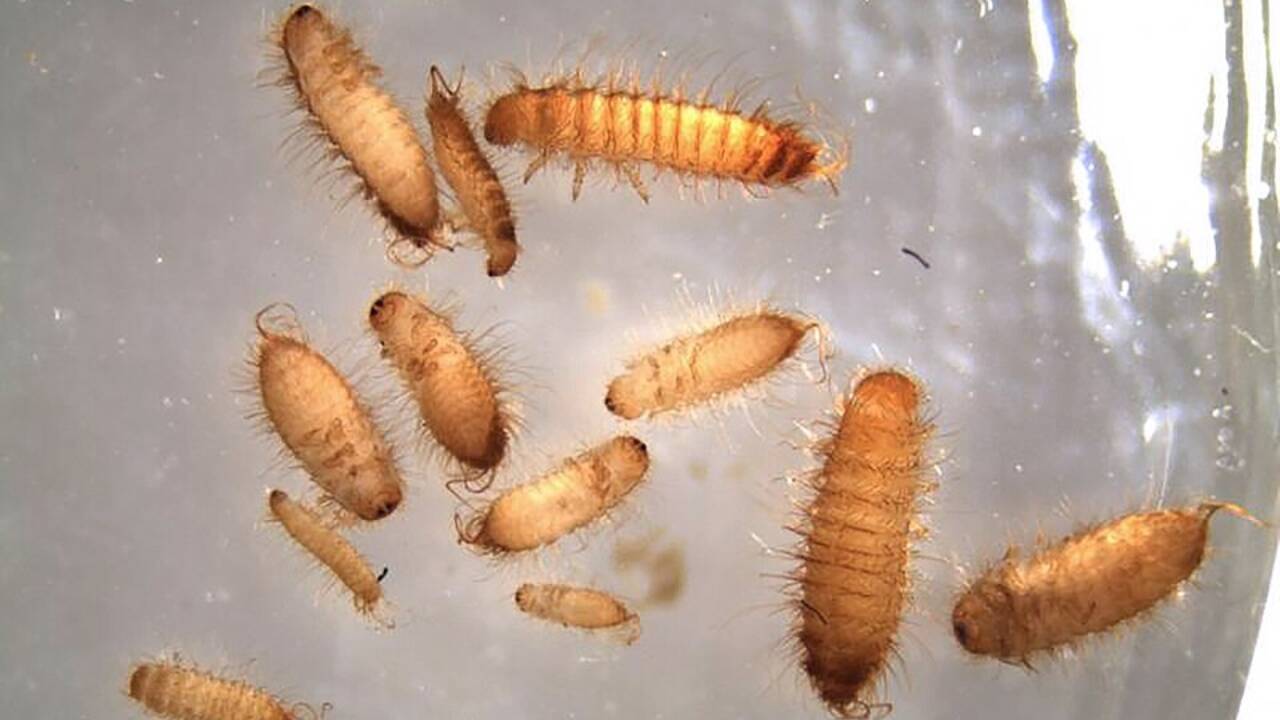
In 1953, when inspectors discovered a tiny brown beetle feeding inside a grain warehouse in California, the United States came across an enemy that was unlike almost any other agricultural pest it had encountered before. The insect, the khapra beetle (Trogoderma granarium), could survive long periods without food, hide deep inside cracks and crevices, and spread through stored commodities while remaining unnoticed.
Get breaking news anytime, anywhere. Download the TOI app now!

Following its discovery, the response became one of the largest insect-eradication campaigns in U.S. history, with entire warehouses sealed beneath giant plastic sheets and flooded with methyl bromide until the pest was finally declared eradicated in 1966. According to Cheryl Day and Ben White’s review of global khapra beetle eradications, the campaign lasted more than 13 years, while involving fumigation of over hundreds of infested sites and thousands of property inspections. The working review paper by Day and White noted that khapra beetle larvae feed on wheat, rice, barley, maize, pulses, oilseeds, and numerous other stored commodities, leaving contaminated grain unsuitable for trade or consumption.
The paper also traces how the beetle’s resilience made eradication so difficult: females can lay up to 500 eggs even after mating multiple times, larvae can survive long periods without food, and infestations often spread unnoticed in cracks, packaging and stored grain. Drawing on earlier outbreaks in Australia and elsewhere, the authors argue that repeated interceptions and the insect’s ability to hide in cargo mean border quarantine is far cheaper than large-scale post-border campaigns.
A tiny beetle that triggered a nationwide response
According to the International Plant Protection Convention (IPPC) and historical USDA records, the first major U.S. infestation was detected in California in 1953, although investigators later indicated that the beetle may have been present there years prior. Notably, by the time officials noticed the scale of the invasion, infestations had already spread to Arizona, New Mexico, Texas and neighbouring parts of Mexico by the movement of grain and other stored products.
However, rather than accepting permanent establishment of the pest, the United States authorities launched an unprecedented eradication programme. Day and White’s research noted that every confirmed infestation triggered intensive surveys, repeated inspections and strict quarantine measures. Furthermore, thousands of warehouses, mills, grain elevators and storage facilities were examined, while movement of potentially contaminated commodities was tightly controlled to prevent the pest from reaching new regions.
Another aspect of the campaign was the fumigation strategy. Historical USDA records and FAO guidance explained how giant warehouses were completely wrapped in gas-tight plastic or specially coated tarpaulins before being filled with methyl bromide, which is considered a highly effective fumigant. Notably, cracks in floors, walls and silos were sealed or filled with mortar to eliminate the beetles’ hiding places, thus ensuring that even larvae concealed deep within structures were exposed to the toxic gas. FAO reported that some fumigated structures reached volumes of around four million cubic feet, underscoring the scale of the operation.
The eradication operation lasted for nearly 13 years
As per Day and White’s paper, authorities carried out approximately 97,000 property inspections while tracing grain movements, monitoring warehouses and repeatedly surveying regions where the infestation had once been discovered. More than 600 infestation sites underwent fumigation, making the campaign one of the largest coordinated efforts ever mounted against a stored-product pest in the country.
According to the International Plant Protection Convention, the campaign succeeded because officials combined several layers of control rather than relying on fumigation alone. Eradication programmes for khapra beetle required strict quarantine, destruction or treatment of contaminated commodities, repeated inspections, surveillance trapping and follow-up monitoring to ensure no populations survived the operation. This project later became an international case study, demonstrating that even a highly resilient stored-product pest could be eliminated if infestations were detected early while every outbreak was aggressively contained.
It is worth noting that although the U.S. has declared the original outbreak eradicated in 1966, the threat never completely vanished. USDA’s Animal and Plant Health Inspection Service (APHIS) has reported that khapra beetle continues to be inspected at American ports of entry on imported cargo, containers and stored products. As the insect spreads easily through international trade and can survive for prolonged periods in difficult conditions, it remains one of the country’s highest-priority quarantine pests.