
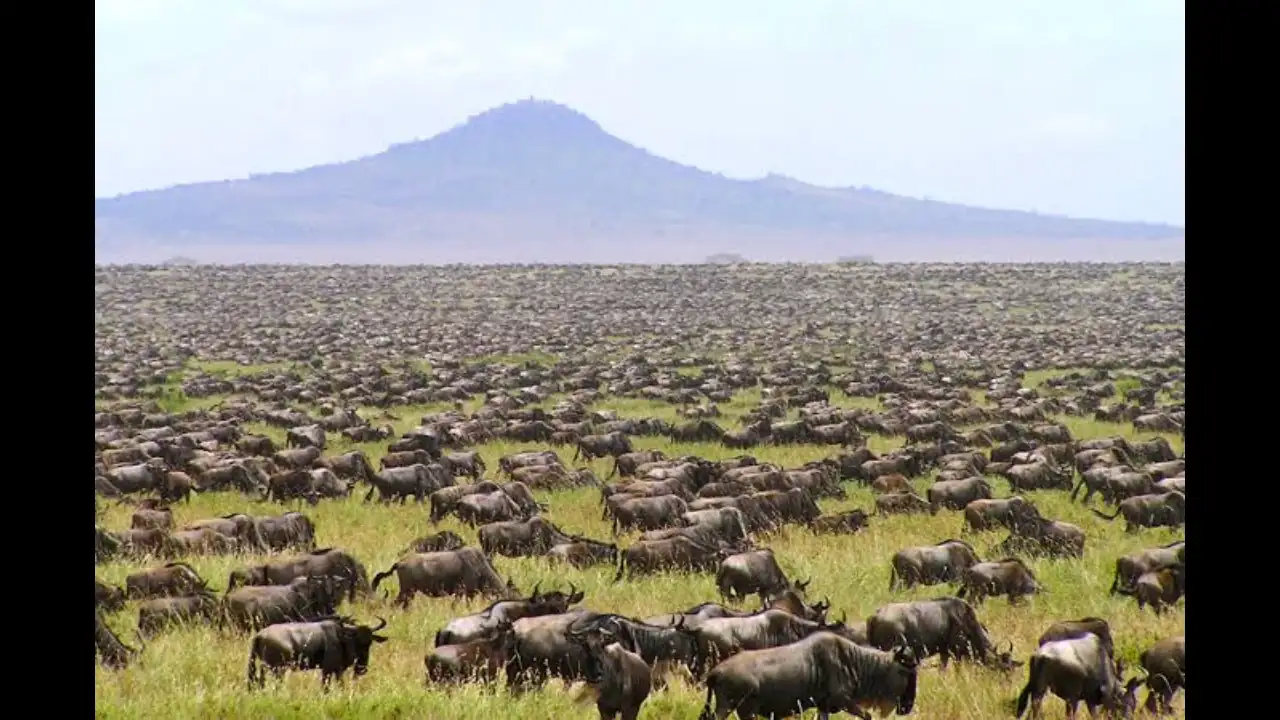
The Serengeti's blue wildebeest may be best known for crossing rivers and grasslands by the million. Their migration is one of Earth's great wildlife spectacles. Yet their most important role may happen quietly under their hooves. By eating enormous amounts of grass, these animals can influence fires, trees, soil and carbon across a vast landscape.
That connection became visible after a deadly livestock disease was brought under control. Rinderpest had suppressed wildebeest numbers for decades, leaving much more grass standing across the Serengeti. When the disease disappeared in the 1960s, wildebeest numbers surged and grazing pressure increased. Research later linked that population recovery with fewer fires and rising tree density.














