
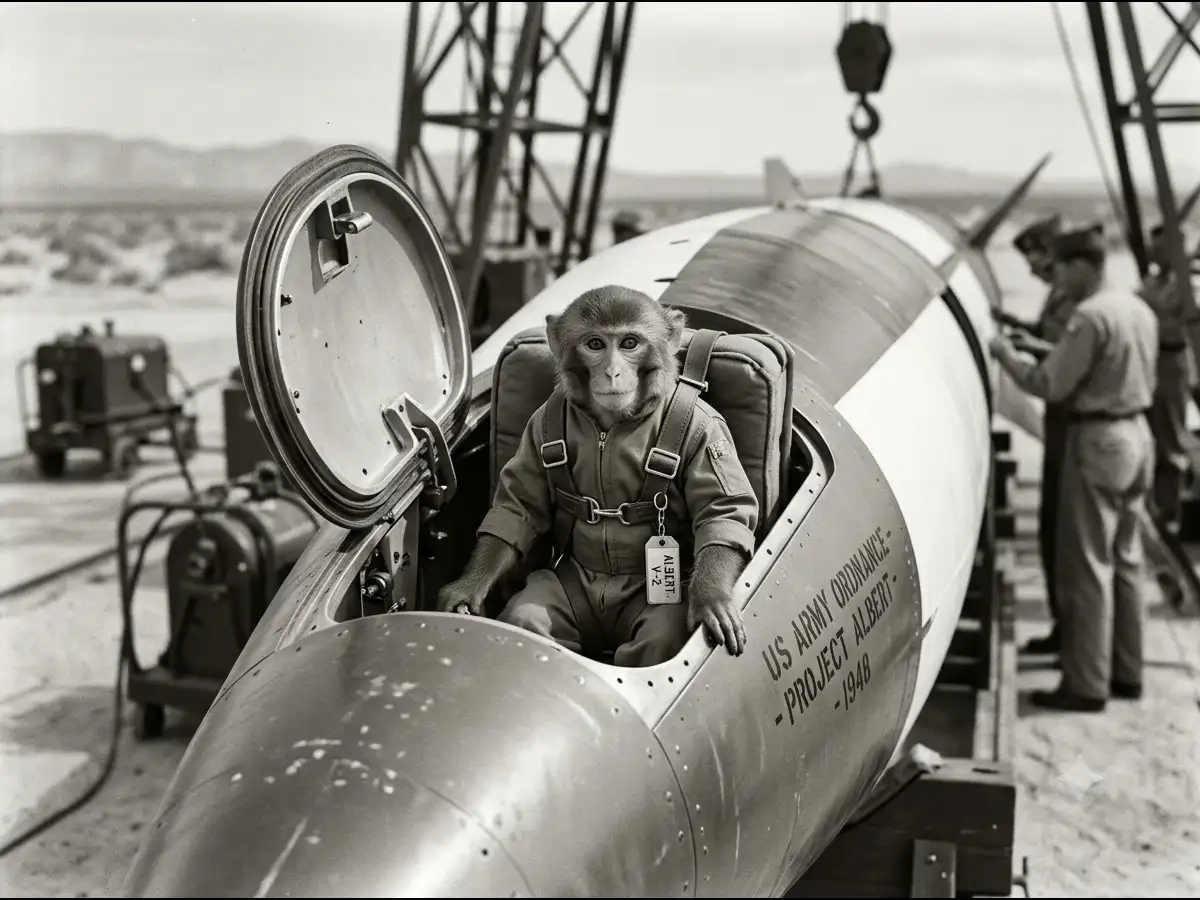
In 1948, a male rhesus monkey named Albert was launched on a V-2 rocket by the US towards space as part of an early effort to study the effects of rocket flight on living organisms. The launch took place at White Sands Proving Ground in New Mexico before NASA was created. Albert I was placed inside the crew capsule of a V-2 rocket and was anesthetized before launch. The rocket reached about 39 miles, but it did not cross the accepted boundary of space. The mission also failed to provide useful biological data because the monitoring system did not record signs of life.














