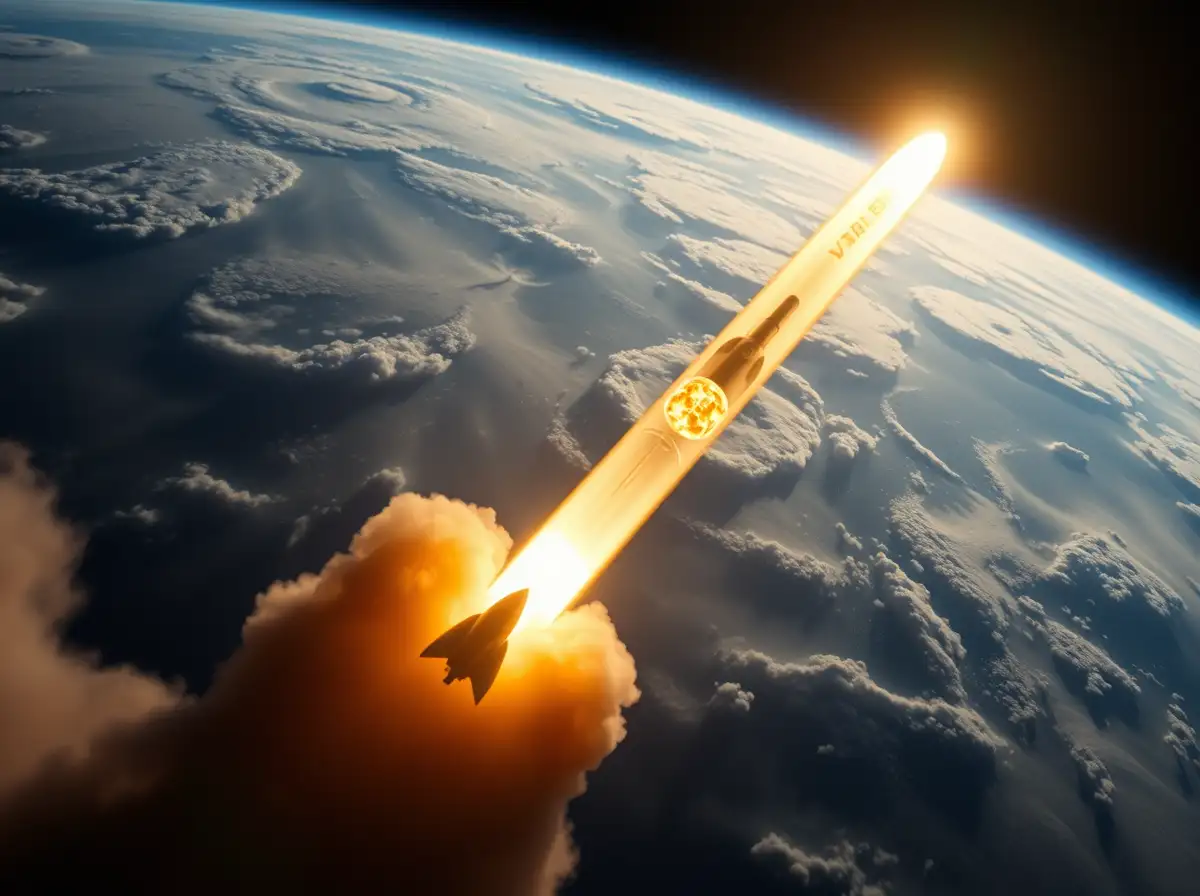
The history of space exploration began with a surprisingly small group of pioneers: fruit flies. On February 20, 1947, American military researchers launched fruit flies aboard a captured German V-2 rocket from White Sands, New Mexico. The rocket carried the insects approximately 67 miles (109 kilometers) above Earth, taking them beyond the modern 100-kilometer boundary commonly used to define space. The experiment was not designed as a publicity stunt. Scientists wanted to understand whether cosmic radiation could damage living organisms before humans eventually attempted spaceflight. The successful recovery of the insects helped establish an important foundation for biological research beyond Earth.
The choice of fruit flies was more scientifically significant than it might initially appear. Drosophila melanogaster has been a major laboratory organism for generations because it reproduces quickly, is relatively easy to study and has biological similarities useful for understanding genetics. According to HowStuffWorks, roughly 75% of human disease-causing genes have recognizable counterparts in fruit flies. That made the insects practical subjects for early space biology experiments. Researchers could examine whether exposure to the harsh environment above Earth produced visible or genetic effects. When the V-2 returned toward Earth, a capsule containing the insects separated from the rocket and descended by parachute. The flies were recovered alive, providing encouraging early evidence about short-duration exposure to space radiation.