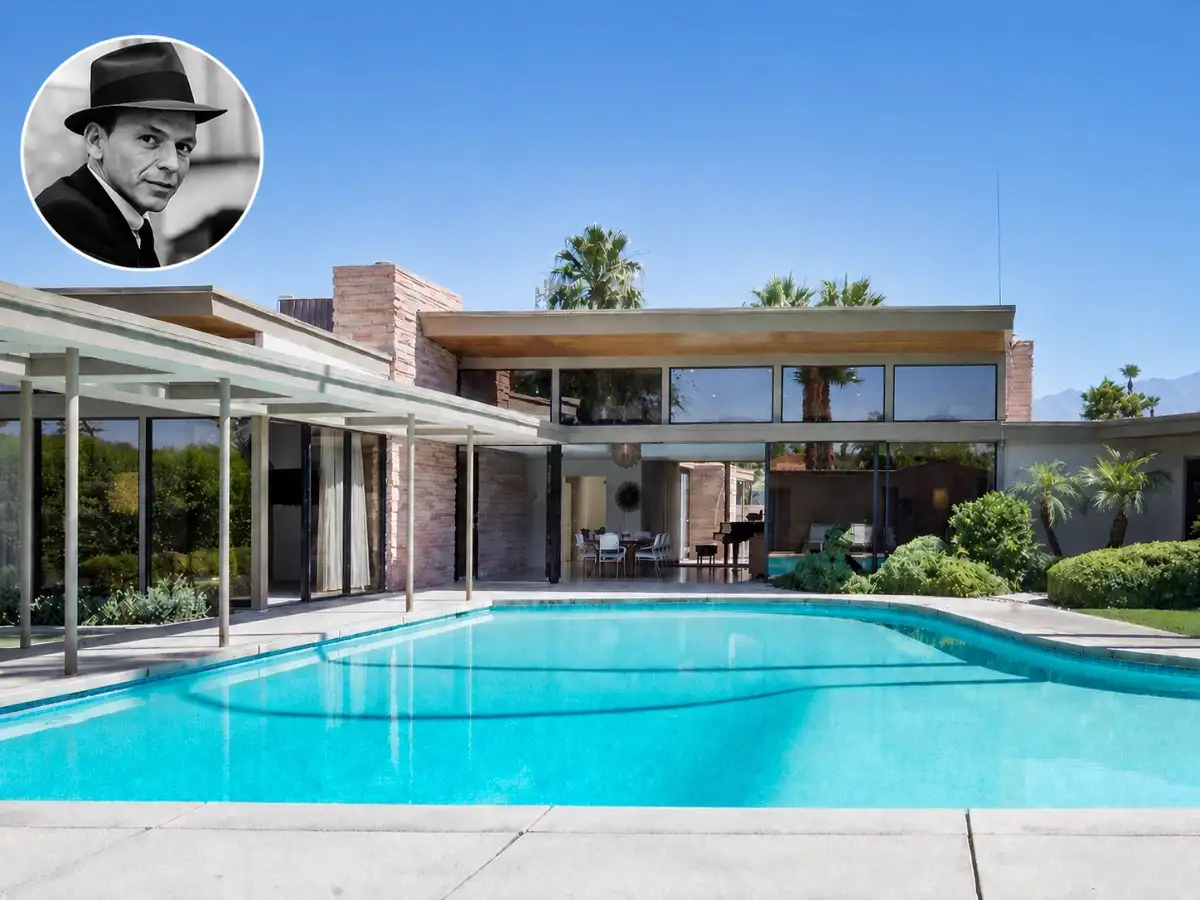
Frank Sinatra was only 31, but he had already sold a million records and signed a new film contract. He wanted a house that matched his new fortune, something big and grand, with columns, built right there in the desert. In the late spring of 1947, he walked into architect E. Stewart Williams' office in Palm Springs eating an ice cream cone, snapped his fingers, and said he wanted a house done by Christmas. According to the Class 1 Historic Site nomination filed with the city of Palm Springs, that visit began the story of Twin Palms, a desert home that also happened to be Williams' very first residential project, a fact confirmed separately in the National Register of Historic Places nomination filed with the National Park Service.
A star who wanted a mansion