Get all your news in one place.
100's of premium titles.
One app.
Start reading
The Times of India
The Times of India
World
TOI World Desk

In 1946, an Audubon ornithologist travelled 26,000 miles searching for the unknown nesting ground of America's last 15 migratory whooping cranes; their wild population now approaches 700

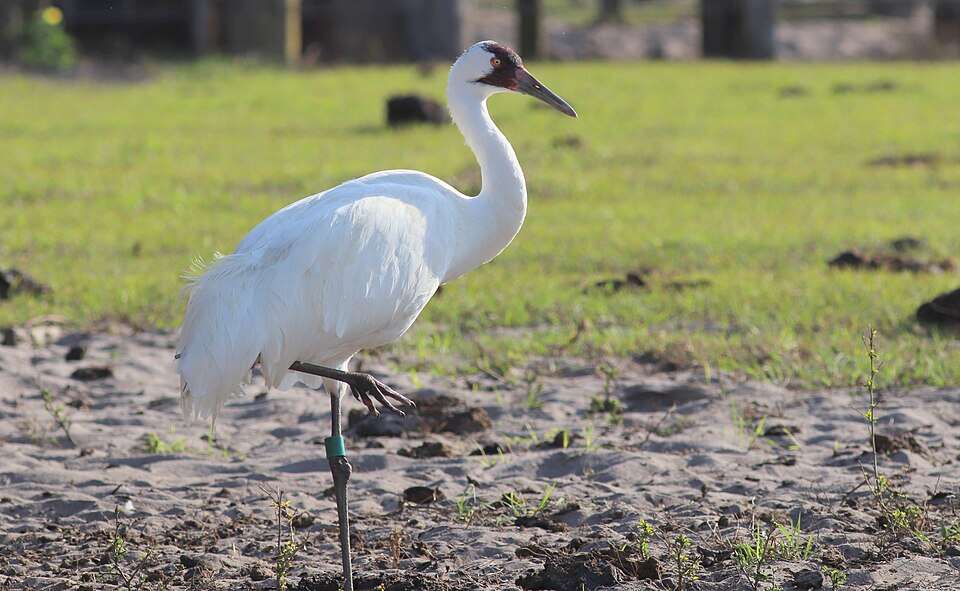
By the 1940s, the outlook for the whooping crane was dismal. The bird, which is North America’s tallest and one of its most recognisable species, had been pushed to the brink of extinction, with the last remaining migratory flock declining to just 15 individuals by 1941. The flock spent winters at Aransas National Wildlife Refuge on the Texas coast, while its breeding grounds remained unknown.

Get breaking news anytime, anywhere. Download the TOI app now!
The whooping crane’s wintering grounds were known, but its breeding grounds remained a mystery. Discovering the nesting ground of these rare birds became the greatest wildlife conservation challenge in the twentieth century.

Robert Porter Allen, who worked as an ornithologist at the National Audubon Society, took up the mission in 1946. Over the course of many years, he traveled several thousand miles to study their behavior, migration patterns, and habitat. As the National Audubon Society says, his research eventually helped reveal the location of the whooping cranes’ nesting grounds in Canada.

An endangered bird

The whooping crane (Grus americana) was previously found in vast regions of North America, but their population size fell greatly because of habitat destruction, hunting and disturbance of breeding grounds.

As reported by the U.S. Fish and Wildlife Service Whooping Crane Species Profile , population declines accelerated in the 19th and 20th centuries as wetland and grassland conversion for agriculture and hunting reduced the species. By 1941, the last migratory flock comprised only 15 cranes, which spent winters at Aransas National Wildlife Refuge on the Gulf Coast, but scientists still could not locate their summer nesting grounds. The nesting site remained unknown.

Allen’s quest for answers

When Allen began his project in 1946, he tried to determine what the cranes needed to survive. He investigated their feeding habits, behaviour, and migration threats. As stated by the National Audubon Society, during one winter season in Texas, Porter R. Allen travelled nearly 6,000 miles by jeep while searching for the remaining whooping cranes and documenting their status. His work helped raise public awareness about the need to conserve the species.

His investigation showed that the wintering habitat at Aransas could support the remaining cranes. The biggest threats seemed to lie somewhere else, namely during migration and in their breeding area, which was unknown. He worked to reduce illegal hunting by raising awareness in the communities along the cranes’ migration route.

The secret breeding ground was finally found

For many years, nobody knew where the whooping cranes nested. Allen undertook an aerial survey of remote territories in the northwestern part of Canada. Finally, in 1954, Canadian Forest Service pilots spotted a whooping crane with its chick from a helicopter near the Sass River in the Northwest Territories.

This showed that the cranes were nesting in one of North America’s most inaccessible regions. In 1955, Allen joined the researchers from the Canadian Wildlife Service and U.S. Fish and Wildlife Service for a six-week expedition to the territory where the birds were found. According to the National Audubon Society, the expedition provided valuable data about the cranes’ nesting territory.

A conservation comeback that took decades to achieve

Identifying the breeding sites was not enough to solve all the problems facing whooping cranes, so conservationists worked to protect habitats and raise awareness of the species. In the coming decades, government agencies and conservation organisations launched many programs to help the birds.

According to the U.S. Fish and Wildlife Service, some of the initiatives include the protection of breeding and wintering habitats, population monitoring and the introduction of more captive breeding and release programs. One major recent success has been the release of captive-bred cranes into the wild to establish new populations.

From 15 birds to almost 700

Nowadays, the recovery of the whooping crane is regarded as one of the most notable success stories of wildlife conservation on the continent. According to the U.S. Fish and Wildlife Service , all living whooping cranes today trace their origins to the low point of just 15 birds wintering at Aransas National Wildlife Refuge in 1941, after which decades of conservation work helped rebuild the population.

The U.S. Fish and Wildlife Service reports that the current size of the wild population has reached almost 700 birds. The recovery remains fragile. Whooping cranes continue to face numerous challenges such as loss of habitat, accidents with power lines, and changed environmental conditions.

Their recovery shows what years of scientific research and conservation work can achieve. Nearly eight decades ago, Robert Porter Allen followed the trail of 15 birds across miles of wilderness to uncover the nesting grounds of one of America’s rarest species.

Sign up to read this article
Read news from 100's of titles, curated specifically for you.
Already a member? Sign in here
Related Stories
Top stories on inkl right now
One subscription that gives you access to news from hundreds of sites
Already a member? Sign in here
Our Picks
Fourteen days free
Download the app
One app. One membership.
100+ trusted global sources.