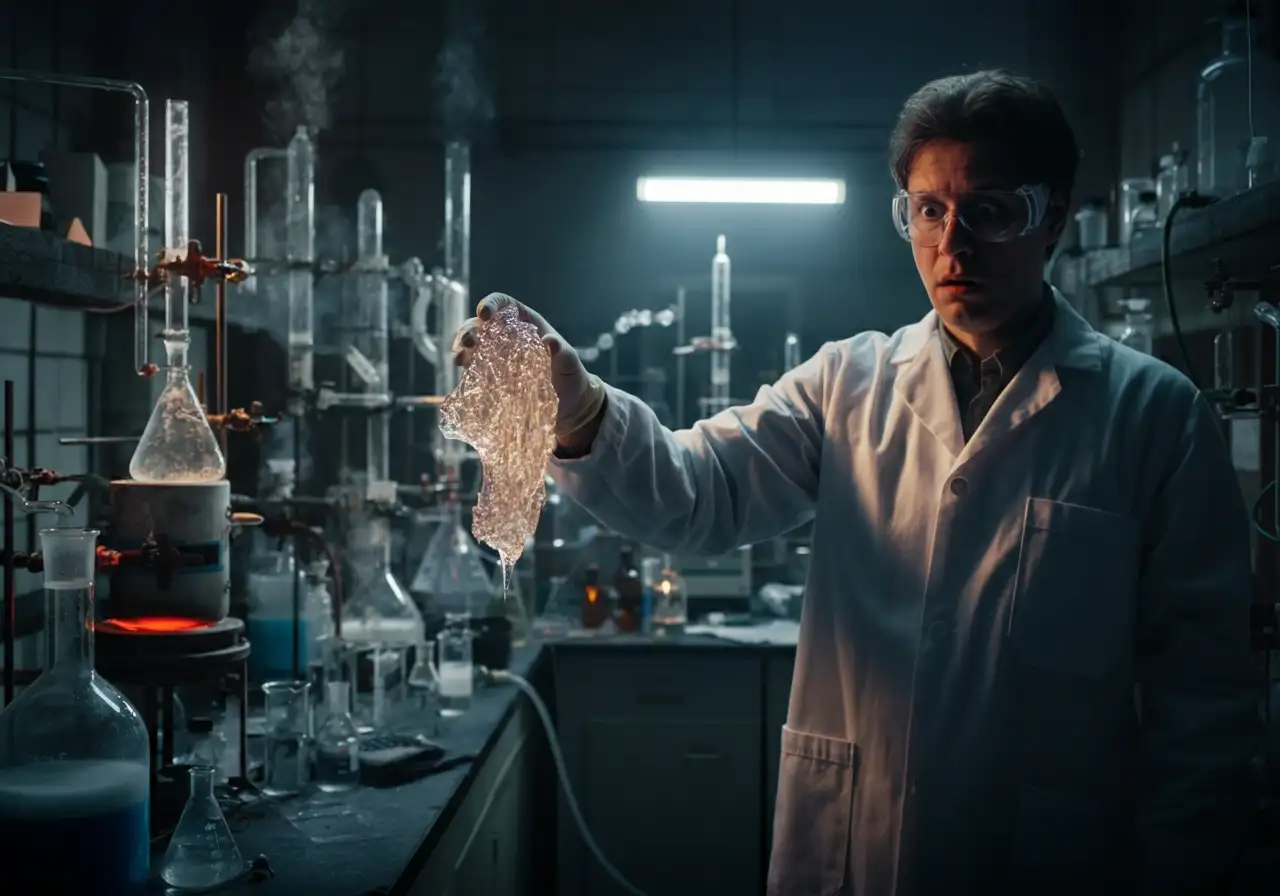
Polyethylene, which is one of the most commonly used plastics, owes its existence to an unfortunate experiment in a laboratory. In 1933, two chemists, Eric Fawcett and Reginald Gibson, working at Imperial Chemical Industries, or ICI, in England, were performing an experiment on ethylene gas at very high pressure. The chemists were trying to see the reaction process which might give rise to new industrial materials.
But, rather than the expected reaction, there was a strange waxy substance left in the equipment. Initially, the chemists thought that the substance was just another sign of a failed experiment or contamination. But, soon enough, it turned out that the substance was much more than that. This unexpected product was polyethylene, which later became indispensable in packaging, insulation, and other applications.