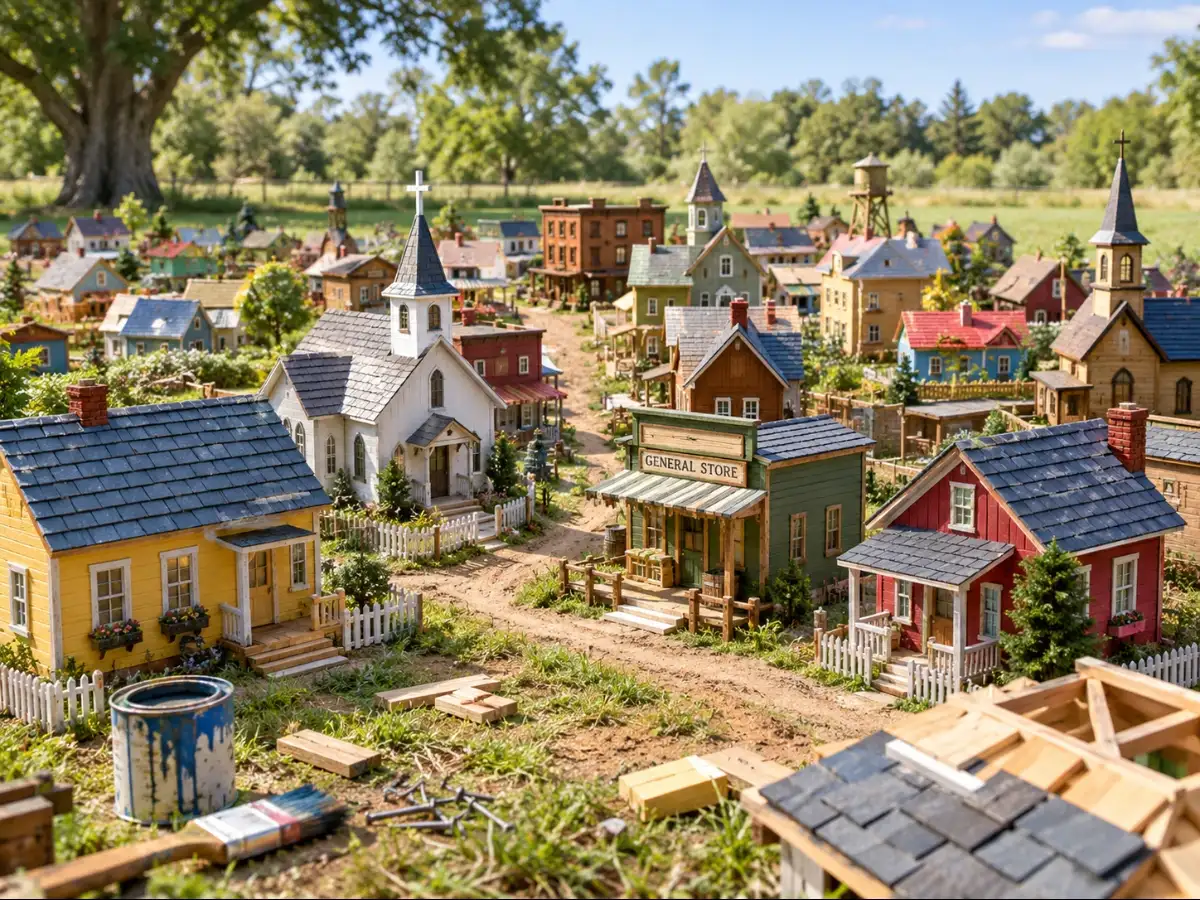
For three weeks in late spring of 1925, crowds gathered at a park in Springfield, Missouri, to witness a strange sight. It was neither a fair nor a circus. It was an entire city, but in miniature. According to historian Joseph Nathan Kane's reference work Famous First Facts, about 10,000 schoolchildren built 1,200 miniature structures on a five-acre lot at Grant Beach Park that year. It is one of the stranger chapters in American school history, and it shows how far a city would go to persuade people to buy homes.
A city that fit in a park

Tiny Town was not a one-day school project. Students spent 10 weeks building it, working after school and often completing smaller pieces at home with their parents. When completed, the "city" was 1000 feet long and 250 feet wide. It had 1,000 miniature houses and approximately 200 other buildings, including schools, churches, stores, and even government offices. All of the buildings were constructed on a scale of about one-half inch to the foot, and the streets had real electric lights and working water lines. The houses were planted with real grass and decorated inside like real houses, right down to curtains and rugs. It was not the first attempt, either. In 1919, a smaller version, built of some 400 houses, had already been shown off. Six years later, the schoolchildren went bigger. Tiny Town opened to the public on May 25, 1925, timed to the final weeks of the school year.