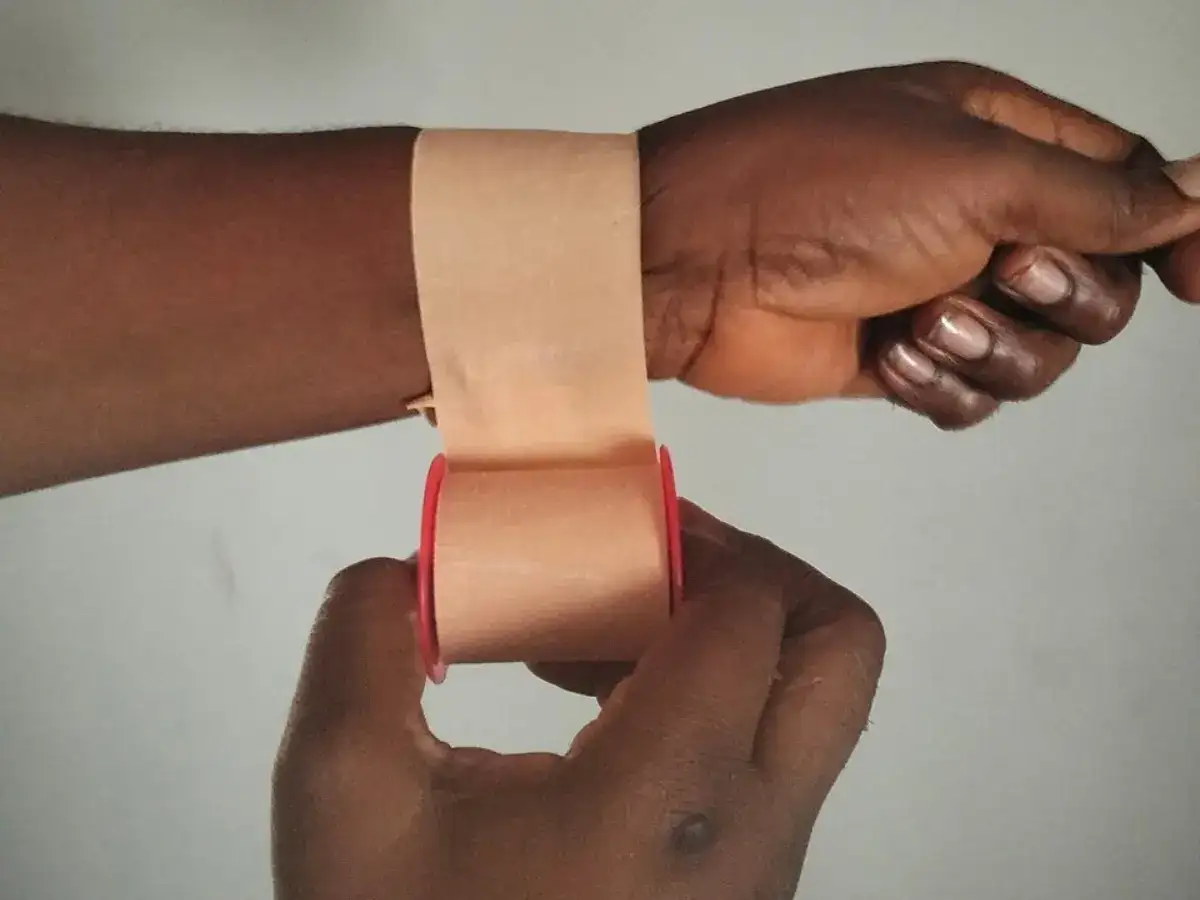
Unlike many innovations, Earle Dickson's creation did not come out of a lab. The inventor created the product at home, aiming to address a daily problem encountered by his spouse. Frequent cuts in the course of housekeeping and cooking were common occurrences, and covering wounds posed more difficulties than anticipated. Gauze would often slip from fingers due to movements, while adhesive bandage would not always stay in its place for long enough.
To overcome that issue, Dickson used his imagination and came up with an easy solution. He combined bits of gauze and adhesive tape into one handy item that could be applied swiftly whenever necessary without having to use the whole process of bandaging. Such an item proved to be quite successful and developed into the iconic Band-Aid.

A minor but important health problem
It is obvious that finger cuts do not seem serious injuries at first sight. However, according to the results of scientific research in the field of medical care, skin injuries occurring in the hands and joints are rather difficult to cover up. Research works published in PubMed Central devoted to wound care mention that it is hard to cover the area where constant movement occurs, thus allowing germs and soil to penetrate the skin.
This logic explains why Dickson's invention was such a success. The solution did not involve any novel medicines. Rather, it focused on simplifying, accelerating, and ensuring that protection would be provided for common injuries. It is also noted by researchers that people will be more willing to provide first aid regularly if products are convenient and simple. Gauze and tape need preparations, adjustments and continuous work. An adhesive strip significantly decreases the amount of required work. Simplicity became one of the key factors which made the invention so successful.
The reasons why the adhesive strip solved a bigger problem
Dickson's invention succeeded due to its ability to solve a much bigger problem than simply covering an injury. Many injuries sustained by the hands are constantly reopened due to the constant bending, stretching, and contact with objects in these parts. People may simply stop applying dressings if they keep sliding.
According to the various studies concerning modern tissue adhesives, wound dressings should be flexible, adhere to the skin, and remain comfortable despite all movements. The adhesive strip met these criteria to a surprising degree. This also meant that there was less frequent need for handling wounds by touch. This is important since such handling is often associated with increased risks of contamination and slower healing process.
On a practical level, the Band-Aid became an element of first aid that could be applied immediately without any contemplation. The timing of the invention could not have been better. Home medicine chests became more commonplace among Americans at the beginning of the twentieth century. There came a need for items that would allow one to take care of small injuries by oneself, rather than call the physician in every case of getting hurt.