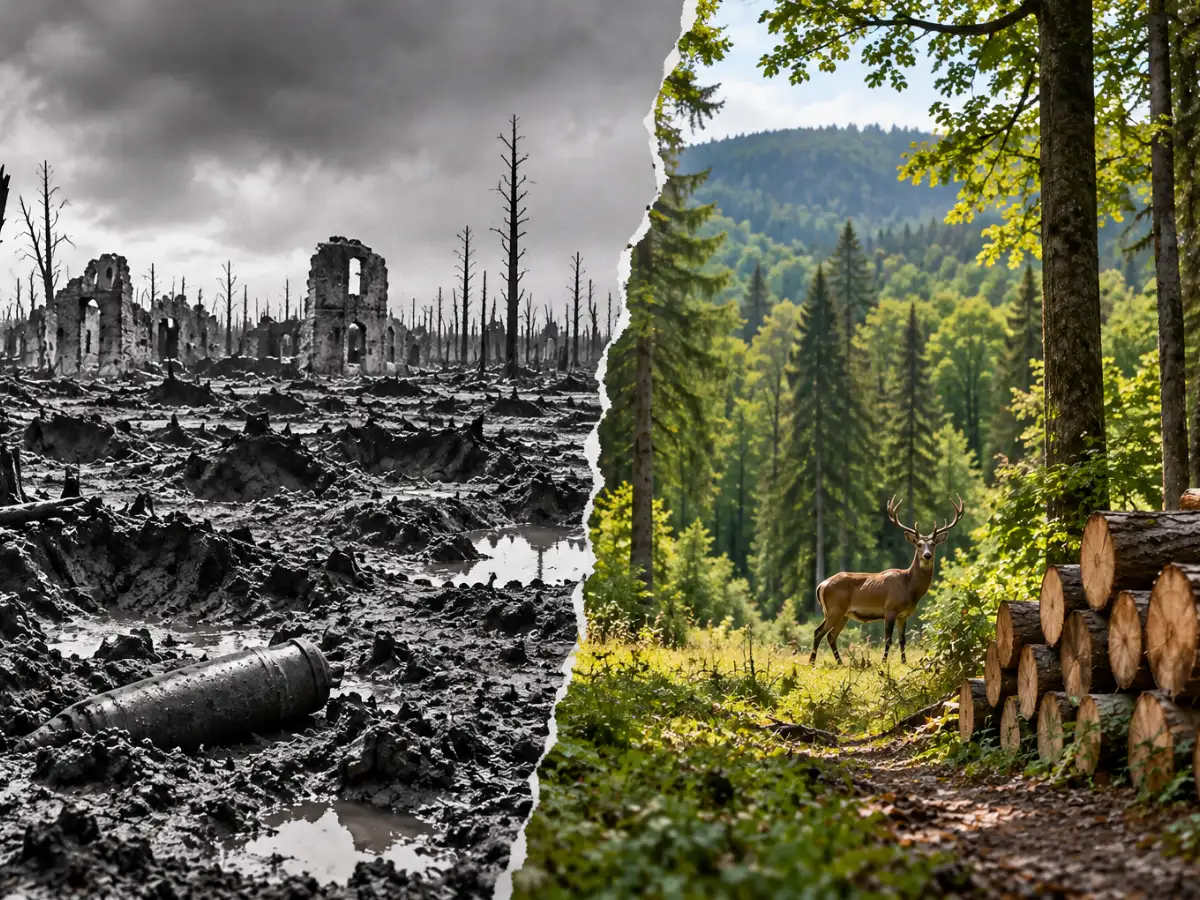
The effect of World War 1 were felt across Europe for many years even after the war ended in 1918. A prime example of that is France's Verdun. The area was so heavily bombarded that France eventually decided some areas were simply too dangerous to return to normal life. In 1919, more than 1,200 square kilometres of land were classified as the Zone Rouge, or “Red Zone.”
The designation covered land considered too damaged or contaminated for people to live on, farm or develop. More than a century later, parts of the Zone Rouge remain restricted. Unexploded artillery shells are still recovered from the soil, while traces of wartime chemicals and heavy metals continue to complicate efforts to restore some areas. And perhaps most remarkably, several villages destroyed during the war still legally exist — despite having no residents.