Get all your news in one place.
100's of premium titles.
One app.
Start reading
The Economic Times
The Economic Times
Trending Desk

In 1909, the Eiffel Tower was set to be demolished. Here's how a radio saved the world's most-visited monument

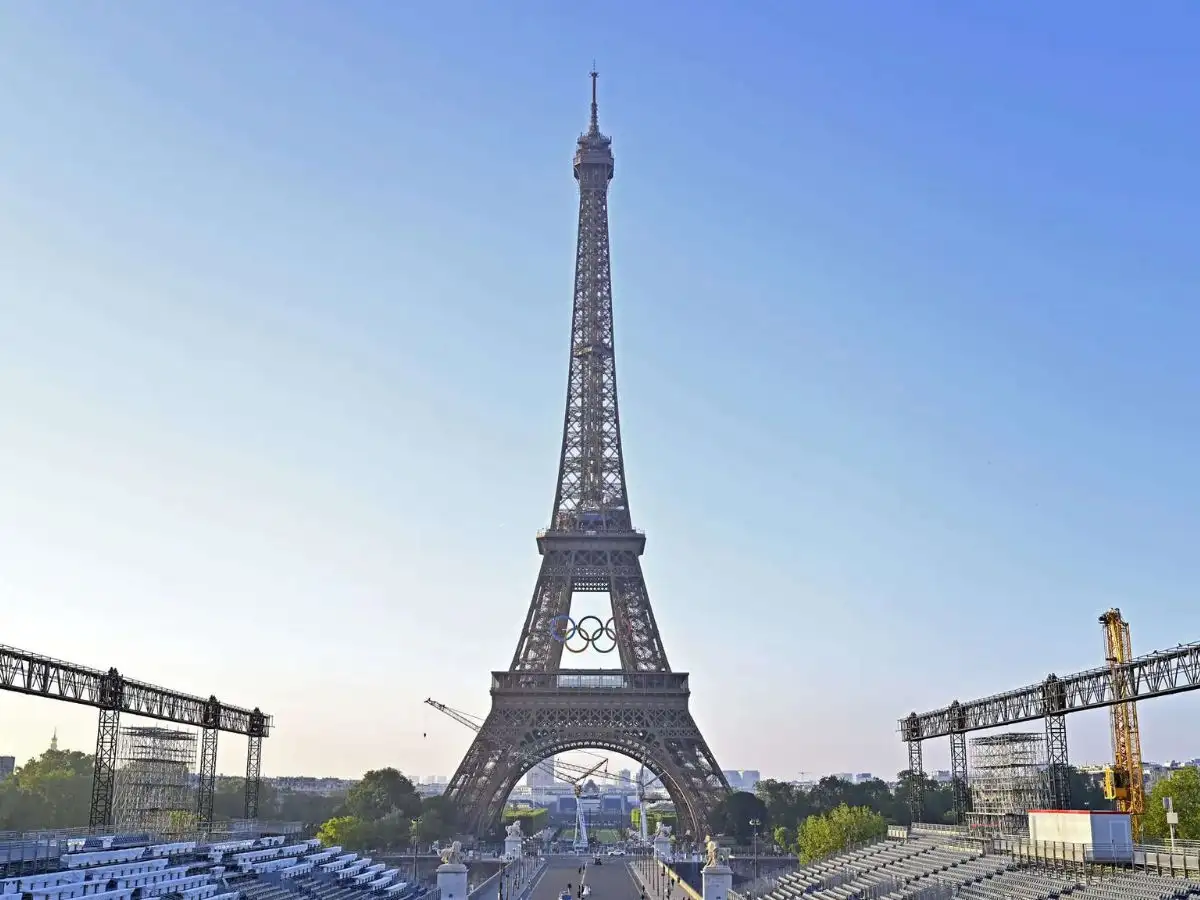
Eiffel Tower was never meant to last forever. Paris nearly tore down its most famous landmark just two decades after it went up, and the one thing that stopped the wrecking crews wasn't beauty or nostalgia. It was radio. Every year, close to seven million people climb the Eiffel Tower, making it the most-visited paid monument on the planet. Millions more photograph it from the Champ de Mars below. It is, by any measure, the symbol of Paris. But for a few tense years in the early 1900s, the "Iron Lady" came within a signature of the scrapyard.

Eiffel Tower Was Built to Disappear

When Gustave Eiffel's company won the contract to build the tower for the 1889 Exposition Universelle, the World's Fair marking the 100th anniversary of the French Revolution, nobody intended it to become permanent. The deal the city of Paris struck with Eiffel gave him a 20-year concession. After that, ownership of the tower would revert fully to the city, free to do with it as it pleased. The unspoken assumption at the time was that it would come down.

Also Read: The black rose mystery: Why coal-black roses bloom only in one small district of Turkey

That expiration date was set for January 1, 1910.

The tower wasn't universally loved to begin with. Its construction sparked outrage among some of France's most prominent artists and writers, who saw the 1,000-foot lattice of iron as an industrial scar on the Paris skyline. A famous petition circulated ahead of construction, signed by cultural figures who called it a "gigantic black smokestack" towering over the city. Even after it opened to fanfare in 1889, public enthusiasm cooled in the years that followed. Attendance at the tower dipped noticeably by the time of the 1900 World's Fair, and there was little guarantee that Paris would fight to keep an aging, controversial iron structure it had never wanted to be permanent in the first place.

The Engineer's Gambit

Gustave Eiffel, however, wasn't ready to let his creation become scrap metal. Rather than campaign on sentiment, he made a calculated bet on science.

Eiffel opened the tower up to researchers, turning its upper levels into a working laboratory. He supported meteorological observation posts, and in 1909 built a wind tunnel at its base where thousands of aerodynamic experiments were carried out, early work that would go on to shape French aviation engineering. A German physicist later used instruments at the tower's summit to record unusual radiation readings, a discovery that fed into the identification of cosmic rays a few years afterward.

But it was a new, largely untested technology that ultimately rescued the tower: wireless telegraphy, the forerunner of radio.

As early as 1898, an inventor named Eugène Ducretet used the tower to send the first wireless Morse code message across Paris. A year later, signals from the tower reached all the way to London. Eiffel recognized what he had: the tallest structure in the world was also, conveniently, the best radio antenna anyone had ever built.

He offered the tower's summit to the French military, financing the installation himself and partnering with a young army officer tasked with exploring wireless communication for defense purposes. The results escalated quickly. By 1904, signals from the tower were reaching military outposts hundreds of kilometers away. By 1907, transmissions stretched to a naval base in North Africa. A year later, the tower was sending and receiving signals across roughly 6,000 kilometers, the longest-range wireless system on Earth at the time.

By 1909, with the demolition deadline just months away, a permanent military radio station had been built beneath the Champ de Mars. The Eiffel Tower was no longer just a monument or a tourist curiosity. It had become critical national infrastructure.

From Eyesore to Essential

The argument worked. As 1909 drew to a close, Paris renewed Eiffel's concession, this time for 70 years, effectively guaranteeing the tower's survival for the rest of the century. What had almost been condemned as an oversized, outdated fairground attraction was reclassified as a strategic military and scientific asset.

The payoff came soon after. During the First World War, the tower's radio station is credited with intercepting enemy transmissions, giving French forces an intelligence edge at a critical moment in the war. The structure that critics once dismissed as an ugly stunt had become a tool of national defense.

Even the Second World War couldn't finish what the 1909 deadline started. As Allied forces closed in on Paris in 1944, Adolf Hitler reportedly ordered the tower's destruction. The German military governor of Paris ignored the command, and the order was never carried out.

A Landmark Reborn

Today, the science that once saved the tower has faded into the background, most visitors climbing its stairs and elevators have no idea a French army radio station once operated beneath their feet. What remains is the silhouette: 330 meters of iron lattice that nearly became scrap, and instead became one of the most photographed structures on Earth.

Nearly 300 million people have visited the Eiffel Tower since it opened in 1889. Every one of them, in a sense, has radio to thank.

Sign up to read this article
Read news from 100's of titles, curated specifically for you.
Already a member? Sign in here
Related Stories
Top stories on inkl right now
One subscription that gives you access to news from hundreds of sites
Already a member? Sign in here
Our Picks
Fourteen days free
Download the app
One app. One membership.
100+ trusted global sources.