
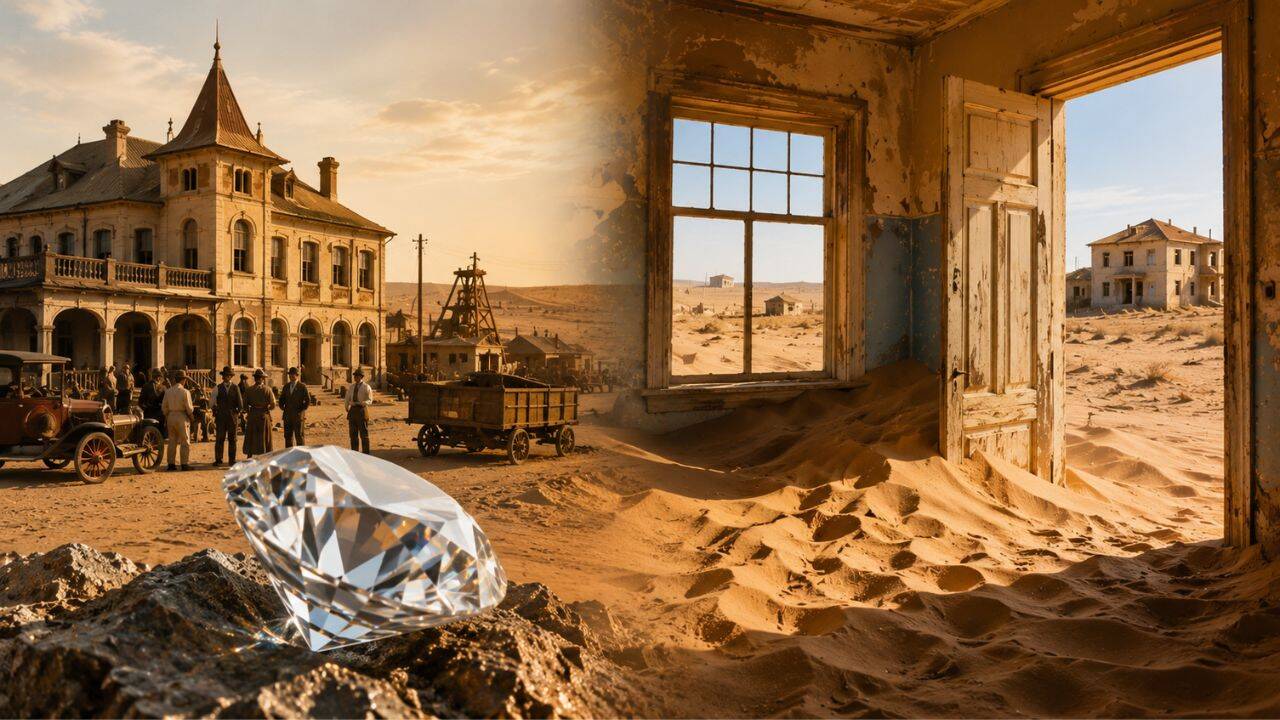
In 1908, a railway worker clearing sand beside a track in what is now Namibia noticed something unusual: stones that caught the sunlight. His German supervisor, August Stauch, recognised the discovery as diamonds, setting off a rush that would transform one of southern Africa’s harshest landscapes. Within months, prospectors and mining companies were moving into the remote desert, while the colonial authorities imposed tight controls over the newly valuable territory. Kolmanskop soon emerged as the centre of the diamond boom, growing into an improbable European-style settlement complete with electricity, a hospital, bakery, butcher, post office and even an ice-making plant.
Get breaking news anytime, anywhere. Download the TOI app now!




