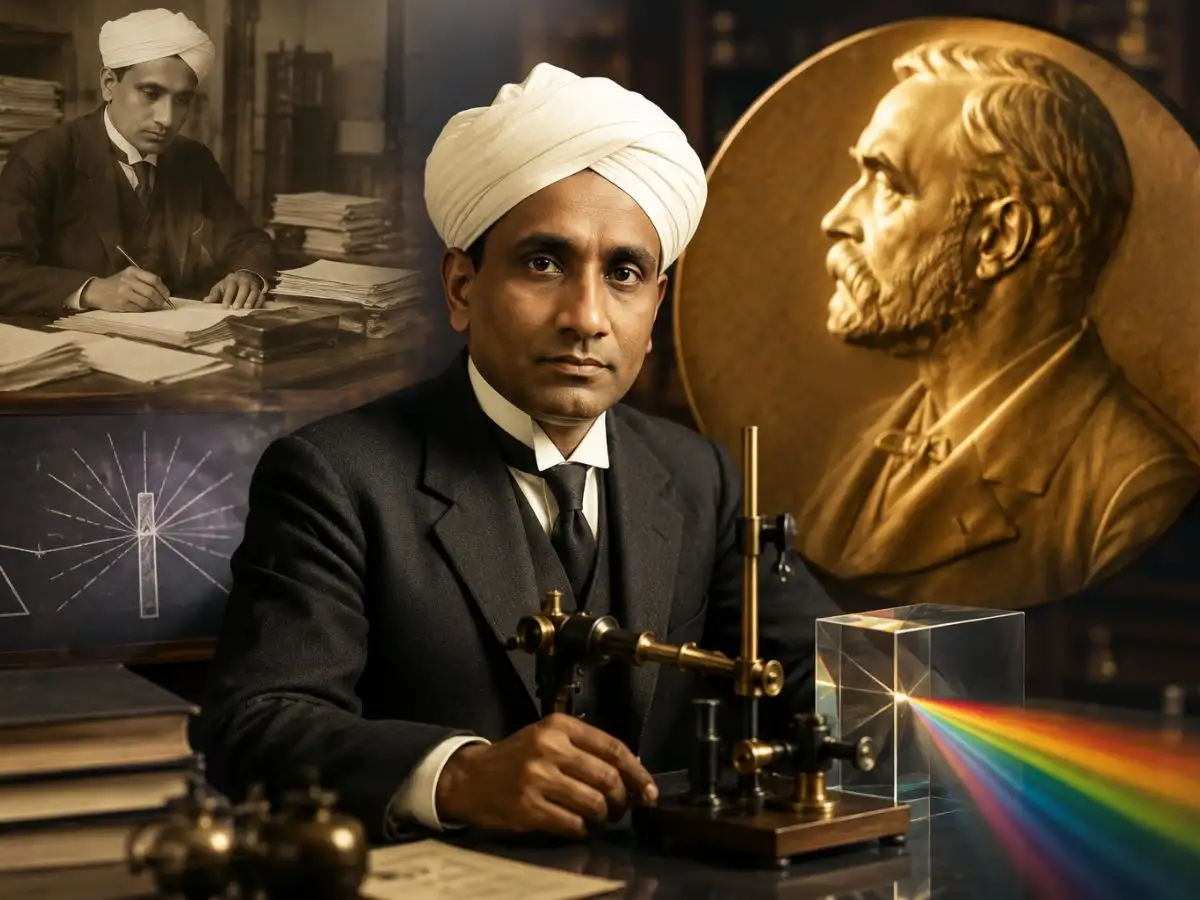
There's a particular kind of Indian story that never gets old: a government job by day, a scientific revolution by night. This one belongs to Chandrasekhara Venkata Raman, better known simply as CV Raman, and it begins not in a laboratory, but in a finance office.
In 1907, Raman was a brilliant 18-year-old fresh out of Presidency College, Madras, with a master's degree completed with record marks and a physics paper already published in a British journal. By every instinct, he wanted to be a scientist. But India in 1907, under colonial rule, offered almost no career in research, no institutes, no funding, no path forward for a young Indian physicist, however gifted.