
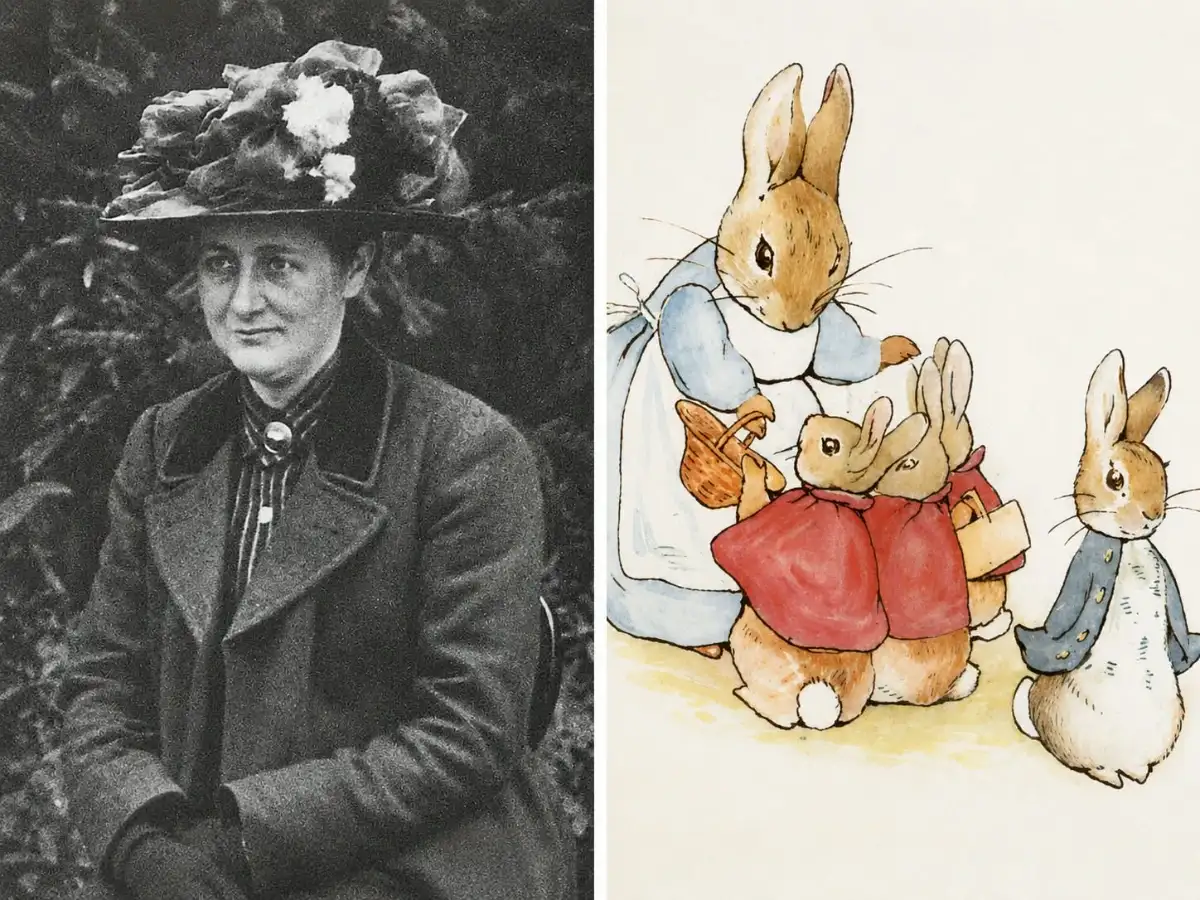
By any definition, Beatrix Potter is the least likely of the land barons in British history today. Not remembered for her incredible real estate sense, she was a shy Victorian woman who, over many years, purchased vast tracts of the Lake District in England with the money from her books, most popularly for “a rabbit in a blue jacket.” According to the National Trust, the profits from "The Tale of Peter Rabbit," along with a small inheritance, enabled her to buy Hill Top Farm in 1905; by the time she died in 1943, she had accumulated approximately 4000 acres and 15 working farms, all of which she left to the National Trust. It's almost astonishing how one children's author quietly outmaneuvered an entire century of development pressure on a landscape that other countries have struggled for decades to protect through policy alone.
A children's writer with a very grown-up way out

The part of Potter's life that's skipped over in the picture book is that she might not have been sentimental about her farms; she was strategic. She didn't just donate the land and then walk away. Her will included instructions for operating the farms as working sheep farms, not as manicured estates or as a "holiday home sprawl.”
This is more akin to a conservation easement than a charitable gift long before land trusts became the common practice in America. It's worth reflecting on how rare this is. Most benefactors that have substantial amounts of funds want the building to be named after them. Potter wanted the mud, fences, and shepherds to remain just as they were.
The sheep are doing more work than you think
The creature at the heart of her passions was a scruffy, gray-faced hill sheep known as a Herdwick, unknown to most Americans. The breed became Potter's passion, and in 1943 she was elected president of the Herdwick Sheep Breeders' Association, the first woman ever chosen for the role. She never got to serve: she died that December, weeks before her term was due to begin in March 1944. It's a form of devotion that has a real scientific value.







